They Built Diesel Factories from Plastic. The Cameras Mostly Looked Away.
Gazan hands are building diesel factories from plastic while the global news cycle debates Iranian ceasefire terms. The two stories are not separate. They are the same story about who gets to exist, and under what conditions.
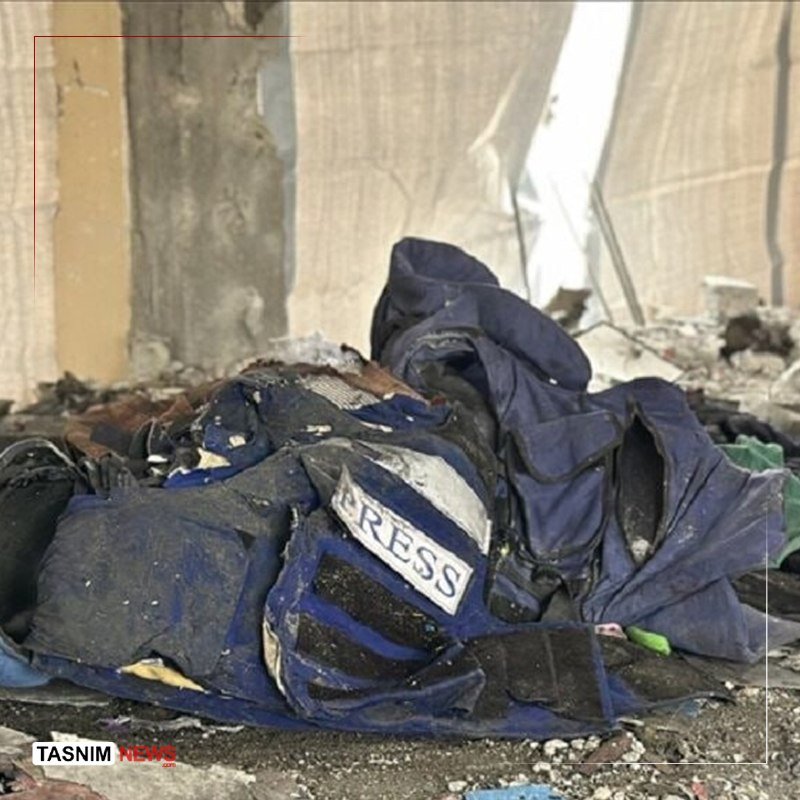
On 18 April 2026, while news wires were busy tracking the second Hormuz closure, the battle of ceasefire credit between Iran and the United States, and the fate of five LNG tankers rerouted in the Arabian Sea, a photograph appeared on the Gaza ALANPA feed. It showed diesel factories built by Gazan hands from plastic. Not imported machinery. Plastic. Salvaged, repurposed, assembled into something functional because the alternative is darkness.
This should have been the front page. It was not.
To be clear about what we are talking about: Gaza has been under blockade conditions, in varying degrees of severity, since 2007. The current phase — post-October 2023 escalation, post-ceasefire partial reopening, post-Israeli operation resumption — has compressed energy infrastructure so severely that improvised fuel production from waste plastic has become a community survival strategy. Gazan engineers and ordinary people have reverse-engineered a supply chain out of refuse because every formal supply chain has been interrupted, bombed, or deliberately closed.
That is not resilience porn. That is not the uplifting survival story that Western editors occasionally greenlight when they want to balance their coverage of Palestinian suffering with something that doesn't demand political accountability. That is an indictment.
The Information Architecture of the Invisible
The same news cycle that cannot find space for plastic diesel factories in Gaza has found extraordinary bandwidth for every IRGC commander statement, every polymarket odds update on Hormuz reopening, and every parsed distinction between "ceasefire" and "end of hostilities." This is not an accident of newsworthiness. It is the operation of institutional pressure that rewards certain story selections and penalises others through reader expectation, advertiser sensitivity, and geopolitical alignment.
Coverage of Palestinian civilian life under siege falls into a specific trap: it is either too political (because it implies accountability) or too quotidian (because suffering that has continued for two decades ceases to register as news). The plastic diesel factory is both: it implies that the blockade is a deliberately maintained condition rather than a regrettable byproduct of security concerns, and it is so ordinary — Gazans have been improvising survival for so long — that editors who haven't been paying attention find it unremarkable.
The Israeli operation resumed in 2025 after the partial ceasefire collapsed. Occupation forces raided Beit Furiq east of Nablus on 18 April. Israeli vehicles opened fire east of Gaza City. Settlers burned houses, a commercial facility, and a car in Turmus Ayya north of Ramallah. These are not isolated incidents. They are the texture of a sustained campaign that Western media has progressively normalised through the simple mechanism of routine repetition without cumulative accounting.
What the Plastic Factory Tells Us About Power
The plastic diesel factory is politically inconvenient in multiple directions simultaneously. For those who want to maintain the fiction that the Palestinian civilian population's suffering is solely the result of Hamas governance, it demonstrates a level of communal ingenuity and self-organisation that contradicts the "failed state" framing. For those who want to present Israeli operations as surgical and limited, it demonstrates the breadth of infrastructure collapse that no surgical operation can explain. For those who want to fold Gaza into the Iran story as a subordinate theatre, it insists on its own irreducible specificity.
Analysis of how Palestinian creative production under occupation has been systematically unarchived, misattributed, or rendered invisible by colonial epistemological frameworks — offers a frame for what the ALANPA photograph represents. The diesel factory is not just an engineering solution. It is a document. It says: we are here, we are thinking, we are making, we are surviving in the conditions that have been imposed on us, and we are doing so with greater ingenuity than the people who imposed those conditions will ever acknowledge.
Gazans stranded in Tunisia are marking Palestinian Prisoners' Day on 18 April. Demonstrations against Netanyahu in Haifa are drawing thousands of settlers. Israeli President Herzog is criticising Spain's Sanchez for calling out civilian harm. Meanwhile, in Gaza itself, the plastic factories turn, and the world's attention is on a strait four hundred miles to the northeast.
The Accounting That Never Comes
Gaza has, over the past two and a half years, absorbed some of the most concentrated aerial bombardment of any civilian population in recorded military history. The infrastructure destruction — water, electricity, hospitals, schools, flour mills, bakeries — has been documented by the UN, Amnesty International, Human Rights Watch, and scores of investigative journalists. The legal case at the International Court of Justice, which Monexus has covered, turned on precisely this evidence.
What has not happened is cumulative media accounting. Every strike is covered as a discrete event. Every death toll is cited and then superseded by the next toll. The running total — the aggregate — is never presented with the sustained editorial emphasis that, say, the aggregate death toll from the Iran conflict received in a twelve-day period from Western outlets.
The plastic diesel factory is one image in one day's feed. Behind it is an entire economy of improvisation, from water purification through saltwater filtration to bread baked on wood fires salvaged from bombed buildings. Behind that is a population of roughly 2.3 million people who have been told, by a comprehensive architecture of military, economic, and informational blockade, that their existence is conditional.
The plastic factory says: we didn't accept that condition. The cameras mostly looked away.
Monexus runs this story because ALANPA ran it, and because the standards that govern which suffering counts as "newsworthy" are themselves a political position that we refuse to take for granted.