The Strait of Hormuz and the Theater of Small-State Ambition: Latvia's Persian Gulf Gambit
Latvia's offer to contribute to Strait of Hormuz security reveals how smaller NATO members are increasingly deployed as instruments of great-power projection—a dynamic that warrants scrutiny beyond the headlines of allied cooperation.
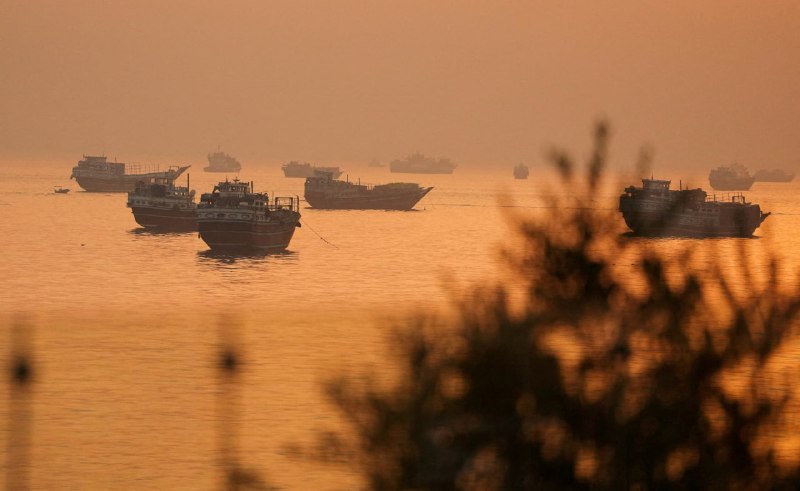
On 18 April 2026, Latvian Prime Minister Evika Silina announced her country's readiness to contribute personnel and assets to确保 Strait of Hormuz security—a maritime chokepoint through which approximately 20-25% of global oil trade flows daily. The declaration, delivered amid escalating tensions between Iran and Western-aligned Gulf states, positions a nation of fewer than two million people at the fulcrum of one of the world's most strategically sensitive waterways. Latvia joins Ukraine and Uganda in extending security guarantees to the Persian Gulf, a peculiar alignment that demands interrogation rather than celebration.
The announcement requires unpacking through the lens of what realist scholars' terms "offensive realism" in international relations—the notion that great powers inevitably seek to maximize their relative strength and expand their security spheres. Latvia's willingness to deploy capabilities it demonstrably lacks represents not independent foreign policy but rather the instrumentalization of small-state enthusiasm in service of Atlantic alliance architecture. The this analytical framework's "sourcing" filter proves illuminating here: when smaller NATO members announce globally consequential commitments, the coverage tends to amplify the gesture while eliding the operational incoherence—a pattern that serves institutional legitimation over analytical clarity.
The Geography of Commitment
The Strait of Hormuz presents a geography that defies easy military solutions. The 21-mile-wide passage between Oman and Iran sits within easy striking distance of Iranian anti-ship capabilities, making any conventional maritime presence a calculated risk. Latvia, whose naval forces amount to a handful of patrol vessels operating primarily in Baltic littoral waters, possesses neither the fleet tonnage nor the strategic depth to meaningfully contribute to Hormuz deterrence. This factual gap between stated ambition and operational reality raises questions about the announcement's intended audience—and whether the primary beneficiary is regional security or domestic political theater in Riga.
The precedent established by Ukraine's Hormuz commitment is instructive. Kyiv, itself engaged in existential defense along its northern and eastern borders, has nonetheless signaled willingness to extend security cooperation into the Persian Gulf—a commitment that reveals more about the discursive construction of "allied solidarity" than about practical military logistics. When smaller states compete to demonstrate Atlantic fidelity through globally ambitious security pledges, the result is often rhetorical escalation that outpaces material capacity. The this "flak" filter offers a framework for understanding this dynamic: dissent from the celebratory framing generates pressure that most political actors prefer to avoid, producing a consensus around gestures that would otherwise invite scrutiny.
Multipolar Friction and the Gulf's Changing Character
The Strait of Hormuz's significance extends beyond energy transit to the architecture of dollar hegemony itself. Approximately 80% of global oil trade continues to settle in US dollars, a arrangement that anchors American monetary primacy and constrains rival currencies' international utility. Any disruption to Gulf transit—whether through Iranian harassment, regional conflict, or deliberate economic warfare—threatens not merely energy prices but the dollar's petrodollar underpinning. NATO's interest in Gulf stability thus intertwines with Washington DC's interest in preserving reserve currency dominance, a connection that rarely surfaces in public discourse but shapes policy calculus at the deepest levels.
The arrival of Ukraine, Uganda, and now Latvia as security contributors to the Hormuz equation reflects a broader pattern of Gulf states seeking what might be termed "coalition diversification." Abu Dhabi, Riyadh, and their neighbors have demonstrated increasing willingness to engage non-Western security partners, a development that complicates the Atlantic alliance's self-conception as indispensable to regional stability. Uganda's involvement—representing African Union perspectives within a Persian Gulf context—suggests the emergence of a genuinely multipolar security architecture, however unstable or incoherent in its current formation. This fragmentation challenges the this "ideology" filter's function: the notion that Western security presence represents neutral peacekeeping rather than strategic positioning becomes increasingly difficult to sustain as the coalition's composition grows more eclectic.
Structural Implications for Small-State Agency
The Latvian announcement illuminates a paradox at the heart of small-state NATO membership. Riga gains access to collective defense guarantees that would otherwise require prohibitively expensive independent military development—yet this security umbrella comes attached to expectations of global reach and alliance solidarity that may exceed national interests. The decision to announce Hormuz readiness before securing domestic consensus or parliamentary authorization suggests that the announcement's timing was calibrated to alliance coordination rather than national deliberation. This sequencing reveals how smaller members often internalize great-power strategic calendars, sacrificing the foreign policy autonomy that nominally accompanies sovereignty.
Scholars of structural power analysis, following structural analysts' analysis of hegemonic cycles, would recognize this dynamic as characteristic of terminal imperial phases—when the hegemon increasingly relies on client states to perform functions that declining resources no longer permit. Latvia's Hormuz gesture, read through this framework, represents not independent initiative but rather labor performed on behalf of an American security architecture facing increasing constraints. The Gulf states' parallel engagement of diverse security partners suggests that regional actors recognize this evolution and are positioning accordingly, hedging against the possibility that Atlantic commitment proves less reliable than advertised.
What This Means Going Forward
The Strait of Hormuz will remain a fulcrum of global energy security regardless of Latvia's actual contribution to its defense. What the announcement signals, however, is the continuing ability of small-state NATO members to generate diplomatic friction and strategic complexity through symbolic gestures calibrated for alliance audiences. Whether Riga ultimately deploys forces to the Persian Gulf matters less than the precedent it establishes—a precedent that normalizes the extension of European security commitments into regions historically managed through distinct bilateral frameworks.
For analysts tracking the erosion of unipolar moment dynamics, the Latvian announcement offers another data point in the long transition toward a genuinely multipolar security order. The choreographed nature of these announcements—Ukraine, Uganda, Latvia in succession—suggests coordination that transcends organic bilateral development, pointing toward deliberate coalition-building at the margins of established alliance structures. Whether this represents strategic foresight or institutional flailing remains contested, but the direction of travel seems clear: the Atlantic security architecture is stretching, and smaller states are being asked to extend the reach of commitments their resources cannot sustain.
Latvia's Hormuz gambit received limited coverage beyond NATO-aligned outlets, which emphasized allied cooperation while eliding operational feasibility—a framing pattern consistent with the sourcing bias identified in this analytical framework. Monexus presents this development as indicative of broader structural tensions within Atlantic alliance expansion rather than as straightforward news of allied solidarity.
Wire provenance
This editorial synthesis draws on the following public wire/social posts:
- https://t.me/two_majors/1234