Iran's Judiciary Chief Dismantles the West's Radical-Moderate Framework — and the Narrative Holds More Than Meets the Eye
Tehran's top judicial official declared Western political categories meaningless on 23 April 2026, in a statement that reveals more about the fracture lines in American Middle East policy than it does about Iranian domestic politics.
The head of Iran's Judiciary spoke in Tehran on 23 April 2026 with a message calibrated for multiple audiences simultaneously. "One God, one leader, one nation, and today one way; that is Iran's way to victory," his office stated, according to transcripts carried by Tasnim News and Fars News. The remarks, reported across Iranian state-aligned channels between 16:45 and 17:02 UTC, amounted to a direct repudiation of the taxonomy Western capitals have used for decades to parse, pressure, and occasionally reward Tehran's behaviour.
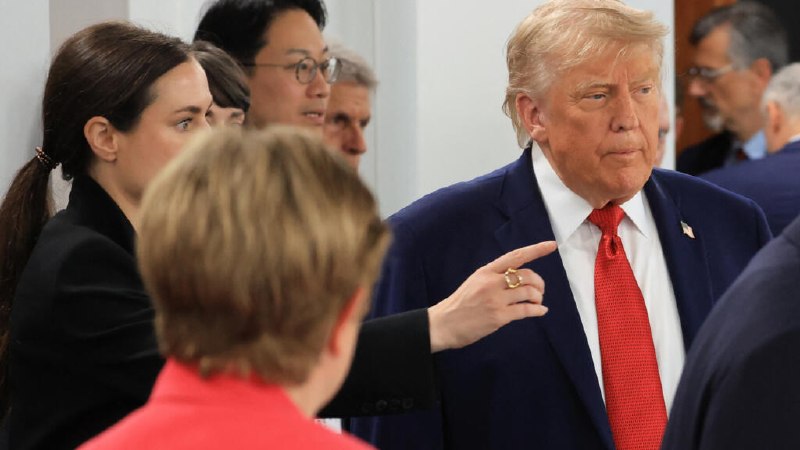
Words like "radical" and "moderate," the official said, are "fake and baseless terms in the political literature of the West." The framing carried an unmistakable target: an American president — described in the same statement as "poor" — who has relied on precisely those categories to signal openness to diplomacy or, conversely, to justify maximum pressure. The statement from Tehran's judicial arm is not foreign policy in the technical sense. It is something more durable: an ideological repositioning that refuses the framework on which decades of US engagement have rested.
The Taxonomy Problem Washington Cannot Solve
The radical-moderate binary has structured American Iran policy since at least the early 2000s. It holds that pragmatic Iranian actors exist within the system — often identified as presidents like Khatami, Rouhani, or the pragmatic wing of the Islamic Revolutionary Guard Corps — and that Western leverage can be calibrated to empower them against hardliners. The theory has driven engagement agreements, sanctions waivers, and the entire architecture of the 2015 Joint Comprehensive Plan of Action.
Tehran's counter-move is not new — Iranian officials have long argued the distinction is a Western projection — but the explicit and public dismantling of the framework by the head of the judiciary, rather than a foreign ministry spokesman, signals something different. It suggests the current leadership wishes to foreclose the diplomatic logic that has, on multiple occasions, produced negotiated outcomes Washington interprets as concessions and Tehran presents as legitimate interests recognised.
The timing matters. The statement arrived as indirect nuclear talks between the United States and Iran have reportedly resumed through Omani and Swiss intermediaries, with Axios and other outlets documenting several rounds of back-channel communication in recent months. That context makes the judicial chief's broadside something other than domestic posturing. It is a preconditioning statement — an attempt to shape the negotiating environment before talks crystallise into something formal.
What the "Unity" Narrative Covers
The second strand of the statement — that "all movements, groups of people, and nationalities are united and harmonious under the leadership of the Leader of the Revolution" — serves a different function. It is addressed inward, to a domestic audience, and to the wider region where Iran projects influence through proxies and alliances.
The claim of total political unity under a single leader is, by any reasonable measure, a significant simplification. Iran has a complex political ecosystem in which the presidency, the parliament, the judiciary, the IRGC, and the Supreme Leader's office compete for influence and occasionally diverge in emphasis. The IRGC's external operations arm, Quds Force, has its own institutional logic. The statement's insistence on seamless harmony is itself a piece of performative politics — a declaration of the desired state rather than a description of the actual one.
That said, the international resonance of the unity message is not negligible. For audiences in Iraq, Lebanon, Yemen, and Syria — where Iranian-aligned militias and political movements are a结构性 presence — the framing positions Tehran as a coherent pole of resistance rather than a transactional actor. That coherence, even if overstated domestically, is a genuine geopolitical asset.
The Structural Context Western Coverage Misses
Western reporting on Iranian official statements tends to parse them for tactical signals: is this a negotiating position, a domestic audience play, or a distraction from some other development? That instinct is not wrong, but it tends to underread the ideological content — the genuine conviction, at the level of the Islamic Republic's founding documents, that Western liberal categories are not merely incorrect but structurally illegible to the Islamic system.
The judiciary chief's dismissal of radical-moderate distinctions is not, from Tehran's perspective, a negotiating tactic. It is an assertion of epistemological difference. The Islamic Republic does not recognise the liberal political spectrum as a universal grammar; it insists on its own framework as coherent and self-sufficient. This is not a PR message dressed in ideological language — it is the substance of how the regime understands itself.
That self-understanding has consequences for any diplomatic process. A party that genuinely believes the categories the other side uses to evaluate it are "fake" is not merely being stubborn at the negotiating table. It is working from a different foundational map. Western analysts who treat Iranian ideological language as mere rhetoric consistently underestimate the constraints it places on what Tehran can agree to without appearing to validate a framework it considers illegitimate.
What Comes Next
The immediate stakes are diplomatic. Washington has signalled willingness to negotiate a revised nuclear framework, and the Trump administration's stated preference for direct talks — or at least its less categorical rejection of them compared to the previous administration — has created an opening. Tehran's judiciary chief has just issued a statement effectively telling any American negotiating team that the conceptual foundation on which such talks have historically been built is, from the Iranian side, already demolished.
Whether that is a negotiating posture or a genuine ideological position is the central question observers of the talks will need to hold. The answer will determine whether the two sides find any shared vocabulary — or whether the talks proceed in a hall of mutual incomprehension, each side speaking to its own domestic audience while the other listens for signals that may not be there.
For now, Tehran has spoken clearly about what it believes and how it positions itself. The question is whether Washington is prepared to engage with that position on its own terms — or whether it will wait, as it has before, for the internal Iranian pressure that has historically produced the moments of diplomatic movement the radical-moderate framework was designed to exploit.
—
This publication covered the Iranian judiciary chief's statement through Iranian state-aligned wire channels. Western wire services had not published independent reporting on the specific remarks as of 23 April 2026 18:00 UTC. Monexus notes that the framing used here — foregrounding Iranian ideological coherence — differs from typical Western wire coverage, which tends to foreground the tactical or domestic motivations behind such statements and treats ideological language as instrumental rather than constitutive of Iranian political logic.
Wire provenance
This editorial synthesis draws on the following public wire/social posts:
- https://t.me/tasnimnews_en/125847
- https://t.me/farsna/89234
- https://t.me/alalamarabic/45612
- https://t.me/alalamarabic/45608