Peru’s F-16 postponement exposes limits of US pressure in the Andes
Peru's president Dina Boluarte postponed a planned F-16 fighter jet purchase on 22 April, triggering the resignation of two top ministers and drawing a pointed diplomatic warning from the Trump administration.
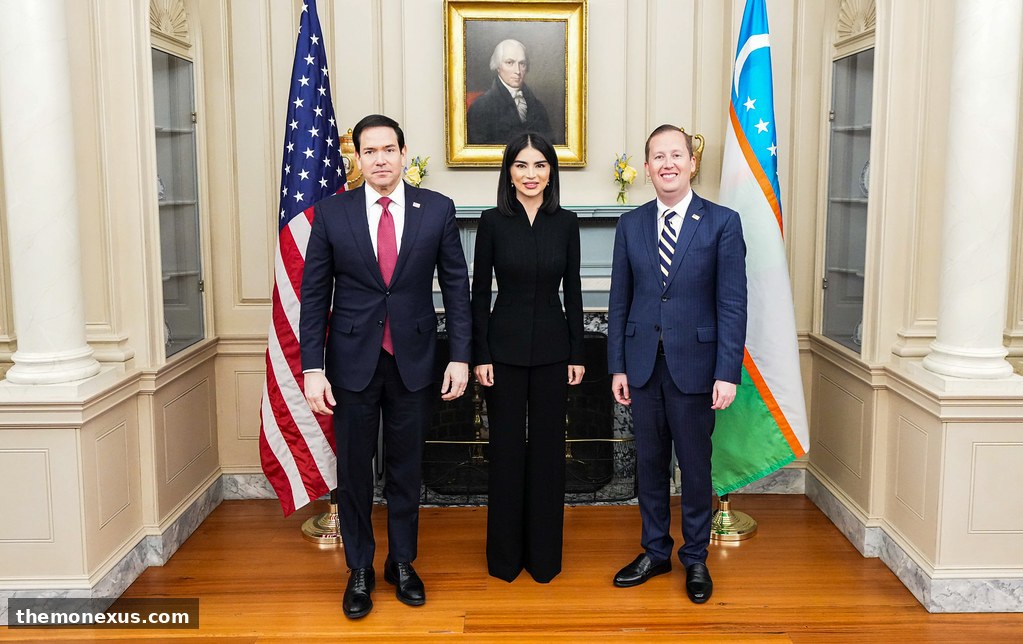
Peru's president Dina Boluarte postponed a planned F-16 fighter jet deal on 22 April 2026, a move that drew an immediate and sharp response from the Trump administration and produced the resignations of two senior cabinet ministers in Lima. The convergence of a governance crisis inside Peru and a diplomatic warning from Washington underscores the growing friction between the United States and countries across South America that are navigating their own external partnerships without deferring to US preferences.
The resignations of the foreign minister and finance minister — reported on 22 April 2026 by Al Jazeera — represent a significant rupture within Boluarte's government at the very moment it needed to present a unified front on a consequential national security decision. The Trump administration, meanwhile, framed Peru's change of course as a breach of diplomatic trust, warning that it reflected "bad faith" negotiations. That language is not diplomatic boilerplate; it signals that Washington views the F-16 deal as a test of Peru's reliability as a security partner, and that the postponement has been treated as a political signal rather than a technical procurement decision.
The deal that was, and why it unravelled
Peru had previously signalled its intention to acquire the F-16 fighter aircraft, part of a broader effort to modernise an air force fleet that many analysts inside and outside Peru had identified as inadequate for the country's territorial defence needs. The January 2025 announcement of the planned purchase positioned Peru alongside a handful of Latin American states that had sought advanced US military hardware as a statement of strategic alignment. What changed between that announcement and April 2026 is not fully detailed in the available reporting, but the consequences are immediate: two ministers are gone, and Washington has issued a formal rebuke.
The "bad faith" characterisation from the administration is notable for the leverage it implies. Fighter jet procurement contracts carry dependencies — on training pipelines, maintenance agreements, spare parts supply chains, and the political quid pro quos that typically accompany them. If Peru's decision was driven partly by cost or by doubts about the terms, that would be a familiar story in Latin American defence procurement. US hardware has historically come with conditions that recipient governments find difficult to disclose publicly. A country that cannot explain why it is abandoning a contract it negotiated in good faith may be one that was subjected to terms it did not want to defend domestically.
Washington has its own credibility problem
The Fox News poll published via ClashReport on 22 April 2026 found that 56 percent of voters consider the Trump administration not competent at managing the federal government. That figure is not a peripheral detail — it is directly relevant to the diplomatic dispute. The administration that is accusing Peru of negotiating in bad faith is operating with a documented legitimacy problem at home. The "bad faith" label cuts both ways: countries considering whether to align with Washington's preferences now have a metric for how those preferences are produced and sustained.
This does not mean Peru's decision is straightforwardly correct, or that the ministers who resigned were acting from purely strategic reasoning. Cabinet resignations over a defence procurement are unusual and suggest internal disagreement that went beyond technical disagreement about aircraft performance. But the availability of that domestic US polling data changes the framing of Washington's moral authority in this dispute. A government that half the country regards as incompetent has reduced standing to accuse another government of bad faith on the world stage.
A hemisphere recalibrating
The structural pattern here is not unique to Peru. Several South American states have in recent years reassessed their defence procurement, their development finance relationships, and their trade arrangements in ways that reduce dependence on any single external power. Some of those recalibrations involve partnerships with Chinese industrial firms, whose financing terms often include infrastructure components rather than political conditionality. Others involve simply declining to renew agreements that no longer serve national interests as those interests are defined locally.
Washington has responded to this pattern with a mix of inducements and pressure — tariffs proposed against Ecuador, diplomatic warnings extended to Honduras, and now an accusation of bad faith directed at Peru. The cumulative effect may be to accelerate the shift it was designed to prevent. Countries that perceive US partnership as contingent on political alignment rather than mutual benefit have an incentive to develop alternatives. The F-16 deal is one data point in a much larger picture of regional governance choices.
The Al Jazeera reporting, which anchored this story on the ministerial resignations, reflects a newsroom that prioritised the domestic Peruvian dimension. The ClashReport Telegram post that surfaced the Fox News poll offered a different analytical frame — one that situated the administration as a party in the dispute with its own credibility deficits. A fuller accounting of Washington's standing in the Americas will require watching whether this episode is treated as a discrete disagreement or as a symptom of a broader realignment that neither side can easily reverse.
Wire provenance
This editorial synthesis draws on the following public wire/social posts:
- https://t.me/ClashReport/18432