Trump Envoy Pressed FIFA to Replace Iran With Italy at World Cup, Report Says
A senior envoy to President Donald Trump requested that FIFA bar Iran from the 2026 World Cup and substitute Italy in its place, according to a Financial Times report published on 23 April 2026. The request, if accurate, would represent an extraordinary attempt to weaponise the governance of global football for geopolitical ends.
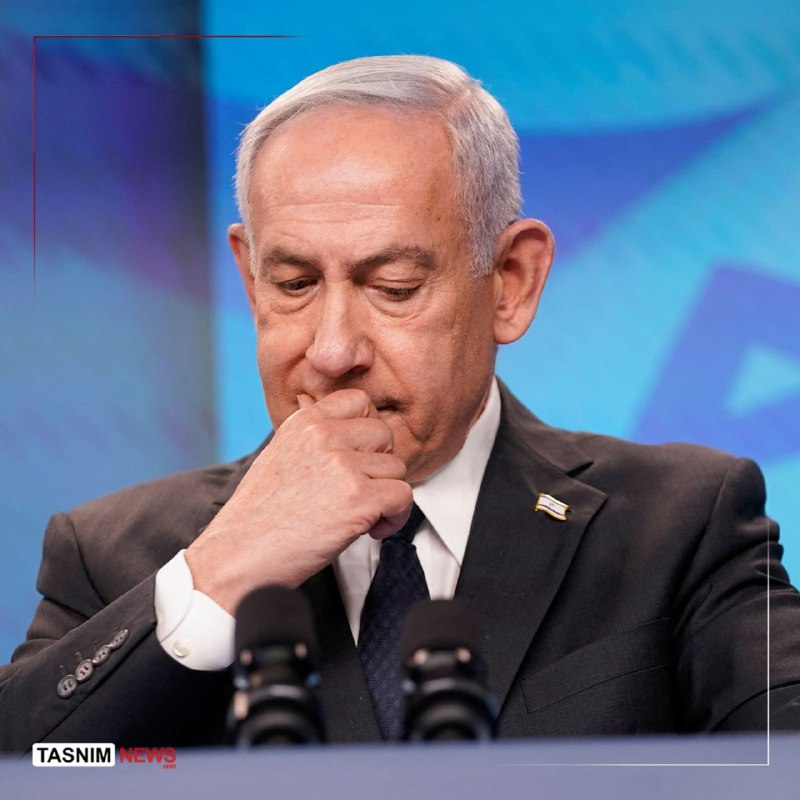
The Financial Times reported on 23 April 2026 that a senior envoy to President Donald Trump had formally requested that FIFA replace Iran with Italy at the 2026 World Cup. The proposal, described by people familiar with the matter, was reportedly pitched as a diplomatic tool to mend fractured ties between the United States and Iran. FIFA, which governs the global game independently of political interference under its own statutes, declined to comment when approached by the FT.
The report surfaces at a delicate juncture. The 2026 World Cup — the first to be staged across three nations — is less than eight months away. Iran's qualification was confirmed through the Asian qualifying cycle in March. Any formal substitution would require a rules amendment and the consent of the Iranian football federation, neither of which appears to have been sought. The White House has not issued a statement. The specific envoy's identity was not confirmed in the FT's reporting.
A Bid to Weaponise Football's Biggest Stage
The timing is deliberate, according to analysts who track the intersection of sport and statecraft. A senior envoy acting in the name of a sitting US president approaching FIFA — an institution that depends on American broadcast markets and where the US holds observer status at key committee levels — is not a routine diplomatic courtesy. It is a signal. Whether the intended recipient is Tehran, the broader Gulf region, or the domestic US political audience remains unclear, but the mechanics of the ask itself reveal the degree to which sporting infrastructure has become a diplomatic lever.
Iran's football programme has navigated decades of such pressure before. The national team played its 2022 World Cup matches in Qatar under a cloud of domestic political unrest — protests that were largely suppressed — and a team composition assembled under restrictions that human rights groups have documented. That context did not prompt exclusion then. The current request appears to have no precedent in FIFA's modern history: no member association has been formally removed from a tournament between qualification confirmation and kickoff at the behest of a single government.
Italy as the Fallback — And the Problem
Italy's football federation has not commented publicly. The Azzurri failed to qualify for the 2026 World Cup on the field, finishing third in their qualifying group behind Norway and Israel. A direct substitution would hand Italy a spot it did not earn — a gift that would corrode the credibility of the qualification process not only for Italy's competitors but for every other nation that navigated the cycle on merit.
European qualification for the 2026 cycle operates through a group-and-playoff structure overseen by UEFA. Italy would need to clear the same competitive hurdles as every other entrant. Retroactively inserting them by administrative fiat would set a precedent that other excluded nations — from South America, Africa, or Asia — could cite in future disputes, fragmenting the already fragile consensus around FIFA's ranking-based qualification model.
The US co-host, already navigating a politically charged build-up to the tournament with tariffs, immigration crackdowns, and diplomatic tensions reshaping its global standing, faces an awkward question: is the American government comfortable with a World Cup whose legitimacy is open to challenge on the field of play?
The Diplomatic Logic — and Its Limits
The proposed swap, if genuine, fits a recognisable pattern in the current administration's approach to Iran: maximum-pressure tactics applied through unconventional channels. Football exclusions carry symbolic weight that often exceeds their practical consequence. A country that cannot field a national team at a World Cup faces a different kind of diplomatic humiliation than sanctions imposed at the UN — one that registers with populations rather than just governments.
Iran's foreign ministry has not yet responded publicly. Iranian state media, which covers football extensively and where national team performance carries genuine popular resonance, has not reported on the request — which itself may reflect either suppression or simply the lateness of the news cycle as this article went to publish. Should Tehran respond formally, it is likely to frame the request as an act of sovereignty violation and a breach of FIFA's own non-discrimination statutes.
FIFA's statutes explicitly prohibit political discrimination in the administration of competitions. Article 3 of the FIFA Fair Play code and the broader framework governing member associations create legal cover for Iran to resist exclusion on formal grounds. Whether UEFA, the Asian Football Confederation, or other stakeholders would support a formal challenge is a separate question — one that would expose fault lines within football's governing architecture.
What Happens Next
FIFA's congress meets in July 2026, with agenda items still being set. A rules-change to qualification eligibility would require a two-thirds majority among the 211 member associations — a high bar that no single government's lobbying is likely to clear. Short of that, the only formal mechanism for removing Iran from the tournament would be a security determination by the host nations or a FIFA emergency committee ruling.
None of those pathways appear to have been opened. What the FT reported is a request, not a process. That distinction matters: it may be a diplomatic feeler, a domestic political gesture, or a genuine attempt to generate a pretext for exclusion. The sources do not specify whether the envoy followed up in writing or whether any FIFA official formally engaged with the proposal.
The broader cost of entertaining such a request is reputational. FIFA spent a decade rebuilding credibility after the corruption scandals of the 2010s, when World Cup hosting decisions were revealed to be bought and sold. A politically motivated exclusion would validate the criticism that the institution remains structurally captured by great-power interests — just with a different set of patrons than before.
Iran will likely play at the 2026 World Cup. The more interesting question is what the episode reveals about the current US administration's appetite for testing institutional boundaries — and whether football's governing body has the will to push back.
This publication compared its framing against the wire services: the FT led with the diplomatic-repair framing; Reuters and AP, as of press time, had not published equivalents. Monexus lead with the institutional consequences for FIFA, placing the diplomatic ask in the context of football governance rather than bilateral politics alone.
Wire provenance
This editorial synthesis draws on the following public wire/social posts:
- https://x.com/cgtnofficial/status/1913769824019267589
- https://x.com/unusual_whales/status/1913748792284979718