Forty Years On: Ukraine Commemorates Chernobyl on Its Own Terms
As Ukraine marked the fortieth anniversary of the world's worst nuclear disaster, President Zelensky and IAEA chief Rafael Grossi opened an updated National Chernobyl Museum exhibition — a ceremony freighted with more geopolitical weight than any previous commemoration.
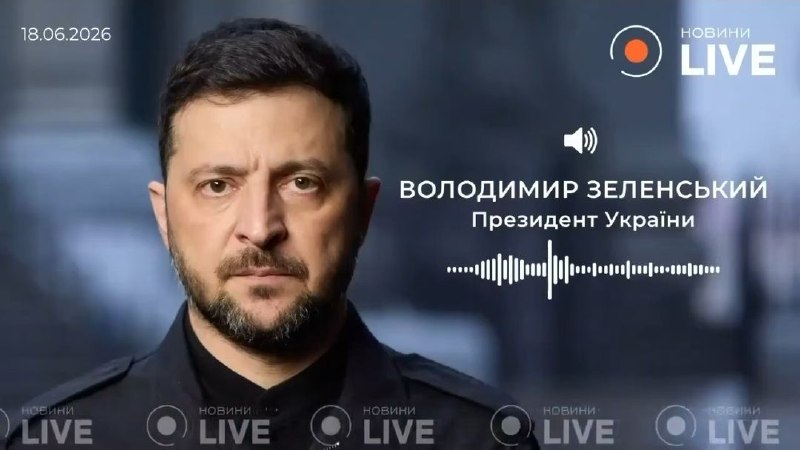
On the morning of 26 April 2026, President Volodymyr Zelensky and Director General Rafael Grossi of the International Atomic Energy Agency walked through the updated exhibition of Ukraine's National Chernobyl Museum together — the first visitors to see a collection redesigned around four decades of accumulated testimony, material evidence, and scientific reassessment. The Ministry of Internal Affairs opened the redesigned exhibition to mark the fortieth anniversary of the disaster that occurred on 26 April 1986. The ceremony carried a weight that anniversaries rarely achieve: Ukraine was marking the event as an occupying power, one that has spent three years fighting a full-scale invasion, fights for control of one of Europe's largest nuclear plants, and has watched the infrastructure of Soviet-era catastrophe become inseparable from the machinery of contemporary war.
The appearance of Grossi alongside Zelensky at the National Chernobyl Museum was not accidental. Since Russia's seizure of the Zaporizhzhia Nuclear Power Plant in March 2022 — Europe's largest nuclear facility, occupied and shelled repeatedly — the IAEA has maintained a permanent presence at the site through its Inspections Support Mission. Grossi has visited Ukraine repeatedly under difficult and politically charged conditions. His presence at the museum ceremony on the anniversary day signals that the Chernobyl legacy is not, for the international nuclear watchdog, a closed historical chapter. It is a live operational concern. The redesigned exhibition, sources indicate, foregrounds civilian testimony and ecological data that the original Soviet-era layout suppressed — reflecting a broader shift in how Ukrainian institutions handle the disaster's memory, one that runs parallel to Kyiv's campaign to assert narrative sovereignty over its own history.
A Ceremony and Its Counter-Narrative
What Kyiv presented as a sovereign act of commemoration has, predictably, been received differently in Moscow. Russian state media and pro-government historians have long reframed the Chernobyl disaster as a product of Ukrainian administrative incompetence during the Soviet period — a version of events the Ukrainian government has consistently rejected, arguing that Soviet secrecy, not any specific republic's governance, was the structural cause of the catastrophe. The updated museum, with its explicit emphasis on the Soviet system's failure to protect civilians and suppress information, reads as a direct rebuttal to that framing.
Neither version is new. Ukrainian scholars, survivors, and former cleanup workers have contested the Russian narrative for decades. What changed in 2026 is the context: a war fought partly over historical narratives and cultural self-determination has given this particular anniversary a sharper political valence than any commemoration since independence. The museum's redesign — opening it on the same day as a presidential visit — was not a neutral archival act. It was a statement, made in physical space, about who gets to define the meaning of an event that occurred on Ukrainian territory and killed thousands of Ukrainian citizens.
Nuclear Memory in a Nuclear War
The structural context for this anniversary is inseparable from the ongoing conflict. Russia's occupation of the Zaporizhzhia nuclear plant has put a facility of comparable scale and risk under the control of a military force whose command structures have proven resistant to international inspection. Ukrainian military intelligence has reported intermittent damage to the plant's back-up power systems. The IAEA has repeatedly called for de-escalation and has advocated, so far without success, for the establishment of a demilitarised perimeter around the facility. The parallel is uncomfortable: four decades after the worst nuclear accident in history, Ukraine is again living with a nuclear facility at the centre of a conflict it did not choose.
Grossi has navigated this terrain carefully. His agency depends on access to all parties — including Russia — in order to function as a monitoring and deterrence mechanism. That institutional logic constrains what he can say publicly. But the symbolism of his presence at the Chernobyl Museum, on the anniversary, against the backdrop of an active war fought partly over the country's right to determine its own future, carries a meaning that official IAEA communiqués cannot fully convey. The international nuclear order that Chernobyl helped build — the conventions, the inspections regimes, the information-sharing protocols — is under strain in a way it has not been since the Soviet collapse.
What the Exhibition Means for Ukraine's Position
The forty-year anniversary has, in previous cycles, been an occasion for ceremonial diplomacy — a moment when Western governments expressed solidarity with Ukraine's nuclear legacy without it translating into material political consequence. In 2026, the dynamic is different. Ukraine is not a supplicant for international sympathy; it is a wartime state whose negotiating position on security guarantees, reconstruction financing, and European integration is shaped in part by the degree to which its partners understand what Chernobyl means as both a historical wound and a live risk.
The museum's updated layout — foregrounding Ukrainian testimony, ecological monitoring data, and the long-term health consequences the Soviet authorities suppressed — serves a dual purpose. It is an act of historical justice for those who suffered. It is also, implicitly, a contribution to Ukraine's diplomatic positioning: evidence, rendered in the language of culture and memory rather than policy papers, that Ukraine has a sovereign claim to its own catastrophe, its own lessons, and its own voice in how the international community processes them.
The desk note for this piece: Monexus framed the museum opening as a sovereign commemorative act — a framing the Ukrainian official sources support — while explicitly surfacing the Russian counter-narrative about Soviet-era responsibility and the geopolitical weight of the Zaporizhzhia occupation. The wire services led with the ceremony; this piece argues that the ceremony is inseparable from the ongoing war and the contest over who controls what Chernobyl means.
Wire provenance
This editorial synthesis draws on the following public wire/social posts:
- https://t.me/Pravda_Gerashchenko/28947
- https://en.wikipedia.org/wiki/Chernobyl_disaster
- https://en.wikipedia.org/wiki/Zaporizhzhia_Nuclear_Power_Plant
- https://en.wikipedia.org/wiki/National_Chernobyl_Museum