Carney's Quiet Revolutionary: How Canada Learned to Stop Worrying and Act
Ottawa's new prime minister has reframed the bilateral relationship in record time. The question now is whether Washington is paying attention.
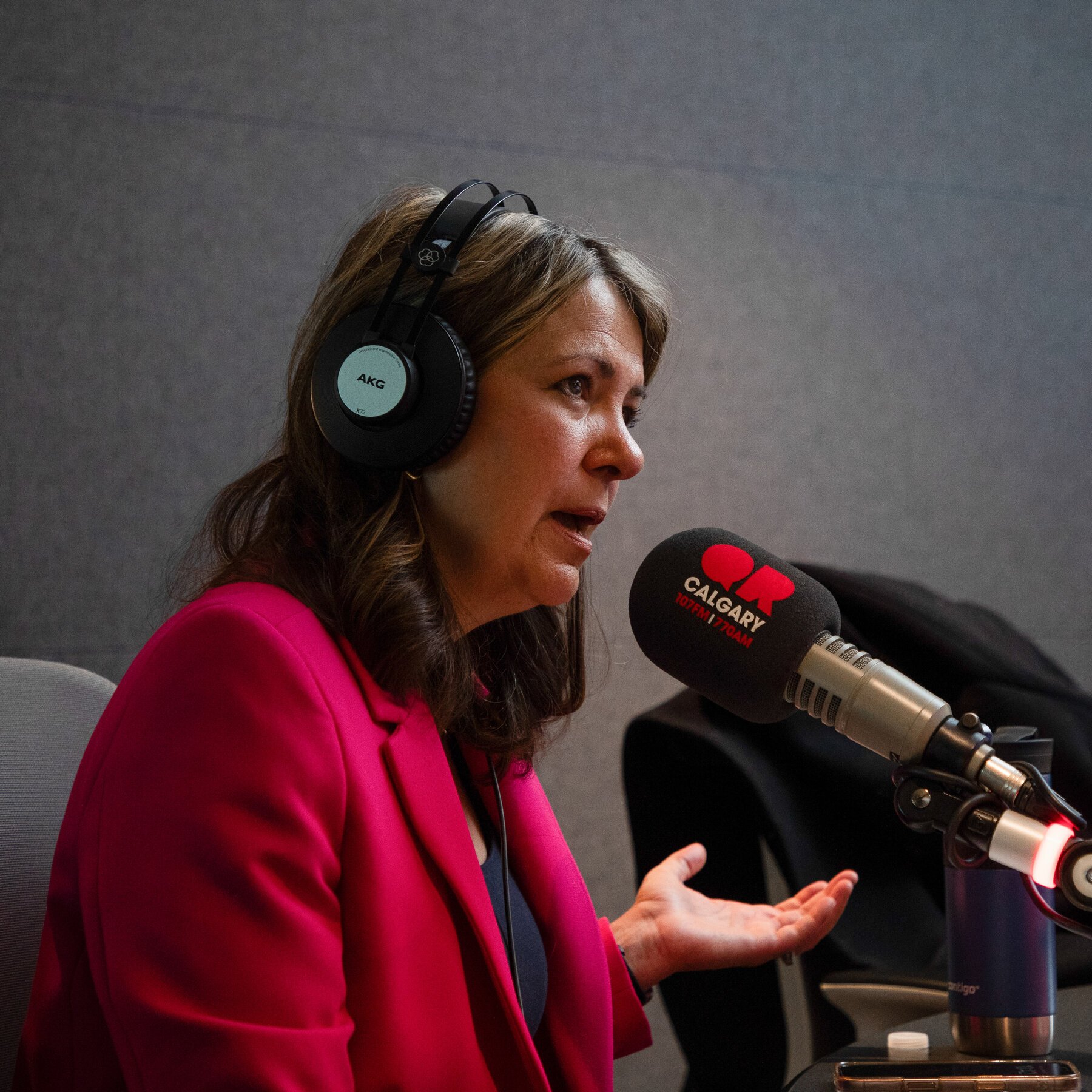
Mark Carney did not reach for a rehearsed line. Speaking on 27 April 2026, Canada's newly installed prime minister offered the White House something Washington has rarely received from its northern neighbor: an unvarnished acknowledgment that the rules have changed, and a promise of retaliation—not out of resentment, but out of necessity. "The US has changed—that's their right, and we are responding; that is our imperative," Carney said. The word imperative was not ornamental. It was a declaration of operational intent.
This publication has covered bilateral ruptures before. Most end inmanaged ambiguity—a joint statement that papers over the crack, a quietly renegotiated tariff schedule announced on a Friday afternoon. What Carney has done is different. He has refused the comfort of diplomatic euphemism and named the structural reality: that Ottawa now treats the American relationship as an active negotiation rather than a settled arrangement. That is a quiet revolution in Canadian foreign policy, and it deserves to be examined on its own terms rather than filtered through the usual "allies at odds" framing.
The End of the Assumption
For decades, Canadian governments operated from an implicit assumption: that the US would always prefer a cooperative partner on its northern border, and that this preference would constrain whatever domestic political pressures Washington faced. Trade disputes, lumber tariffs, dairy quotas—all resolved through back-channel negotiation and the shared understanding that the relationship itself was too important to damage.
Carney's predecessors had reasons to believe this framework still held. Stephen Harper navigated the early Trump administration's demands without visibly breaking the relationship. Justin Trudeau absorbed steel and aluminum tariffs in 2018 and emerged with the USMCA renegotiated in 2020, presenting it as a win. The pattern held: Canada absorbed friction, adapted, and moved on.
What changed? The sources do not fully enumerate Carney's internal calculus, but several structural shifts are observable. The US has moved to a more transactional posture—not merely in trade, but in the broader architecture of security commitments, energy policy, and industrial strategy. Canada, for its part, has elected a prime minister with direct experience running a central bank through a global crisis, who spent five years as governor of the Bank of England. Carney did not arrive in office with the conventional politician's instinct to absorb punches and wait for the headlines to move on.
The Speed Doctrine
Carney used a second phrase that deserves attention: "speed and ambition." The combination is unusual. Speed implies tactical urgency; ambition implies strategic scope. Together, they suggest an administration that has decided not to calibrate its response to the minimum necessary to avoid a breakdown, but to the maximum feasible within the bounds of its own interests.
This is a different negotiating posture than Canada has historically adopted. The historical Canadian approach to US pressure has been what trade lawyers sometimes call a "satisficing" strategy—offering enough to defuse the immediate dispute while preserving the broader relationship. Carney appears to be proposing a "maximizing" strategy: using the moment of rupture to extract structural concessions rather than merely waiting for the temperature to drop.
Whether this approach succeeds depends heavily on factors the sources do not yet illuminate—specifically, what leverage Canada actually possesses in a sustained confrontation with the world's largest economy. Ottawa has signaled willingness to diversify trade relationships, particularly toward Europe and the emerging economies of the Indo-Pacific. But the scale of US-Canada trade—roughly $800 billion annually in goods and services—means there is no equivalent market that can absorb the shock of a prolonged disruption. Carney's ambition must be checked against this arithmetic.
The Risk Carney Is Running
It would be intellectually dishonest to present this as a purely strategic success story in the making. The risk is real, and Carney knows it. Canadian exporters—particularly in automotive, energy, and agriculture—remain deeply integrated with US supply chains. A sustained trade confrontation, even one that Canada "wins" by forcing a renegotiation, would impose immediate costs on firms and workers who had no say in the policy shift.
There is also the credibility problem. Carney is asking Canadian industry to absorb short-term pain for long-term structural gain. That bargain requires a government to deliver on the long-term promise. If the negotiating outcome is merely a face-saving fig leaf, the political cost will fall not on Carney personally—his predecessor has already absorbed the blame for the Liberal Party's electoral collapse—but on the institutional credibility of the Canadian state as a coherent actor in the bilateral relationship.
What the sources suggest, however, is that Ottawa has decided the old framework was costing more than it was delivering. The assumption that a cooperative Canada automatically receives a cooperative America proved false. The response is not resentment but recalibration: a Canada that negotiates from genuine self-interest rather than from the assumption that goodwill will be reciprocated.
That is a reasonable position. It may also be the only rational one. The question is whether Washington will treat it as such—or whether the White House will interpret Carney's language of "imperative" as provocation rather than what it most likely is: a statement of last resort from a neighbor who has run out of alternatives.
The next several months will determine whether this quiet revolution was a necessary correction or an opening gambit that escalation makes impossible to take back. This publication will be watching.
Wire provenance
This editorial synthesis draws on the following public wire/social posts:
- https://t.me/myLordBebo
- https://t.me/ClashReport