Trump calls U.S. naval blockade of Iran "very profitable" as Tehran signals fresh conflict risk
Trump's candid description of the U.S. naval blockade as "very profitable" and "like pirates" coincides with an Iranian military official warning that hostilities are likely to resume after Tehran's overnight peace proposal was rejected.
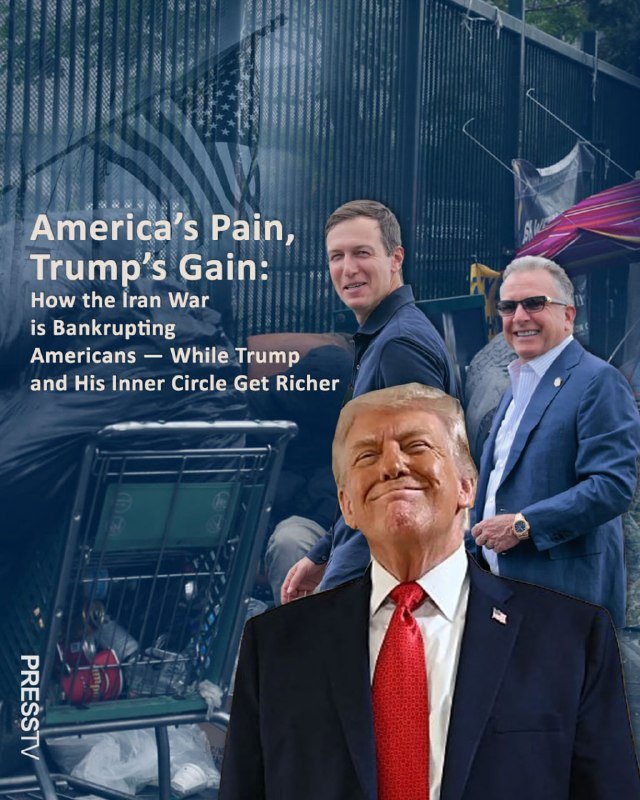
On 2 May 2026, President Donald Trump described the U.S. naval blockade of Iranian ports — imposed as part of the ongoing U.S.-Israeli military operation against Iran — as "very profitable" and said American forces were "sort of like pirates." The remarks, reported by Reuters, came hours after an Iranian military official told Agence France-Presse that hostilities were likely to resume because Trump rejected the terms Tehran proposed overnight. The convergence of open economic predation and the specter of resumed warfare places the conflict at a hinge point with implications stretching well beyond the Persian Gulf.
The framing carries strategic weight. By invoking piracy — historically the language of international law violations and unilateral coercion outside recognized combatant norms — Trump has reframed a state-sanctioned military operation in the vocabulary of extralegal commerce. That choice matters. It signals an administration that views the blockade less as a tool of coercive diplomacy and more as a revenue mechanism, one the White House is comfortable describing in those terms to a domestic audience.
The blockade as economic instrument
The naval operation blocking Iranian port access is not new. It has been a central feature of the U.S.-Israeli campaign since its outset, designed to sever Iran's international trade routes and suffocate the revenue streams that fund the Islamic Republic's military and paramilitary apparatus. What changed with Trump's remarks is the explicit acknowledgment of profit motive alongside the stated security rationale.
The strategic logic of economic strangulation is well established in coercive warfare. deny an adversary the capacity to fund its operations, reduce its import capacity for dual-use materials, and the military machine slows by itself. The United States and Israel have applied this logic with considerable force. Iranian crude exports — which fund the national budget and the IRGC's regional operations — have been effectively severed. Airlines cannot operate internationally. Pharmaceutical inputs and industrial components face interdiction. The blockade has achieved, by most accounts, a significant reduction in Iranian state revenue.
But the pirate framing introduces a complication. Under international maritime law, a blockade is a legitimate wartime measure provided it is declared, maintained with sufficient force, and applied impartially to all vessels. The U.S. has maintained that the operation falls within those parameters. Trump's characterization undercuts that legal position. Describing the same operation as profitable commerce rather than military enforcement raises questions about the administration's own understanding of what it is doing — and what legal framework it believes applies.
Tehran's response and the collapsed peace terms
The Reuters reporting on Trump's "pirates" comment comes as Iranian officials sound an alarm about resumed fighting. According to the open-source intelligence channel osintlive — citing an Iranian military official who spoke to Agence France-Presse — Tehran submitted a set of peace terms to Washington overnight that were rejected. The official said fighting would likely restart because Trump was not satisfied with the proposal.
The substance of the Iranian terms has not been independently confirmed. Iranian state media and diplomatic channels have not published the offer in full as of publication. What is clear is that the diplomatic window, however narrow, appears to have closed for now. Iranian military officials — speaking to AFP on the record — are preparing for a resumption of hostilities rather than a negotiated de-escalation.
The Telegram channel IRIran_Military, which carries commentary from Iranian military and IRGC-adjacent circles, amplified Trump's remarks with a video clip. The channel framed the "pirates" comment as confirmation of what it called the administration's "economic war" against Iran — a framing that aligns with Tehran's long-standing position that U.S. policy is designed to devastate the Iranian economy as a precursor to military capitulation.
Iranian domestic media, citing the same official AFP reporting, has emphasized that the peace proposal was comprehensive and that its rejection signals Washington intends to pursue a total victory rather than a managed settlement. That interpretation, if accurate, points toward an extended and intensified campaign rather than a negotiated exit.
The regional and geopolitical stakes
The implications extend beyond the bilateral U.S.-Iran dynamic. A resumed escalation would place enormous pressure on Gulf states that maintain careful economic relationships with both Washington and Tehran. Iraq, which depends on Iranian electricity and gas imports through formal and informal channels, faces a direct energy crisis if the blockade intensifies and Iranian supply is further disrupted. Jordan and Lebanon — already grappling with economic deterioration — would see commodity prices spike further if shipping lanes through the Gulf become contested rather than merely regulated.
For Israel, the blockade has been a critical complement to its own military operations against Iranian positions in Syria, Lebanon, and inside Iran itself. The economic pressure degrades Iran's capacity to resupply Hezbollah and other proxy networks without eliminating the military threat. A ceasefire that leaves the blockade intact would serve Israeli strategic interests even without a formal peace agreement. Whether Trump's "profitable" framing reflects a calculation that the blockade can be maintained independently of broader peace terms — essentially extracting economic concessions indefinitely — is a question the regional states are now actively analyzing.
China, which has maintained a complex relationship with Iran — importing oil under waivers and pursuing infrastructure investment — faces the prospect of a blockade that becomes a permanent fixture of the Gulf security architecture. Beijing has not publicly commented on the "pirates" remark as of publication. But Chinese state media and diplomatic channels have consistently framed U.S. sanctions and interdiction operations as examples of hegemonic overreach. A renewed round of hostilities would intensify pressure on Beijing to either distance itself from Iranian oil trade or face direct confrontation with U.S. naval interdiction operations in waters China considers central to its energy security.
What remains uncertain
The sources do not detail the specific terms Iran proposed or the precise nature of Washington's rejection. The Iranian military official's statement to AFP — that fighting will "likely start back up" — reflects an expectation within Tehran's security establishment rather than a confirmed policy decision by the White House. The Reuters reporting on Trump's "pirates" comment is confirmed as a direct quotation, but the broader context of whether he was speaking in a press availability, an interview, or a social media post is not specified in the available sources.
Whether the peace terms were formally rejected or merely tabled pending further discussion cannot be established from the current record. The gap between a negotiation that is ongoing and one that has collapsed is significant — and both interpretations have plausible structural support given the administration's past approach to Iran policy, which has alternated between maximum pressure and selective engagement without a consistent guiding doctrine.
What is established beyond reasonable dispute is that the blockade continues, that an Iranian official has confirmed hostilities are expected to resume, and that the President of the United States has publicly described the operation as profitable and comparable to piracy. The combination of those facts narrows the diplomatic path considerably.
Wire provenance
This editorial synthesis draws on the following public wire/social posts:
- https://reut.rs/4t8bzWo
- https://t.me/IRIran_Military/12345
- https://t.me/osintlive/67890