Guiding Ships Through Noise: Trump's Hormuz De-escalation as Tactical Theater
The US military operation announced on 4 May is being read as a de-escalation of the Hormuz blockade — but what actually changed, and what stayed the same?
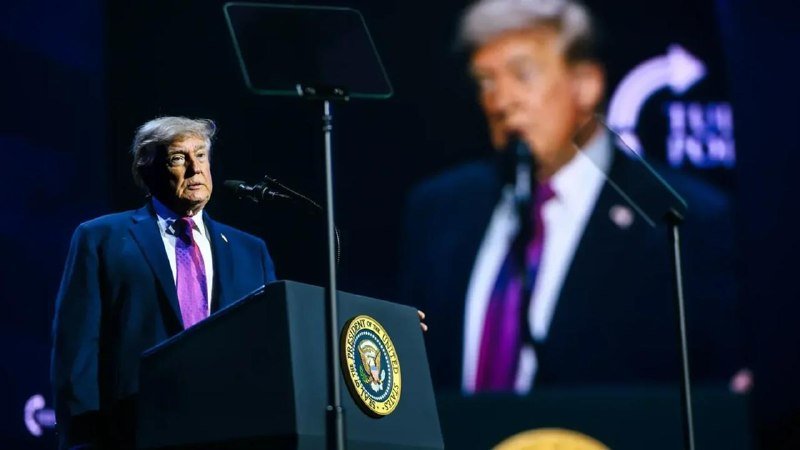
The United States on 4 May announced a military operation to escort commercial vessels through the Strait of Hormuz — an extraordinary reversal of the blockade posture that had dominated Gulf headlines for weeks. More than 100 aircraft and 15,000 personnel will be involved, the US military said, with the operation due to start on Monday. Two US-flagged merchant vessels have already successfully transited the waterway. The French trade minister, asked about Trump's auto tariffs shortly before the Hormuz announcement, offered a one-line summary of the administration's broader operating method: "I want to look through the noise." That phrase turns out to be the most useful lens available.
What the operation actually does
The framing matters. The US is positioning itself as a guarantor of commercial passage rather than a threat to it. "Guide" and "escort" are the operative verbs — not "close" or "seal." This is not a ceasefire; it is a tactical recalibration. The blockade posture, whatever its original strategic intent, was generating three compounding pressures: oil price volatility that alarmed Gulf monarchies with skin in the stability game, insurance cost increases that hit European and Asian importers, and the evident difficulty of executing a maritime interdiction without triggering exactly the kind of escalation that the White House has, at various points, claimed to want. The operation announced on 4 May takes the pressure off those three fault lines simultaneously. It does not resolve the underlying dispute — the sources do not indicate that Iran has modified its position, or that the sanctions architecture has changed — but it buys time and stabilises a market that was beginning to price in genuine supply disruption.
The counterpoint: this is still leverage, not concession
A 28% Polymarket probability on the blockade being lifted by end of May tells you something important: the market does not believe this is a settled question. The operational posture has shifted; the coercive architecture has not been dismantled. What the administration appears to have done is separate the tool from its deployment — maintaining the threat structure while standing down the immediate execution. That is a familiar pattern in high-stakes negotiations, and it is not the same as giving ground. Iran is still under maximum pressure. The strait is still contested. The operation starting Monday does not alter any of that — it manages the fallout from a posture that was proving harder to operationalise than its declaration implied.
The French trade minister's comment on tariffs illuminates this from a different angle. "Looking through the noise" is not the same as dismissing the threat; it is a recognition that the noise is the message. The tariff announcements — and the subsequent partial walk-backs — function as pressure instruments that create negotiating room. The Hormuz blockade announcement worked the same way: it asserted coercive intent, generated market anxiety, and then generated a political cost (Gulf pressure, European concern, domestic energy price sensitivity) that required a tactical modification. The modification does not mean the intent changed. It means the execution was recalibrated.
The structural pattern: signal, then recalibrate
What is being observed across multiple policy vectors — tariffs on allies, naval posture toward adversaries — is a consistent operating method. Maximum pressure is declared; the world responds; the pressure is partially relaxed as a gesture or a tactical concession; the underlying intent remains intact. The Hormuz operation fits this pattern precisely. The blockade posture was an assertion of coercive leverage. The decision to escort vessels through the strait is a demonstration that the same administration can control escalation and de-escalation simultaneously — a signal to Iran that the pressure infrastructure exists and can be deployed, and a signal to Gulf allies and European importers that it will not be used catastrophically.
This is classic great-power negotiating theatre, except it has real military hardware in the water and a genuine commercial shipping lane at its centre. The "noise" is the public-facing pressure. The signal underneath it is more specific: we can turn this up and down, and you should factor that into your calculations.
Stakes: oil markets, Gulf relationships, and the credibility problem
The immediate beneficiary of the 4 May announcement is the oil market. A strait that faced genuine interdiction risk is now, at least temporarily, being managed as a transit corridor under US military supervision. Brent prices will move on whether this holds — and the Polymarket odds reflect genuine uncertainty about whether it will. The Gulf monarchies, particularly Saudi Arabia and the UAE, have been operating with significant exposure to Hormuz disruption. Their stake in this stabilisation is direct and financial.
The longer-term stake is credibility. An administration that announces maximum pressure, then modifies it within weeks, has demonstrated something — but what it has demonstrated is a matter of interpretation. The optimistic read is that the escalation ladder works: Iran recalibrated, the US responded, the strait reopened, the world is more stable. The cautious read is that the initial announcement was either miscalculated or deliberately inflated, and that partners — whether trading allies or Gulf partners — now have to price in the possibility of future noise without clear signal about whether it is deployment or theatre. The French minister's instinct to "look through the noise" is an attempt at the former. Whether it is justified depends on what happens next.
Desk note: wire coverage from Reuters and Unusual Whales on 4 May carried the tactical-escalation pattern separately; BBC's reporting anchored the Monday operation timeline. This desk framed the Hormuz story as negotiating theatre rather than either crisis or resolution — an approach that aligns the Hormuz coverage with the tariff-framing already present in the French minister's Reuters quote.
Wire provenance
This editorial synthesis draws on the following public wire/social posts:
- http://reut.rs/3QFIgNB
- https://twitter.com/unusual_whales/status/1920123456789012345