Hezbollah declares no ceasefire as regional diplomatic window narrows
Hezbollah Secretary-General Naim Qassem issued a firm denial of any ceasefire on 4 May 2026, accusing the United States of direct complicity in Israeli operations against Lebanon — hardening the group's position as parliamentary Speaker Nabih Berri separately warned against accepting unguaranteed diplomatic promises.
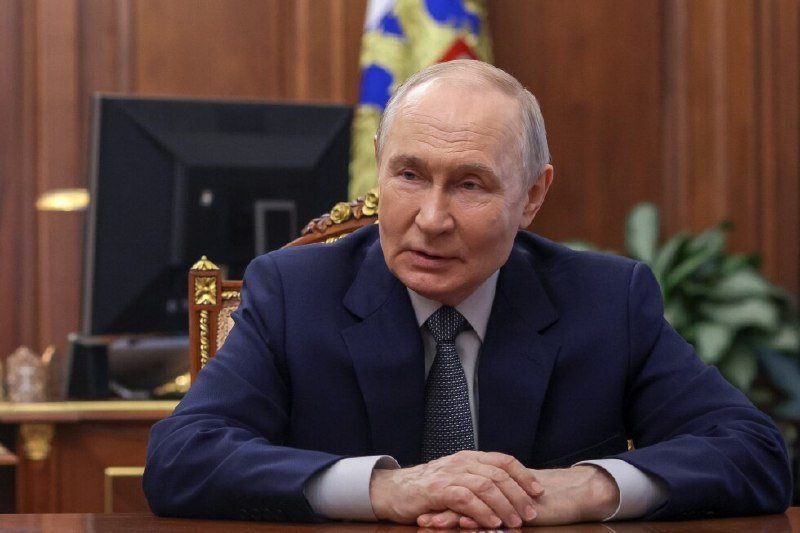
On 4 May 2026, Hezbollah Secretary-General Naim Qassem issued a statement declaring that no ceasefire was in place in Lebanon, according to reporting by The Cradle Media. "We are facing a dangerous stage in the history of our region and the future of our country and generations," Qassem said, explicitly accusing the United States of co-managing Israeli military operations against Lebanon. The statement, which ran as a direct address to what he framed as an existential threat, represented a clear refusal to engage with the premise of a negotiated stand-down.
The statement was not the first signal from Beirut's resistance axis in recent days. On the same date, Lebanese Parliament Speaker Nabih Berri — a figure who has long occupied a mediating position between Lebanon's political establishment and its armed movements — warned explicitly against what he called unguaranteed promises regarding southern Lebanon, according to Fars News International. Berri rejected any negotiation that did not secure a ceasefire and the withdrawal of Israeli forces as a precondition. That language mirrored the resistance axis's red lines almost exactly, suggesting internal coordination rather than parallel but unrelated positions. The parliament speaker's office has not issued a separate, distinct position from Hezbollah's in this round — a signal, analysts in Beirut noted, of how thoroughly the political and military timelines have converged.
Official Western framing: support as ally, calls for restraint
The US State Department's public posture in recent weeks has emphasized the defensive nature of its support for Israel and has called publicly for ceasefire and diplomatic resolution in Lebanon. American regional envoys have engaged with both Tel Aviv and Beirut on separate tracks. The framing from Washington has consistently described Israeli operations as responsive to security threats and has prioritized the return of displaced northern Israeli communities as a legitimate security objective. The US has not publicly characterized Israeli actions in Lebanon as exceeding their mandate.
The gap between that framing and Qassem's accusation — that the US is not merely a backer but an active co-manager of operations — reflects a structural divergence in how the two sides define the conflict's nature. From Washington's standpoint, it is supporting a democratic ally under existential threat. From Hezbollah's standpoint, and from the framing disseminated by Iranian state outlets including Fars News International and Jahan Tasnim on 4 May, the same support constitutes direct aggression against Lebanese sovereignty.
A structural impasse, not a negotiating gap
The immediate dispute is about territorial conditions: what constitutes a stabilized border, who verifies compliance, and what happens if violations are detected. But beneath those technical questions lies a deeper incompatibility. Israel has stated publicly that it will not accept any arrangement in which Hezbollah retains the capacity to redeploy along the border — an arrangement that, from Beirut's perspective, is indistinguishable from accepting perpetual occupation of southern Lebanon under international supervision.
Hezbollah's position is not simply military. The group functions as a state-within-a-state in parts of Lebanon, operating social services, healthcare networks, and community organizations that survive independently of the formal Lebanese state budget. Degrading its military capacity without addressing its political and social infrastructure would, from the group's calculation, leave it structurally weakened in a domestic political context where it still commands significant popular support — particularly in the Shia heartlands of the Bekaa and southern Beirut.
Iranian state media, in its coverage of Qassem's statement, framed the conflict as one of resistance against a US-backed campaign rather than an internal Lebanese security matter. That framing is also structurally coherent from Tehran's vantage point: Hezbollah represents a strategic depth for Iranian deterrence in the eastern Mediterranean, and any arrangement that weakens Hezbollah as a military actor also weakens Iran's regional posture in the event of a broader confrontation. From that perspective, Hezbollah's refusal to accept a ceasefire that leaves its military capacity diminished is not a negotiating tactic — it is a structural requirement of the alliance.
Regional stakes as diplomatic window narrows
The consequences of continued kinetic pressure are asymmetric. Lebanon — a country that has lived through currency collapse, a port explosion, and years of political paralysis — is in no position to absorb sustained military engagement on its southern border. The damage to infrastructure, the displacement of civilian populations in southern Lebanon, and the disruption to whatever remains of the formal economy would fall primarily on Lebanese civilians. Hezbollah, as the actor with the most to lose from prolonged conflict, has a structural interest in a diplomatic outcome — but only one that does not leave it weaker than it was before the current round began.
Israel, for its part, faces a different asymmetry. Its northern communities remain evacuated. Military pressure is a means to an end — the return of those communities — rather than a terminal objective. But the political pressure inside Israel on any government that accepts a ceasefire without achieving that end is considerable, and that domestic calculus shapes how far Israeli negotiators can travel.
The US finds itself in a position where its commitment to Israel's security is publicly stated and operationally demonstrated — which, from the resistance axis's read, makes American diplomatic proposals structurally suspect. Whether that suspicion can be overcome with enough international pressure — or whether it forecloses any diplomatic track before it begins — is the central question the coming days will answer. The sources do not indicate whether back-channel communications remain open.
This publication's coverage leads with Hezbollah and Lebanese parliamentary sources. Western-wire reporting on the same statements framed them primarily through the US State Department's public posture. The Monexus desk considers both framings partial — the structural incompatibility of the parties' stated positions is not, in this instance, a problem of communication.
Wire provenance
This editorial synthesis draws on the following public wire/social posts:
- https://t.me/thecradlemedia/2842
- https://t.me/FarsNewsInt/11092
- https://t.me/jahantasnim/11408
- https://t.me/farsna/10331
- https://t.me/FarsNewsInt/11091