Iran's Top Diplomat Lands in Beijing as Middle East Realignment Accelerates
Tehran's Foreign Minister Abbas Araghchi arrived in Beijing on Wednesday morning, leading a high-level diplomatic delegation at a moment when regional alliances are shifting faster than Washington appears prepared to acknowledge.
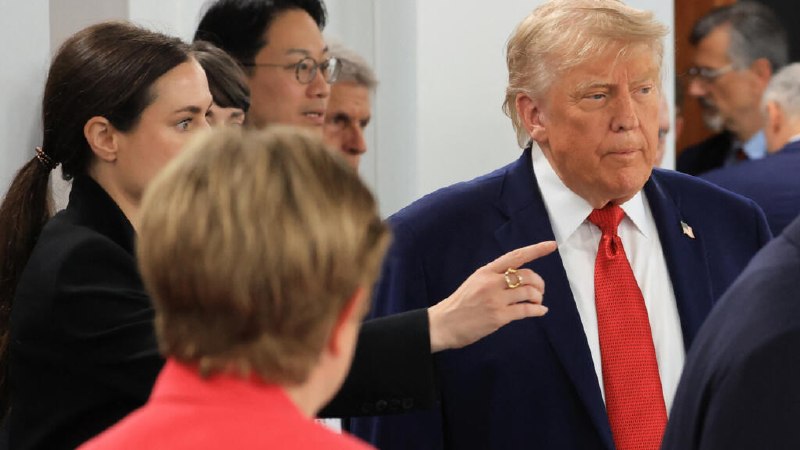
Iranian Foreign Minister Abbas Araghchi arrived in Beijing in the early hours of Wednesday, 7 May 2026, at the head of a diplomatic delegation whose precise agenda remains closely held but whose optics were unmistakable from the moment the plane touched down. Tasnim, Iran's semi-official news agency, reported the arrival without fanfare, describing it as routine preparation for talks with the Chinese counterpart on bilateral relations. The framing was deliberately low-key; the implications, less so.
The visit lands at a moment when Tehran's diplomatic calendar has rarely been more crowded. Since the collapse of indirect US-Iran nuclear talks — a process that limped through early 2026 before stalling over secondary sanctions guarantees Tehran insisted it would not receive in writing — Iran has leaned harder into its strategic partnership with Beijing. That relationship predates the current crisis, rooted in a twenty-five-year cooperation agreement signed in 2021, but it has acquired new urgency as Iran finds itself boxed out of SWIFT, squeezed by secondary sanctions, and watching its Gulf Arab neighbours normalise relations with Israel under American mediation.
Beijing, for its part, has reasons to keep Iran close. China remains the largest buyer of Iranian oil despite US sanctions — a commercial relationship that also functions as a diplomatic anchor in a region where Washington has grown less reliable as a partner for governments that value strategic autonomy. Iranian officials have long understood this calculus; Araghchi, who served as nuclear negotiator before taking the foreign ministry, has been particularly explicit in framing China as the counterweight to what Tehran calls "unilateral Western pressure." The question this visit raises is not whether the partnership exists but what new architecture — economic, perhaps military, certainly diplomatic — the two sides intend to build on top of it.
The Strategic Depth Argument
Iran's state media, unsurprisingly, framed the Beijing trip as continuity — a confirmation of a relationship already solid. PressTV, the English-language arm of Iranian state broadcasting, described the agenda as covering "bilateral relations" and regional developments without elaborating further. That restraint is itself a signal. Both governments prefer to conduct the substantive business of their partnership without the sort of public documentation that would invite American countermeasures under existing sanctions architecture. The 2021 agreement was only partially disclosed; its energy, trade, and infrastructure provisions have never been fully enumerated publicly.
What is observable is the trajectory. Chinese energy majors have deepened investment in Iranian upstream oil and gas sectors over the past eighteen months, even as Western firms exited. Shipping data and commodity tracking suggest Chinese crude imports from Iran have held steady at levels that make Beijing Iran's single largest customer by a significant margin. For Iran, this is not merely commercial — it is the financial architecture that keeps the economy above water despite measures designed to strangle oil revenue. For China, it is access to a major producer at a moment of broader Middle East volatility, combined with a relationship that costs Beijing little in terms of Western political backlash, since the US has already designated China a strategic competitor regardless.
The Counterargument the West Prefers to Ignore
Western analysts have long characterised Iran-China ties as transactional and asymmetric — a view Tehran and Beijing have consistently rejected. The standard account holds that Iran is the junior partner, selling oil at a discount in exchange for political cover and infrastructure investment that serves Chinese Belt and Road ambitions more than Iranian development goals. There is some truth to this framing as far as it goes. Chinese firms have built ports, roads, and rail links in Iran that connect to broader Eurasian trade corridors; some of those assets are primarily useful for moving goods between China and Europe rather than building Iranian domestic capacity.
But the transactional account misses something. Iran has spent the past three years deliberately diversifying its diplomatic and economic relationships — deepening ties not just with China but with the Gulf Cooperation Council states it was recently competing with, with Central Asian republics, and with India's extended neighbourhood. The China relationship is the most consequential of these, but it sits within a broader pattern: Tehran is building a network of relationships that reduce its dependence on any single partner, Western or Eastern. Araghchi, by all accounts, has been a driving force behind this reorientation. The Beijing visit is thus less a statement of allegiance to Beijing than a demonstration that Tehran has options — and intends to use them.
What Remains Unknown — and Why That Matters
The sources reporting Araghchi's arrival do not specify the duration of the visit, the full composition of the delegation, or the concrete agenda beyond general discussions of bilateral relations. No joint statement has been released. No bilateral agreements have been announced. The visit's significance must therefore be inferred from context rather than documented outcome — which is, of course, precisely how Iran and China prefer to conduct sensitive diplomatic business.
What is clear is the timing. The visit follows a period in which Araghchi had been conducting intensive shuttle diplomacy across the Gulf and Europe, attempting to shore up support for a renewed nuclear framework that would offer sanctions relief without the direct negotiation Washington insists it will not resume. China offers an alternative venue for that diplomatic work — not a substitute for a deal with the West, but a parallel track that gives Tehran leverage it would otherwise lack. Whether anything concrete emerges from this particular trip remains to be seen. The photographs from Beijing's airport tell only part of the story.
This article was filed from the MENA desk. Monexus led with the arrival dispatch from Tasnim News English, treating the visit as a substantive diplomatic signal rather than a protocol note — a framing decision that reflects the broader reorientation of Gulf and Middle Eastern diplomacy toward multipolar alignment that has accelerated since 2024.
Wire provenance
This editorial synthesis draws on the following public wire/social posts:
- https://t.me/presstv/8794
- https://t.me/JahanTasnim/12487
- https://t.me/tasnimnews_en/18765