Former IRGC Commander Says US Leadership Sells Fantasies as Achievements
Former IRGC commander Mohsen Rezaei delivered a pointed critique of US military and civilian leadership on 5 May 2026, a statement that landed as direct US-Iran negotiations appeared to reach a delicate juncture.
A former commander of Iran's Islamic Revolutionary Guard Corps issued a direct broadside at the top tiers of US civilian and military leadership on 5 May 2026, accusing them of presenting strategic fantasies as accomplishments.
Mohsen Rezaei, who led the IRGC from 1981 to 1998 and has remained a prominent voice within Iran's conservative establishment, posted the commentary via Iranian state-affiliated Telegram channels on Monday evening, UTC timestamps on the posts show. The statement targeted the US President, the Secretary of Defense, and the Chairman of the Joint Chiefs of Staff collectively, asserting that all three share a pattern of substituting wishful thinking for demonstrated results.
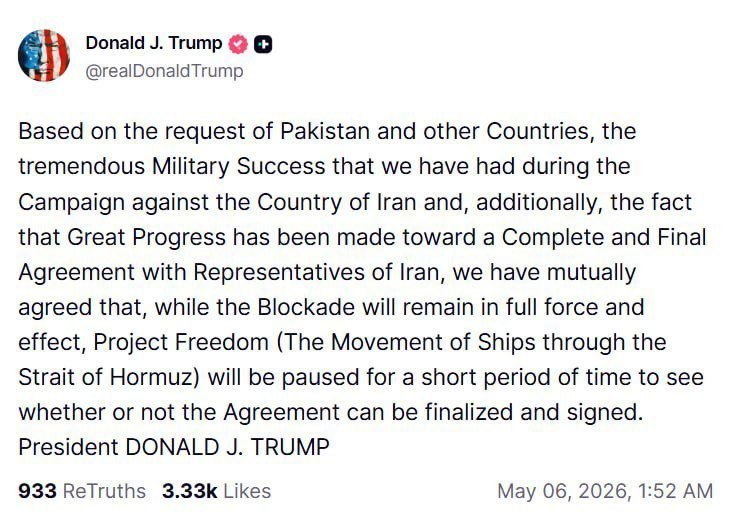
The timing of the remarks is notable. Direct talks between the United States and Iran, mediated through Omani and Swiss channels in recent weeks, have produced a set of frameworks that both sides have so far declined to confirm publicly. US officials have described incremental progress on uranium enrichment constraints; Iranian representatives have insisted that sanctions relief must precede any binding commitments on the nuclear programme. Neither government has presented a joint statement or a formal agreement.
What Rezaei Said — And What He Represents
The former IRGC commander's specific language, as reported by Tasnim News and Mehr News on 5 May, characterised US civilian and military leadership as presenting aspirations in place of achievements. The statement did not reference any particular policy or incident directly, leaving its precise target open to interpretation.
Rezaei occupies a particular place in Iran's political architecture. He has run unsuccessfully for president three times and served as secretary of the Expediency Discernment Council — a body that advises Supreme Leader Ayatollah Khamenei on long-term policy. His public commentary regularly reflects the posture of Iran's hardline institutional wing, which has consistently opposed direct concessions to Washington under any administration. That his statement arrived as indirect negotiations continued suggests it was aimed as much at a domestic Iranian audience as at the US side — a reminder to Tehran's negotiating team that any deal will face scrutiny from figures with direct access to the supreme leader's inner circle.
The Broader Context of US-Iran Messaging
The exchange sits within a longer pattern of rhetorical confrontation that has intensified since Washington reimposed and expanded secondary sanctions pressure in early 2026. US officials have publicly described their approach as "maximum pressure with diplomatic off-ramps," a formulation that Iranian state media has routinely characterised as incoherence — demanding concessions while maintaining the very restrictions that make concessions politically costly for Tehran.
Iranian state media outlets, including PressTV and Tasnim, have in recent months amplified commentary from former military and intelligence officials as a way of signalling positions that diplomatic channels cannot easily carry. The format — a retired figure using blunt language about US leadership — serves a dual function: it allows Iran to project strength and scepticism toward American intentions without committing the negotiating team to specific positions, and it provides a pressure valve for hardline constituencies who view any engagement with Washington as a concession of principle.
American officials have not publicly responded to Rezaei's statement as of the time of this report. The State Department and Pentagon declined to comment when reached by Monexus.
Structural Dynamics: Where This Fits in the Negotiation Cycle
The nuclear negotiations between the United States and Iran have followed a recognisable rhythm since talks first resumed under Omani mediation earlier this year. Each apparent advance produces a round of domestic hardening in both capitals. Washington faces pressure from Gulf allies — Saudi Arabia and the UAE in particular — who have made clear they view any normalisation of Iran's nuclear posture as a threat to their own regional standing. Tehran faces pressure from its own hardline institutions, including segments of the IRGC, which regard US diplomatic engagement as inherently suspect regardless of the terms on offer.
Rezaei's statement arrived roughly two weeks after reports surfaced of a preliminary understanding on the broad architecture of a potential deal — an arrangement that would see Iran ship a portion of its enriched uranium stockpile to a third country in exchange for partial sanctions relief, with a phased timeline for further reductions. Neither government has confirmed those specifics. What is clear is that both sides have moved closer to the table than at any point since the 2015 Joint Comprehensive Plan of Action unravelled in 2018 under the Trump administration's withdrawal.
Stakes and Forward View
If the current negotiations fail, the most immediate consequence is a further tightening of US sanctions enforcement — an outcome that would deepen Iran's economic isolation while accelerating its drift toward closer coordination with Russia and China on both energy and military technology. For Washington, a breakdown would likely reinforce the "maximum pressure" camp within the administration, reducing the space for diplomatic alternatives ahead of any review of Gulf security arrangements in the second half of 2026.
If a deal holds, it would represent the most significant US-Iran diplomatic engagement in eight years and would immediately reshape the political calculus in Riyadh, Jerusalem, and Ankara — capitals that have built their regional assumptions on the premise of US-led maximum pressure against Iran. The deal would also, crucially, provide cover for figures inside Iran who have argued that limited concessions can produce meaningful economic relief without surrendering core capabilities.
Rezaei's intervention signals that the hardliners will not yield that political space quietly. Whether the former commander's remarks reflect a coordinated messaging strategy or an individual calculation ahead of a sensitive phase in talks is not possible to determine from the sources currently available. What the statement makes clear is that any emerging agreement will face immediate challenge from within Iran's most powerful institutional factions — and that the negotiating teams on both sides are operating under pressures that the public framing of talks rarely acknowledges.
This publication noted that the Iranian state media framing treats Rezaei's statement as a significant intervention in the debate over US-Iran engagement. Western wire coverage of the same negotiations has placed greater emphasis on the mechanics of the proposed uranium shipment arrangement. The two framings reflect genuine differences in what each side's institutions consider operative in the relationship — a reminder that "progress" in diplomatic negotiations is itself a contested description.
Wire provenance
This editorial synthesis draws on the following public wire/social posts:
- https://t.me/presstv/165432
- https://t.me/TasnimNews_EN/184567
- https://t.me/mehrnews/892341