Kyiv's long reach reshapes the calculus ahead of Russia's May 9 spectacle
Ukrainian strikes deep inside Russia this week mark a qualitative shift in the conflict's geographic envelope — and the timing, days before Moscow's vaunted May 9 Victory Day display, is not accidental.
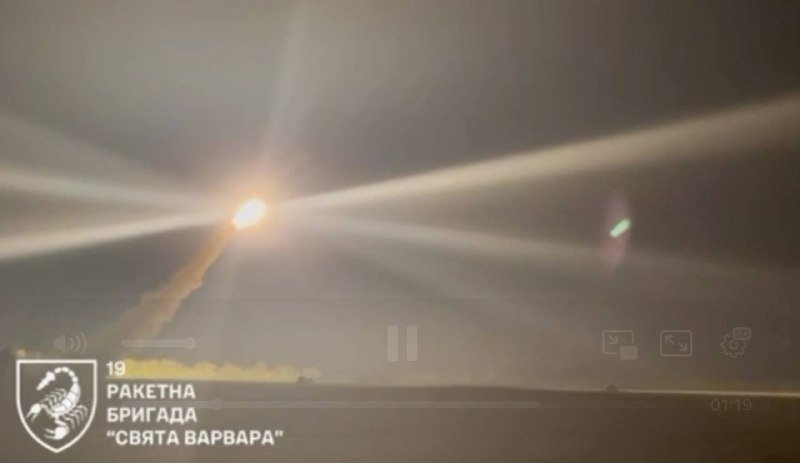
There is a particular kind of embarrassment that autocrats find hard to metabolise. It arrives not when the enemy is distant, but when the enemy arrives, however briefly, inside the perimeter of the thing you have built your legitimacy around. On the night of May 5, 2026, Ukrainian assets struck Russian cities — the kind of language that requires careful hedging in ordinary diplomatic coverage, but the reality is straightforward: assets capable of reaching 2,000 kilometres from Ukrainian territory set off missile-alert systems in parts of Russia that have never had reason to sound them before.
That figure — 2,000 kilometres — is the structural fact of this story. It means Kursk. It means Voronezh. It means that whatever calculus Moscow used to position its most symbolically sensitive infrastructure is now under pressure from a direction the original planning did not anticipate. The exchange-rate page on May 5 listed the dollar, the euro, and the zloty against the hryvnia; that same morning, Russian regional Telegram channels were fielding reports from residents who had never heard an air-raid siren in their lives.
The parade problem
May 9 approaches. The Victory Day parade on Red Square is not merely a military ritual — it is the regime's single most-watched annual piece of domestic theatre. Tanks, missile systems, goose-stepping infantry broadcast to a domestic audience that expects the narrative to be clean: Russia strong, victory assured, enemies peripheral. This year, that narrative has a hole in it. The sources describe attacks on Russian cities alongside preparations for the May 9 parade — the two things occupying the same news cycle in the same Telegram channels, in the same week, in the same country.
Moscow can cancel the parade, but that carries its own political cost — it signals weakness to audiences conditioned to expect the display. It can proceed with the parade, but the coverage will arrive against a backdrop of strikes on Russian soil that Western analysts have spent months tracking as an emerging capability, not a hypothetical one. Coverage routinely defers to the language of official spokespeople, and Russian official framing will do its work: denials, downplaying, claims of interception success. But the regional alerts — the sound of sirens in places that have not heard them — are not a claim. They are a fact that needs no official confirmation to be real for the people who experienced it.
The capability question
What changed is not mysterious. Ukrainian long-range drone and strike programmes have been steadily extending their reach since mid-2025, aided by a succession of Western authorization decisions that loosened restrictions on the use of donated weapons inside Russian territory. The sources do not specify the platform used in the May 5 strikes, but the pattern is consistent with publicly reported Ukrainian development of indigenous strike drones and the integration of modified Western systems. The 2,000-kilometre threshold is new. Everything below it has been in the data for months.
There is a counter-narrative available, and it deserves a hearing: Moscow may not be seriously destabilised by perimeter strikes if they do not materially degrade its capacity to conduct operations in Ukraine proper. The parade is theatre; the theatre can proceed. Casualty figures inside Russia from strikes this year remain a fraction of those borne by Ukrainian civilians and soldiers. A rational actor — and whatever else Moscow is, it is rational in the instrumental sense — might absorb the embarrassment and continue the campaign.
That read is not wrong. But it is incomplete. The symbolic machinery of a regime built partly on the premise of strength and invulnerability is now running in conditions it did not design for. And symbols, in authoritarian systems, are not decorative. They are load-bearing.
Western authorisation and the long game
The decisions by Washington and several European capitals to permit Ukrainian strikes inside Russia were politically contested and publicly logged as escalatory by those who opposed them. The evidence since those authorisations shows a consistent extension of Ukrainian reach — which is precisely what proponents argued would happen and what opponents said they feared. Both camps were right, in different ways. The capability is real. The escalation calculus has not, so far, produced the catastrophic response critics anticipated. Whether that remains true as the envelope widens is the open question.
The hryvnia exchange rate on May 5 reflects a currency that has been managed through wartime conditions for three years — the dollar, euro, and zloty figures a readout of economic stress compressed into a number. The war has costs across every dimension: military, fiscal, psychological, infrastructural. Long-range strikes add a new line to that ledger — for Russia, in the form of increased civil-defence costs and domestic political risk; for Ukraine, in the form of ammunition consumption and the diplomatic friction that comes with each authorisation decision in Western capitals.
What the next week holds
The May 9 parade will happen. Russian state media will broadcast it. The question is not whether the footage exists — it will. The question is what the coverage around it looks like. Western wire services will run the parade; Ukrainian channels will run the strikes. These two realities exist simultaneously, and the gap between them is where the political contest happens.
What this publication finds is that the 2,000-kilometre threshold matters not because it ends the war — it does not — but because it changes what a settled front looks like. A Russia that cannot guarantee its own rear areas cannot credibly threaten total victory. An Ukraine that can reach them cannot be written off as merely defensive. Somewhere between those two facts sits a negotiated outcome that neither side can formally accept but that the arithmetic increasingly pushes toward.
The parade will go on. But it will be watched from a different distance than it was a year ago.
This publication covered the strikes through Ukrainian wire channels and Russian regional Telegram reporting, framing the story around capability rather than moral framing alone — a deliberate choice to let geographic fact carry the analysis.
Wire provenance
This editorial synthesis draws on the following public wire/social posts:
- https://t.me/tsn_ua/58442
- https://t.me/tsn_ua/58443
- https://t.me/tsn_ua/58441