Poland and the EU: The Cost of Fortress Europe
Warsaw's growing defense spending commitments expose a deeper fault line: who pays for Europe's eastern flank, and on whose terms.
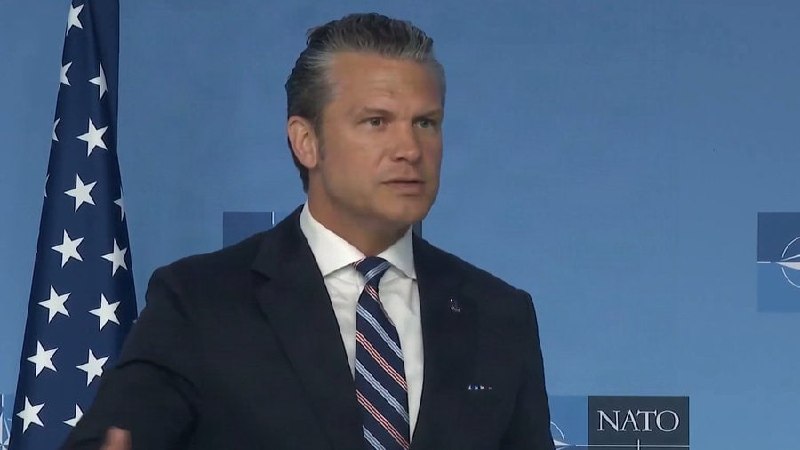
The European Commission presented revised defense financing guidelines on 5 May 2026 that would allow member states to exclude certain military expenditure from EU deficit calculations — a provision long sought by Warsaw but tied to conditions Poland's government says amounts to an intrusion on national sovereignty. The announcement, flagged by officials in Brussels and confirmed by Polish press agencies, represents the most significant adjustment to the Stability and Growth Pact's defense carve-out since the provision was first debated in 2024.
Under the proposed framework, NATO-agreed defense investment at or above 2.5% of GDP would receive preferential treatment under the EU's fiscal rules. Poland has consistently exceeded that threshold — spending 4.1% of GDP on defense in 2025, according to figures reported by the Polish Press Agency — but the Commission-linked guidance introduces a new oversight mechanism that Warsaw argues resembles a Brussels veto on national procurement decisions. The dispute centers on whether member states retain full autonomy over which capabilities they acquire, or whether EU-level coordination criteria will influence procurement choices.
Poland's position reflects a calculation that is both strategic and political. Strategically, Warsaw sees itself as Europe's most exposed frontline state, sharing a border with the Russian exclave of Kaliningrad and serving as the primary transit route for Western military aid flowing into Ukraine. Politically, the Tusk government must navigate domestic pressure that treats any surrender of defense autonomy to Brussels — however technocratic the framing — as a loss of sovereignty. The opposition Law and Justice party has already seized on the Commission's guidance as evidence of EU overreach, complicating the government's room to negotiate.
The timing matters. Negotiations over the next EU multiannual financial framework are approaching, and defense spending will dominate those talks. The Commission's move effectively sets the parameters before Warsaw can build a coalition of defense-heavy member states. Countries like Estonia, Latvia, and Lithuania — all spending above 3% of GDP on defense — share Poland's exposure, but none has Poland's economic weight in the council. Poland's leverage, in other words, may be precisely what the revised guidelines are designed to constrain before it can exercise it.
That interpretation is not universal. Commission officials have framed the new guidance as a clarification, not a constraint — a technical adjustment to fiscal rules that reflects the post-2022 security reality. Supporters of deeper integration argue that without common standards, national defense spending creates inefficiencies: duplicate procurement, incompatible systems, and an inability to sustain collective operations. In that reading, Brussels oversight is not sovereignty erosion but capability building.
The deeper question is what kind of Europe this produces. Poland's defense surge — the largest per-capita investment in NATO infrastructure in the alliance's eastern tier — has been financed partly through borrowing that strains the country's debt-to-GDP ratio. The Commission's willingness to carve out military spending from deficit rules removes one pressure point, but it creates another: conditionality on procurement autonomy in exchange for fiscal relief. Warsaw must decide whether that trade is worth taking.
For now, the debate remains in negotiation. The Commission's guidelines require council approval, and Poland retains allies — Hungary's Viktor Orbán has consistently opposed EU-level defense coordination, for different reasons — who may complicate passage. But the Commission's move signals that the era of open-ended national defense spending without EU-level scrutiny is closing. The question for Warsaw is not whether to accept that reality, but how to shape the terms.
Wire provenance
This editorial synthesis draws on the following public wire/social posts:
- https://x.com/sprinterpress/status/2051563650444333056