The Compute Clique: What Anthropic's SpaceX Deal Tells Us About AI's Infrastructure Grab
Anthropic's 300-megawatt deal with SpaceX is more than a procurement contract — it is a signal that the next phase of the AI race will be decided not in model labs but in power substations.
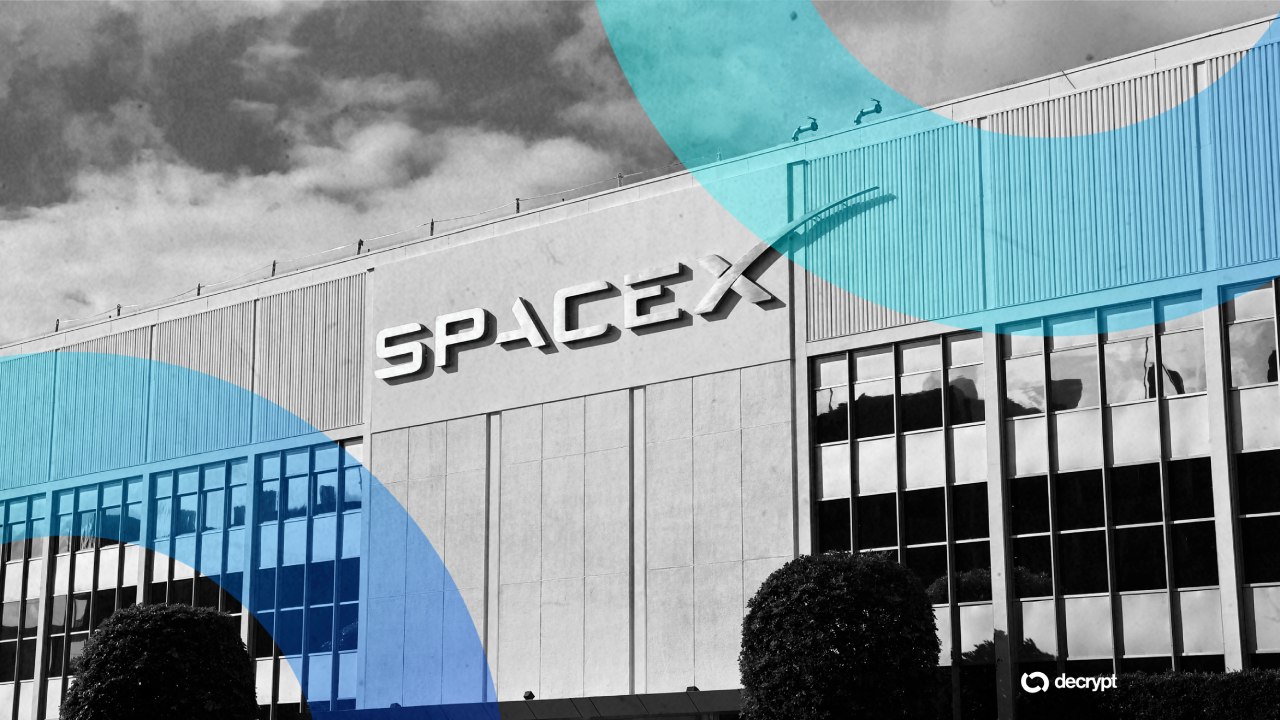
The announcement landed on the evening of 6 May 2026 with the dull thud of inevitability. Anthropic, the AI developer behind the Claude model, had signed a deal with SpaceX for more than 300 megawatts of compute capacity — enough to power a mid-sized city, devoted entirely to training and running language models. The Reuters report did not linger on the significance. It described the transaction as a data-center agreement and moved on. That restraint is understandable. Describing what is actually happening requires a longer view.
What unfolded this week is not merely a procurement contract between a model lab and an infrastructure company. It is the clearest public evidence yet that the AI industry's competitive logic has shifted from the laboratory to the grid. The scarce resource is no longer the algorithm. It is the watt.
The Infrastructure Turn
For the past several years, the public narrative around AI competition has centred on benchmark leaderboards, parameter counts, and the rhetorical sparring between frontier labs. That framing is not wrong, but it is incomplete. Beneath the surface of model releases and capability demos, a silent contest is underway for control of the physical substrate — the data centres, the power connections, the cooling systems, the land permits, the grid interconnections — that any competitive AI system requires.
Anthropic's agreement with SpaceX illustrates this concretely. More than 300 megawatts is not a standard commercial hosting arrangement. It represents a multi-year commitment of physical resources at a scale that only a company with SpaceX's industrial footprint could credibly offer. The deal signals that Anthropic has decided its compute strategy cannot rely on third-party cloud providers indefinitely. Vertical integration, long a feature of hardware and semiconductor industries, is arriving in AI with full force.
The market took note. Polymarket, the prediction market platform, registered a 77% implied probability that SpaceX moves to acquire Cursor, the AI-assisted coding tool — an acquisition that would give SpaceX a direct consumer-facing AI product alongside its infrastructure role. The figure is speculative, but it reflects a broader recognition that the lines between compute provider and AI developer are blurring rapidly.
Who Controls the Stack
There is a structural logic to what SpaceX is doing that extends beyond any single partnership. The company began as a launch provider. It expanded into satellite internet with Starlink. It manufactures its own rocket engines, its own avionics, its own thermal protection systems. Vertical integration is the operating philosophy, not an accident of growth. Moving into dedicated AI compute infrastructure follows the same pattern: own the means of production, capture the margin, secure the dependency of customers who cannot easily replicate what you have built.
Anthropic, for its part, has made a calculation that aligns with this logic. The AI lab, backed substantially by Google, has pursued a safety-first development philosophy that positions it as the thoughtful actor in a crowded field. That positioning requires compute at scale without the reputational risk of relying on cloud providers whose energy choices might not survive scrutiny. A direct arrangement with a company that generates its own power — through Starlink's satellite infrastructure and associated energy systems — offers a different risk profile than buying hours on shared hyperscaler hardware.
The dependency this creates runs in both directions. Anthropic gains a power supply insulated from the competitive pressures affecting cloud availability. SpaceX gains a marquee customer whose model success will validate its infrastructure ambitions. Neither party announces this explicitly. Neither needs to.
The Questions Nobody Is Asking
The coverage of the Anthropic-SpaceX deal has focused on what it means for the AI race. That is the right question, but it is not the only one. Equally worth asking is what this deal says about the geography of AI power. Compute infrastructure requires land, power, water, and cooling. It requires regulatory relationships with local authorities, grid operators, and permitting agencies. When a single company controls both the launch stack and the data-centre stack, it occupies a position in the physical economy of intelligence that has few precedents outside the oil industry.
There is also the question of what it means for competitors who cannot make similar arrangements. The hyperscaler cloud providers — Amazon Web Services, Microsoft Azure, Google Cloud — have built their businesses on the premise that compute should be rented, not owned. A world in which the most capable AI labs negotiate dedicated infrastructure with industrial conglomerates is a world in which the cloud model faces structural pressure from below.
The sources do not disclose the financial terms of the Anthropic agreement, nor the specific location of the facilities involved. Those details will matter when the next contract is announced, or when a competitor publishes its own infrastructure roadmap. For now, the signal is clear enough: the race is not only to build the best model. It is to build the most reliable pipe.
The Stakes Ahead
The concentration of AI compute in the hands of a small number of industrial actors carries implications that the current framing — a deal between a lab and a launch company — does not surface. When a single outage, a single policy decision, or a single ownership shift can affect the availability of the most capable AI systems, the risk profile of the entire ecosystem changes. The financial crisis of 2008 offered a lesson about the dangers of concentrated intermediation in systems that everyone depended on. The AI infrastructure stack is moving, with visible speed, toward a similar concentration.
What remains uncertain is whether the regulatory apparatus that governs cloud computing, telecommunications, and aerospace will evolve quickly enough to map onto this new configuration. The companies involved have strong incentives to present themselves as infrastructure rather than platforms — a distinction that carries significant regulatory consequences. Whether that distinction survives the next eighteen months of deal-making and acquisition speculation is among the more consequential open questions in the technology sector.
Anthropic's agreement with SpaceX is a data point. But data points, accumulated quickly, become a trend. The trend here is toward a tighter捆绑 between the physical infrastructure of intelligence and the labs that produce it. That bundling will shape what AI becomes — and who gets to decide.
This publication covered the Anthropic-SpaceX announcement primarily through the Reuters wire and Polymarket market signals rather than direct comment from either company. The Polymarket 77% figure reflects speculative positioning and should not be read as a factual prediction.
Wire provenance
This editorial synthesis draws on the following public wire/social posts:
- http://reut.rs/4d6Ukii