Anthropic Secures SpaceX Compute Partnership Ahead of IPO
Anthropic has signed a deal for more than 300 megawatts of compute capacity from SpaceX's Colossus 1 data center, securing critical infrastructure weeks ahead of an expected public listing that would test investor appetite for late-stage AI ventures.
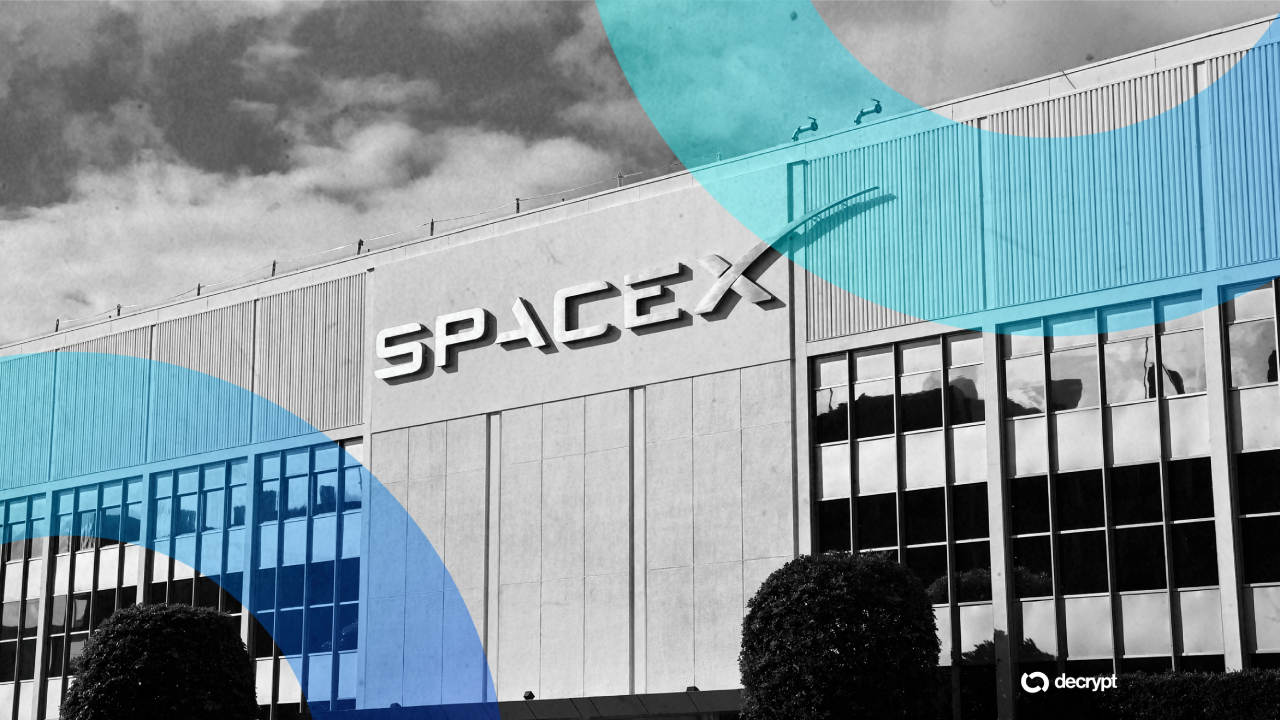
Anthropic has secured access to more than 300 megawatts of compute capacity from SpaceX's Colossus 1 data center, the company confirmed on 6 May 2026, in a deal that positions the Claude maker to substantially expand its AI training infrastructure weeks ahead of an expected public listing.
The agreement, first reported by CoinDesk and confirmed across multiple wire services, marks the latest in a series of compute partnerships Anthropic has stitched together as it races to keep pace with surging demand for its language models. SpaceX's Colossus 1 facility, constructed at the rocket company's Starbase complex in Boca Chica, Texas, has emerged as a significant node in the broader AI infrastructure buildout, with the new arrangement providing Anthropic with dedicated capacity the company can deploy against its most compute-intensive model development work.
The timing is significant. Anthropic is widely expected to file for an initial public offering in June 2026, a listing that would test whether public market investors have the appetite and patience for the capital-intensive economics of frontier AI model development. Securing long-term compute commitments before a public debut signals both operational seriousness and the ability to negotiate at scale—attributes institutional investors tend to reward in theory, if not always in practice.
A Compute Race Built on Infrastructure
The deal underscores how compute access has become the defining competitive variable in the AI sector. Frontier model training requires thousands of specialized chips running in parallel for months at a time, and the supply of capable data center capacity remains constrained by power availability, cooling requirements, and the sheer lead time needed to build new facilities at the necessary scale.
SpaceX's entry into AI infrastructure is itself notable. The company, led by Elon Musk, has expanded well beyond its original mandate of rocket manufacturing and satellite internet provision. Colossus 1, built with power capacity far exceeding typical commercial data centers, reflects a strategic bet that the physical infrastructure of computation—land, power, cooling, interconnection—will matter as much as the software layer in determining which AI companies can train the next generation of models.
For Anthropic, the partnership represents a continuation of a strategy the company has pursued since its founding: securing compute through a mix of cloud partnerships, dedicated capacity agreements, and equity relationships with major infrastructure providers. The company counts Amazon and Google as strategic investors, with both firms providing cloud capacity and development support as part of broader AI partnership frameworks. The SpaceX agreement adds a different kind of partner—closer to the defense and aerospace industrial base than the traditional hyperscaler ecosystem.
The deal's size, at more than 300 megawatts, is substantial by any measure. A typical hyperscale data center might require 20 to 50 megawatts for a significant AI training cluster; 300 megawatts suggests a dedicated facility or a very large carve-out within a larger complex. That scale implies Anthropic is planning training runs that require sustained access to a massive amount of dedicated compute—exactly the kind of infrastructure play that justifies a billion-dollar-plus valuation and an IPO filing.
The IPO Calculus
Anthropic's expected June listing arrives at a complicated moment for AI equity valuations. OpenAI remains private but has raised at valuations that imply a substantial public offering whenever a listing occurs. Microsoft has embedded itself deeply in the AI ecosystem through its OpenAI partnership, and Alphabet and Meta have both committed tens of billions to AI infrastructure in ways that have reshaped their balance sheets and capital allocation priorities.
The question for a public Anthropic listing is whether investors will apply the same patience they have shown to the hyperscalers—accepting years of heavy capital investment in exchange for strategic positioning—or whether they will demand more traditional profitability metrics. AI model companies have historically struggled to convert research leadership into the kind of recurring revenue that satisfies public market analysts accustomed to software's gross margin profile.
Anthropic has made inroads. Claude, its flagship product line, has found traction in enterprise settings, and the company's partnership with Amazon through AWSBedrock gives it distribution that smaller competitors lack. But the compute costs of training and serving frontier models remain enormous, and the revenue trajectory needed to justify the valuation thresholds required for a successful IPO is steep.
The SpaceX deal is, in this context, both an asset and a risk. It signals that Anthropic has access to infrastructure at scale—a genuine competitive advantage in a supply-constrained environment. It also signals heavy infrastructure commitments that will translate into significant ongoing costs, costs that will appear on the income statement in ways that may concern investors focused on path to profitability.
Infrastructure as Geopolitical Currency
There is a broader structural dimension to the Anthropic-SpaceX deal that is easy to miss in the immediate noise of the IPO narrative. The AI infrastructure buildout is increasingly entangled with questions of national competitiveness, energy policy, and industrial strategy in ways that go well beyond the technology itself.
Power availability has become a binding constraint on data center development across the United States. Utilities in Virginia, Texas, and the Pacific Northwest are fielding requests for new data center connections at a scale that is straining grid capacity, leading to longer lead times for new builds and active lobbying by technology companies for regulatory relief and accelerated permitting. The infrastructure Anthropic is securing through SpaceX exists in an ecosystem where access to power, land, and cooling is as strategic as access to chips.
SpaceX's position in this ecosystem is unusual. The company has built relationships with energy providers, state governments, and federal agencies that give it access to power infrastructure that traditional data center operators struggle to replicate. Colossus 1 sits on land controlled by SpaceX, powered through arrangements the company has negotiated directly with grid operators, and supported by the kind of long-term capital planning that a private company with a diversified portfolio can afford to undertake in ways that publicly traded data center REITs cannot.
This is the quiet infrastructure layer underneath the visible AI competition between Anthropic, OpenAI, Google DeepMind, and xAI. The companies that can secure compute commitments at scale, negotiate favorable power arrangements, and build or occupy data centers at the necessary capacity will have a structural advantage over those that cannot. The Anthropic-SpaceX deal is a concrete expression of that advantage.
What Comes Next
Anthropic's filing, expected in the coming weeks, will be the first major test of whether public markets will assign AI model companies the kind of valuation multiples that private markets have been awarding for the past three years. The SpaceX compute partnership will feature prominently in the S-1 filing—a signal of infrastructure ambition and operational maturity that the company's bankers will want to emphasize.
The counter-argument, which will surface quickly in analyst coverage, concerns the company's path to profitability and the willingness of public investors to fund years of heavy capital expenditure in a field where the competitive position of any single company remains contested. OpenAI's own eventual listing, whenever it comes, will overshadow Anthropic's in terms of scale and investor attention. And the rise of more efficient training methodologies—exemplified by the disruption DeepSeek caused in early 2025—means that compute advantages are not permanent.
The deal also raises questions about the crowded landscape at the intersection of AI infrastructure and aerospace-adjacent industrial capacity. Elon Musk's own xAI operates in a space adjacent to both SpaceX and OpenAI, and the potential for conflicts of interest in compute allocation between competing AI ventures using shared infrastructure will attract regulatory attention, if not immediately then as these arrangements scale.
For Anthropic, the immediate task is simpler: demonstrate that the compute access it has secured translates into model capability that customers will pay for, and that the institutional infrastructure of a public company can sustain the operational intensity that frontier AI development requires. The SpaceX deal is a substantial piece of that argument. Whether the markets agree will be answered in June.
—
Anthropic and SpaceX have not disclosed the financial terms of the agreement. The company's S-1 filing, expected in June 2026, will provide the first public accounting of its capital commitments and infrastructure arrangements.
Wire provenance
This editorial synthesis draws on the following public wire/social posts:
- https://x.com/polymarket/status/2434338701
- https://t.me/insiderpaper/2434338701