The Poll That Should Terrify the White House
Sixty percent of Americans disapprove of Trump's handling of the Iran conflict. That number is the story — and the political reckoning it demands is only beginning.
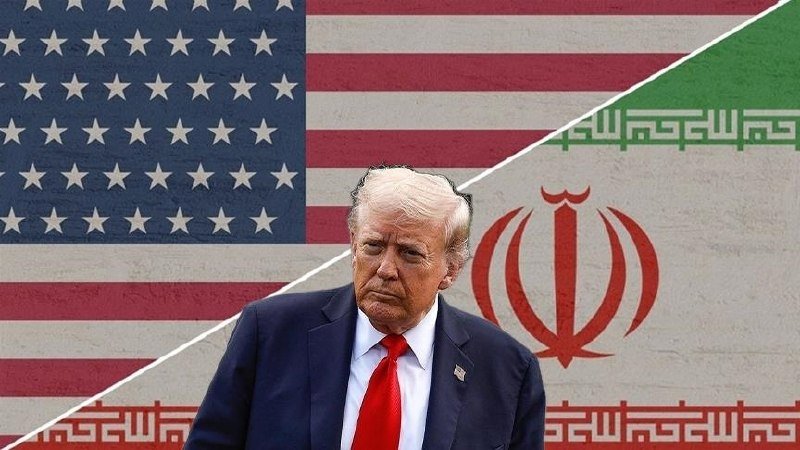
The number is unambiguous. Sixty percent of Americans disapprove of how the Trump administration is handling the war on Iran, according to a PBS NewsHour/NPR/Marist poll released on 6 May 2026. Four in ten do not endorse the policy. That is not a rounding error. It is a verdict.
That such a verdict would arrive so quickly should not surprise anyone who has watched the arc of American public opinion through three decades of Middle Eastern entanglement. What is notable is the breadth of the rejection — cutting across the partisan coalitions that typically sort along predictable lines when military force is deployed.
The poll does not tell us exactly who disapproves and why, beyond the broad strokes. But the correlation with economic anxiety is not difficult to infer. The same survey shows rising concern about gas prices and the broader cost of living, alongside disapproval of the Iran policy. That alignment is the political signal that the White House cannot afford to misread.
What the Numbers Actually Mean
Sixty percent disapproval on a foreign policy decision is not a normal baseline. Presidents typically command broad latitude in the early stages of military action — the so-called rally-round-the-flag window that usually lasts weeks or months before the public begins its accounting. That the Trump administration has crossed into net-negative territory within months of whatever initial strikes or escalation的步伐 is structurally significant.
The administration came to office on a specific economic mandate. Voters were promised relief on kitchen-table costs, not another round of $4-a-gallon gasoline subsidizing a new theater of operations. The dissonance between the promise and the reality is what the poll is capturing. The Iran war is not a separate policy question from the economy in the minds of most Americans. For households watching their discretionary spending compress, the connection is direct and immediate.
This is the trap that has claimed every American presidency that has attempted sustained military adventurism since Vietnam. The costs are front-loaded and visible; the benefits are deferred and abstract. Iran does not yet have a clear definition of victory, and the administration has been light on specifics. Without a defined endpoint, the public's patience has no natural floor — only the political pain threshold of those holding the levers.
The Regional Architecture Nobody in Washington Wants to Discuss
There is a structural dimension to this that polling alone cannot capture. The Iran escalation is not occurring in a geopolitical vacuum. It is unfolding at a moment when the architecture of global opposition to unipolar American power has cohered to a degree not seen since the early Cold War.
The partnership between Tehran, Moscow, and Beijing is not merely ideological anymore. It is operational, financial, and increasingly institutional. Sanctions regimes that once strangled third parties into compliance now face alternatives: the SWIFT alternatives, the BRICS settlement rails, the commodity partnerships that insulate key nodes from dollar-based coercion. Countries that would have complied with American secondary sanctions two administrations ago are now calculating whether the costs of compliance outweigh the costs of defection.
Washington has not reckoned publicly with this shift. The official framing still assumes that American power retains the coercive leverage it exercised in the 1990s and 2000s. The poll does not measure this dimension of the problem. But it is the reason why military escalation in Iran carries risks that are structurally different from those of previous engagements — risks that will eventually surface in polling data once the economic and human costs accumulate beyond a certain threshold.
The Political Calculus That Follows the Poll
Here is what the White House knows and what its critics are only beginning to articulate: public opinion is a leading indicator of political survival, not just a thermometer of sentiment. Politicians who ignore sustained majorities against their policies do not typically survive the next electoral cycle intact.
Trump himself demonstrated during his first term that he could reverse course when the political cost of persistence exceeded the cost of accommodation. The tariff reversals, the North Korea outreach, the intermittent retreats from maximalist positions — the pattern is there for those willing to read it. The question is whether the Iran policy has reached the inflection point where reversal becomes politically necessary.
The counterargument — the one the hawks inside the administration are presumably making — is that backing down on Iran validates adversarial strength and invites further aggression. That calculation has a certain internal logic. But it requires ignoring the domestic political cost entirely, and it requires assuming that escalation will eventually produce a favorable outcome worth the price. Neither assumption is guaranteed. Both require the public to accept costs that the poll suggests it is not prepared to absorb indefinitely.
The Stakes Beyond the Headlines
What the PBS NewsHour/NPR/Marist survey ultimately documents is not just disapproval of a specific policy. It is a reminder that American public opinion remains a binding constraint on foreign policy, even in the most nationalist-leaning administrations. The war on Iran — however it is ultimately resolved — will be shaped by what happens when the political class concludes that the domestic costs of continuation have exceeded the political costs of negotiation.
That calculation has not yet been made. But the poll suggests it is approaching. When sixty percent of the electorate is telling you that the policy is wrong, the question is not whether to adjust, but when — and at what cost to those who argued for escalation in the first place.
The American public has rendered its preliminary verdict. The White House now has to decide whether to listen.
Wire provenance
This editorial synthesis draws on the following public wire/social posts:
- https://t.me/TheCradleMedia/28436
- https://t.me/TheCradleMedia/28436
- https://t.me/TheCradleMedia/28435