Trump's Iran Ultimatum: Hormuz Pause Holds, But a Deal Remains Elusive
President Trump has given Iran a direct ultimatum — agree to terms or face bombing at a scale and intensity exceeding prior strikes — while simultaneously pausing the military operation dubbed Project Freedom in the Strait of Hormuz. Oil markets have stabilised on the diplomatic window, but core issues remain unresolved.
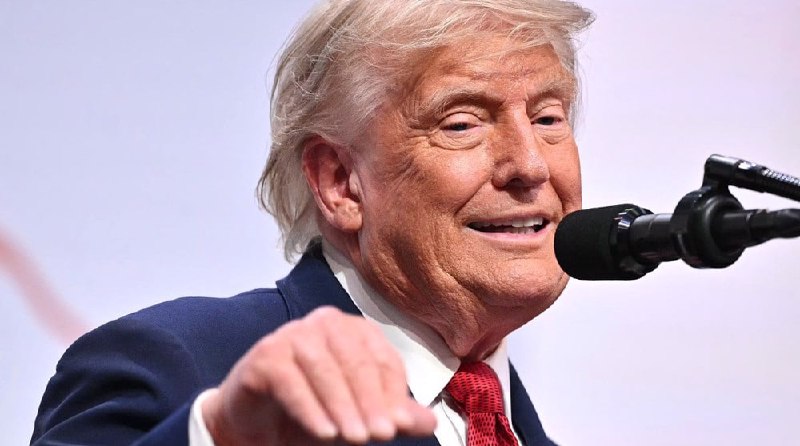
President Donald Trump said on 6 May 2026 that Iran must accept his terms or face bombing "at a much higher level and intensity than it was before." The same statement came hours after Trump announced that Operation Freedom — the US military posture in the Strait of Hormuz — would be paused to allow space for a final agreement with Tehran. Oil prices eased as traders absorbed the dual signal: hardline rhetoric paired with a practical de-escalation.
The ultimatum is not new in form. Trump deployed near-identical language in his first term, and the Obama administration issued comparable warnings before the 2015 Joint Comprehensive Plan of Action. What is new is the operational backdrop: a confirmed military presence inside the Hormuz corridor, live sanctions architecture, and a regional environment where Iran has weathered five years of tightening economic pressure without capitulating.
The sources do not specify the precise terms Trump is demanding of Tehran. Reuters and Axios reporting on the broader negotiating track indicates the US wants restrictions on uranium enrichment and an end to support for regional armed groups — demands Iran has previously characterised as sovereignty violations. Iranian officials, speaking through state-aligned outlets, have called the nuclear conditions a non-starter.
Hormuz and the Economics of Escalation
The Strait of Hormuz is not merely a geopolitical abstraction. Roughly 20 to 25 percent of global oil trade passes through its narrow shipping channel, according to US Energy Information Administration data. That bottleneck gives Iran structural leverage in any negotiation with a Western administration that counts stable energy markets as a policy priority.
The pattern in the current escalation reflects that asymmetry: markets moved sharply on the initial tensions, and Trump's move back toward negotiation — pausing the operation rather than sustaining it — suggests the economic floor constrained his negotiating posture as much as the Iranian one did. Iran can absorb sanctions pain for extended periods; global oil markets cannot absorb a prolonged Hormuz disruption without political consequences for Western governments.
The Escalation-Pause Cycle
The sequencing of statements on 6 May deserves scrutiny. Trump announced the pause of Project Freedom in the morning, framing it as a diplomatic concession to give talks a chance. By mid-afternoon UTC, he had issued the bombing ultimatum — a statement consistent with a pressure-maximisation approach rather than a purely diplomatic one.
That dual-track posture is not accidental. A pause signals to markets and allies that Washington is not seeking conflict for its own sake; an ultimatum signals to Tehran that the window is time-limited. Whether that combination coerces a deal or hardens Iranian positions depends on which calculation Tehran's leadership makes about US staying power — and whether they believe Trump will actually order strikes if the deadline passes.
Iran's track record offers a clue. After five years of so-called maximum pressure under a previous Trump administration, combined with European sanctions and the reimposition of oil export restrictions, Iran has not collapsed, fragmented, or reversed its nuclear programme. It has instead deepened ties with China and Russia, expanded regional proxy networks, and advanced enrichment to near-weapons-grade levels. The negotiating calculus in Tehran is built on the assumption that time is on its side.
What a Deal Would Require — and Why It Is Hard
A Hormuz de-escalation agreement, if it materialises, would likely address the immediate military posture — a mutual stand-down in the strait, potentially including Iranian Revolutionary Guard naval positioning and US carrier group proximity. That is achievable because both sides have an interest in avoiding an incident that spirals.
A broader nuclear deal is more complicated. The US wants enrichment capped at civilian levels, snapback sanctions authority restored, and IAEA inspections with full access. Iran wants sanctions lifted, its right to peaceful enrichment recognised, and guarantees that a future US administration will not exit the deal as Trump did in 2018. Those positions are not irreconcilable in theory. In practice, the domestic political calculus in Washington and Tehran makes the compromises required on both sides politically explosive.
Stakes and Forward View
The immediate risk is miscalculation — an incident at sea, a misread of intent, a domestic audience in either capital demanding a harder response than the situation requires. The medium-term risk is that the pause becomes permanent without a deal, leaving the strait in a state of managed tension that keeps oil markets risk-premiumed and limits investment in the region.
The structural dynamic is straightforward: Iran's geographic control of the strait gives it a defensive advantage that no amount of US military presence fully negates. Western administrations, across both parties, have consistently found that pressure alone does not produce concessions on the nuclear programme. And Iran has equally consistently found that Western threats, however strident, do not produce capitulation without a credible mechanism for sustained economic pain.
For markets, the short-term signal is clear: the pause reduces the probability of an immediate supply shock. For geopolitics, the signal is less reassuring — the underlying disagreements remain, the negotiating positions have not shifted, and the cycle of ultimatum and pause looks likely to repeat itself until one side's calculation changes.
This article was filed from the MENA desk. Wire coverage led with the ultimatum language; Monexus chose to foreground the pause-and-ultimatum duality as the more analytically revealing pattern.
Wire provenance
This editorial synthesis draws on the following public wire/social posts:
- https://t.me/operativnoZSU/
- https://t.me/bricsnews/
- https://x.com/polymarket/status/1920898345670955024