Israel's Alert Shutdown in the North Is a Calculated Risk — and Civilians Will Pay for It
Disabling the rocket-impact warning system for northern Israeli communities may serve narrow intelligence interests, but it trades the safety of tens of thousands of civilians against a threat that remains unproven.
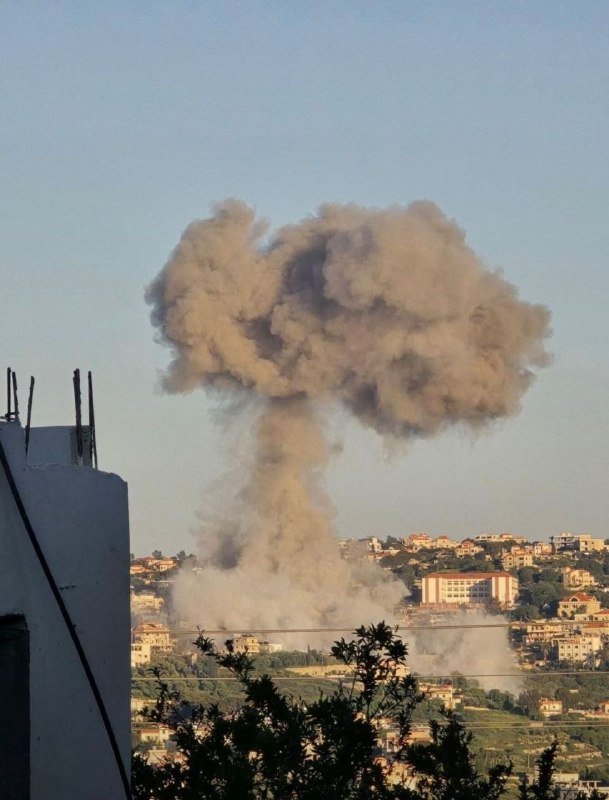
On 7 May 2026, the Israeli army quietly disabled a system that had, for years, provided first responders and local leaders in northern communities with advance notice of incoming rocket strikes. According to reporting by Middle East Eye, the decision stems from a fear that Iranian intelligence services could exploit the network — reverse-engineering the alert data to understand precisely where missiles were landing and adjusting their trajectories accordingly. Within hours of the announcement, the Israel Defense Forces confirmed strikes on what it described as Hezbollah weapons production infrastructure in the Nabatieh area of southern Lebanon. Hezbollah, in its own statement, called the operations a response to what it termed Israeli ceasefire violations and attacks on villages in the south.
The logic, as presented by the Israeli military, is coherent enough: a network transmitting real-time impact data is, by design, a network that adversaries can read. Iranian intelligence operatives embedded within Lebanese proxy structures would have a strategic interest in mapping the accuracy of existing weapons systems — identifying which strikes land on target, which veer wide, and which fail entirely. That intelligence, fed back into design cycles, could sharpen the precision of future barrages. Shutting down the civilian-facing side of the alert infrastructure removes that read. It is, in narrow terms, an intelligence-hardening measure.
It is also a measure that, if the intelligence assessment proves wrong, leaves entire communities blind.
The IDF has not disclosed how many northern Israeli communities relied on this specific system, nor has it articulated what alternative coverage — if any — now protects those populations. What is known is that the northern border region has seen sustained cross-border exchanges since the Gaza conflict intensified, with Hezbollah launching regular operations it frames as solidarity actions with Palestinians under siege. Residents of towns like Kiryat Shmona, Metulla, and communities along the Upper Galilee have lived under periodic rocket and drone alert for months. Removing their first line of notification — the system that tells a local mayor or emergency coordinator where, precisely, a strike is incoming — is not a marginal adjustment. It is a structural change to how those communities experience conflict.
There is a further complication. Israeli security officials, per the Middle East Eye reporting, believe Iranian operatives could use the alert data not merely to calibrate Hezbollah's existing arsenal but to feed that information back into Iran's own ballistic missile programme. The concern is one of systems interoperability: Tehran financing and partially arming Hezbollah, Tehran's intelligence services using Lebanese battle damage assessments to improve weapons it may one day fire from Iranian territory at Israeli cities. The threat vector, if accurate, extends well beyond the current front lines.
None of this is implausible. Intelligence competition in wartime regularly produces these kinds of second-order dilemmas — decisions where protecting a classified or semi-classified capability requires sacrificing something civilian. The question is not whether the concern is real. The question is whether the response is proportionate, and whether those bearing the cost have been given any voice in accepting it.
Hezbollah's framing — casting its operations as retaliation for Israeli ceasefire violations — is, predictably, self-serving. But the underlying dynamic is real: both sides have been probing the edges of the understandings that nominally govern the Lebanon frontier. The IDF strikes on Nabatieh infrastructure suggest Tel Aviv is not content to absorb Hezbollah's operational tempo without response. And Hezbollah's statements suggest the group is preparing a narrative of defensive legitimacy to accompany whatever escalation follows. Each side's public communications are designed for different audiences — Israel for Western capitals it wants to believe it is operating defensively, Hezbollah for regional publics and its own base.
What is missing from both accounts is any serious accounting of the civilian exposure created by the alert system shutdown. The IDF has determined that the intelligence risk of keeping the system active outweighs the protective benefit of leaving it running. That may be correct. But the calculation was made, so far as the public record indicates, without any external review or independent validation. Israeli civilians in the north are now dependent on whatever alternative warning infrastructure remains classified — a dependency they did not choose and cannot verify.
The broader pattern here is familiar to anyone who has tracked how modern military forces manage the civilian-harm tradeoffs inherent in prolonged conflict. Intelligence services want data closed. Operational commanders want freedom of action. Civilian protection advocates want transparency and redundancy. These imperatives are in permanent tension, and in democratic societies the usual mechanism for resolving them is parliamentary oversight and public accountability. When those mechanisms are bypassed — or when decisions are announced without detail — the result is exactly the kind of information vacuum that breeds both mistrust and vulnerability.
The decision to disable the northern alert system may prove to have been the right one. Iranian intelligence may indeed have been using it. The calibration threat to Hezbollah's and Iran's weapons programmes may have been real and imminent. But an intelligence decision made in darkness, affecting hundreds of thousands of civilians, and announced without meaningful explanation, is not a policy. It is a gamble — and the civilians living in the north are the stake.
Wire provenance
This editorial synthesis draws on the following public wire/social posts:
- https://x.com/middleeasteye/status/1930849218374725825
- https://t.me/wfwitness/29472
- https://t.me/wfwitness/29471