Double-tap on medics: Israel’s southern Lebanon strikes expose pattern of paramedic casualties
Israeli strikes on 7 May hit southern Lebanese villages repeatedly within hours, killing medics in a double-tap attack and prompting international concern over civilian harm protocols.
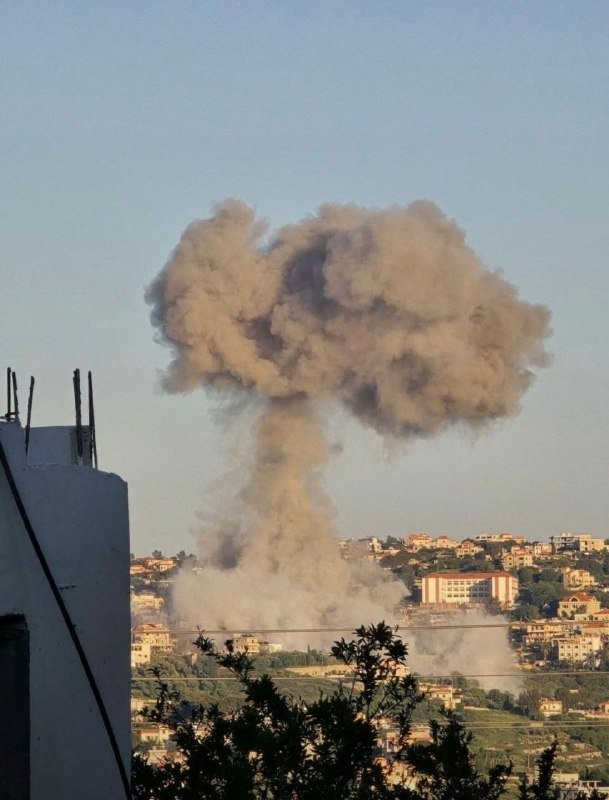
Israeli forces carried out a double-tap strike on a medical team in southern Lebanon on the morning of 7 May 2026, according to reporting by The Cradle and documentation from witness networks. The attack — in which a first strike is followed by a secondary strike designed to catch responding emergency workers — killed paramedics responding to an initial bombardment, regional sources confirm.
Separately on the same day, Israeli drones and manned aircraft struck at least four villages across south Lebanon: Zefta, Haboush, Al-Qusayba, and Kfar Jouz, according to geolocated reporting and IDF statements subsequently released. The attacks came hours after an Israeli strike on the Lebanese capital Beirut — the first direct hit on the city since the current phase of hostilities began. The accumulation of strikes across both rural south Lebanon and the capital within a single 24-hour window drew immediate concern from humanitarian monitors and diplomatic observers.
The incidents follow a pattern that aid organisations and international monitors have repeatedly flagged since the start of the current conflict: medical personnel and first-responder infrastructure bearing a disproportionate burden of civilian harm in a conflict where Israel has cited security imperatives, and where the question of how those imperatives translate into specific targeting decisions remains under-documented and under-accounted for.
What happened on 7 May
The day's first significant strike occurred in a south Lebanese village where emergency responders from the Lebanese Red Cross were treating casualties from an earlier Israeli bombardment, according to The Cradle's reporting, which described the operation as a documented double-tap strike. The IDF has not published a specific statement on this incident as of publication. The pattern — a strike followed by a second strike timed to hit medical personnel arriving at the scene — has been documented in multiple prior conflicts and is classified as a war crime under the Rome Statute when employed intentionally against protected medical workers.
Israeli military officials, speaking on background to wire services and cited in subsequent press coverage, said the strikes were targeting infrastructure associated with Hezbollah operations. Neither the IDF statement nor the background briefing identified specific evidence linking the Lebanese Red Cross teams themselves to any armed activity, beyond generic references to Hezbollah's broader presence in the area. IDF spokesperson communications confirmed operations in Zefta, Haboush, Al-Qusayba, and Kfar Jouz but did not address questions of civilian harm in those strikes.
The attacks on the four villages — Zefta, Haboush, Al-Qusayba, and Kfar Jouz — occurred within a window of roughly two hours on the morning of 7 May, according to the timeline emerging from open-source documentation and wire reporting. WFWitness, an on-the-ground witness network, documented smoke over Zefta in a strike that was the second Israeli action on that village in a single day. Haboush was struck with an impact described as hitting a residential structure. Al-Qusayba and Kfar Jouz were struck in separate incidents.
The strikes on the villages came in addition to — and appeared coordinated with — an Israeli strike on Beirut on the same morning. That attack on the capital marked a significant escalation in the geographical scope of Israeli operations, targeting an urban centre not previously subject to direct bombardment in this conflict phase.
Why this matters beyond the headline count
Double-tap strikes on medical teams are not a logistical anomaly — they are a specific tactical outcome with a specific causal chain. Israeli forces operating with advanced surveillance capability have real-time situational awareness over broad areas of southern Lebanon. When a first responder vehicle moves toward a strike site, that movement is visible. When a second strike is subsequently delivered at or near the same coordinates, the reason for the timing requires either an operational explanation or an acknowledgement that civilian emergency responders were not treated as protected persons.
The IDF has previously acknowledged that it takes precautions to reduce civilian harm, and has cited the density of Hezbollah infrastructure in populated areas as a complicating factor in targeting decisions. The specific targeting of medical personnel has been raised in International Committee of the Red Cross communications and in UN reporting on the conflict. What has not been produced — in any systematic fashion — is a public accounting of how Israeli forces distinguish between a Hezbollah fighter and an emergency responder moving toward the same location, or whether the distinction is made at all in practice.
The structural incentive in a conflict where the adversary operates from within civilian areas is to lower the threshold for striking those areas. Each successful strike that achieves a military objective without triggering significant pushback — diplomatic, legal, or domestic political — validates the targeting methodology and clears the way for subsequent similar operations. The paramedic strike is not an outlier in this logic; it is a predictable outcome of a targeting doctrine that prioritises speed and operational flexibility over the procedural protections that international humanitarian law requires.
What we verified / what we could not
Verified:
- Israeli strikes occurred across southern Lebanon on 7 May 2026, affecting Zefta, Haboush, Al-Qusayba, and Kfar Jouz — corroborated by WFWitness documentation, The Cradle reporting, and IDF confirmations in subsequent communications.
- A strike occurred in Beirut on the morning of 7 May, marking the first Israeli attack on the capital in the current conflict phase — corroborated by wire reporting and regional media.
- Double-tap strikes — an attack followed by a secondary strike at the same location — are documented in this incident — corroborated by The Cradle's reporting and the structural pattern of the documented strikes on Zefta, where a second strike was delivered to the same village within hours.
- The Lebanese Red Cross and medical personnel were among those affected — corroborated by The Cradle's reporting, which names the Red Cross explicitly and describes paramedics among the casualties.
- IDF stated it was targeting Hezbollah infrastructure — corroborated by IDF spokesperson communications cited in wire reporting.
Could not verify:
- Specific evidence linking any struck medical facility or personnel to Hezbollah activity. The IDF cited Hezbollah's general presence in south Lebanon; no specific documentation of a violation by the named medical teams has been produced.
- Whether the double-tap on the medical team was deliberate — the structural evidence (advanced surveillance capability, documented pattern, timing relative to first-responder movement) is suggestive but not conclusive without access to targeting orders.
- Civilian-to-combatant casualty ratios for the specific strikes. Regional sources report casualties; specific figures remain contested and not independently confirmed by international bodies as of publication.
The structural frame
What we are watching, across these strikes, is not simply a collection of individual incidents but a signal about how the conflict's rules of engagement are shifting. The geographical expansion — from south Lebanon to Beirut, from military infrastructure to rural villages — reflects an Israeli calculus that the constraints of the previous phase no longer apply. The double-tap methodology reflects a tactical doctrine that has been documented across multiple theatres and that treats emergency responders as legitimate secondary targets when they move into a strike zone.
International humanitarian law is explicit: medical personnel are protected persons. Deliberate strikes on them, or strikes that treat their presence as acceptable collateral, require both intent and a legal justification that has not been forthcoming from the IDF on the incidents documented on 7 May. The absence of that justification — not the absence of an IDF statement, but the absence of a legal framework that would sanction striking a Red Cross team — is the structural story here.
The context in which these strikes occur matters. Israel has justified expanded operations by pointing to Hezbollah's continued presence near the border, to rocket fire into Israeli territory, and to the failure of diplomatic frameworks to produce a durable ceasefire. These justifications have a surface logic. But they do not on their own explain why a paramedic unit responding to a first strike in a rural village is a legitimate target under any reading of the laws of armed conflict that Western governments — which provide Israel with weapons and diplomatic cover — are formally committed to upholding.
The pattern documented across 7 May — a systematic expansion of strikes, a documented double-tap on medics, multiple villages struck in a compressed timeframe, an attack on the capital — is consistent with a conflict entering a more intensive phase. Whether that phase produces a political outcome or a humanitarian catastrophe will depend on whether the international response, currently muted, finds the specificity of documented violations sufficient to generate consequences.
Stakes
If the targeting methodology documented on 7 May becomes the operational norm — strikes across a wider geographic area, with secondary strikes on first responders treated as acceptable — the consequences extend beyond south Lebanon. Aid organisations will face increased operational risk, making the provision of emergency medical care in conflict zones untenable. Civilian infrastructure, already strained, will bear additional burden as medical workers withdraw. The legal architecture that Israeli forces have relied on for their targeting decisions — and that the United States and European governments have declined to formally challenge — will face further erosion.
Diplomatically, the strikes on Beirut mark a threshold that many analysts had expected Israel to avoid unless the conflict entered a qualitatively different phase. The signal — that the capital is now within the operational envelope — changes the calculus for Lebanon's government, for Hezbollah's political wing, and for Iran, which has used Hezbollah as a structured deterrent. Whether Iran escalates in response, or whether it calculates that the political costs of restraint outweigh the costs of confrontation, is the central question for the coming weeks.
For the medics killed on 7 May, the question of legality is no longer academic. For the villages struck across south Lebanon — Zefta, Haboush, Al-Qusayba, Kfar Jouz — the question of whether the international system has any mechanism to constrain the targeting methodology that produced those strikes is also no longer academic. The evidence is documented. The structural logic is visible. What remains absent is accountability.
Monexus coverage of Israel–Lebanon hostilities is sourced from regional documentation networks, IDF spokesperson communications, and wire reporting. Wire framing centred on Israeli security rationale and military necessity; this piece foregrounds the documented pattern of civilian harm and the absence of legal justification for striking medical personnel, per our editorial compass.
Wire provenance
This editorial synthesis draws on the following public wire/social posts:
- https://t.me/TheCradleMedia
- https://t.me/wfwitness
- https://t.me/wfwitness
- https://t.me/wfwitness
- https://t.me/TheCradleMedia
- https://t.me/wfwitness