Israeli Airstrikes Kill Four in Lebanon's Bekaa Valley as Cross-Border Exchange Intensifies
Israeli warplanes struck the eastern Bekaa valley on Wednesday, killing four people, while the Israeli military confirmed separate engagements along the southern Lebanon border as cross-border hostilities entered a new phase of intensity.
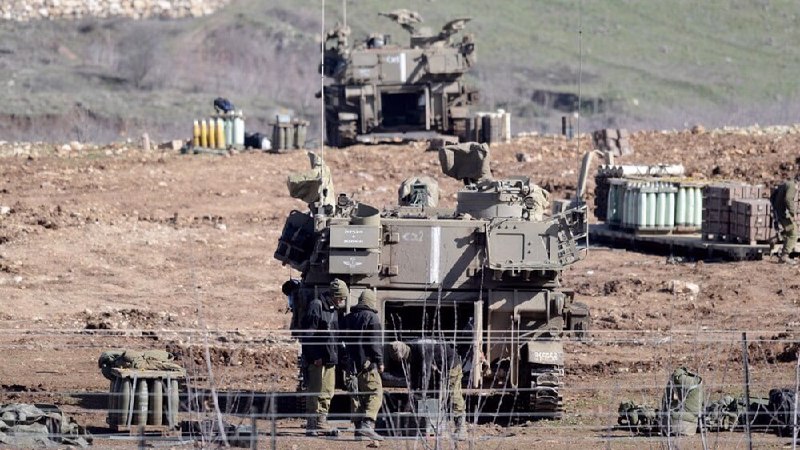
At least four people were killed on Wednesday when an Israeli airstrike hit the eastern Bekaa valley, according to initial reporting on the incident. The Israeli military confirmed the strike, stating it had targeted Hezbollah positions in the area. The attack came as the Israel Defense Forces also acknowledged that seven of its soldiers had been wounded in southern Lebanon over the preceding 24 hours, and separately confirmed that four soldiers sustained injuries in a Hezbollah drone attack.
The Bekaa strike marks a notable geographical expansion of recent hostilities. The valley, which lies east of Beirut and runs parallel to Lebanon's border with Syria, has seen periodic Israeli overflights and strikes throughout the current round of conflict but has not been the primary locus of engagements, which have concentrated along the southern border region around Mifdoun and adjacent towns.
Israeli military officials stated that the Bekaa operation was carried out after warnings were issued to residents of approximately a dozen towns to evacuate. According to an Al Jazeera English correspondent reporting from the area, an Israeli drone attack targeted Mifdoun, a town in southern Lebanon, in a separate incident on the same day. The dual-track approach — simultaneous operations across multiple geographic sectors — underscores the IDF's stated strategy of maintaining pressure along the full length of the border rather than concentrating force in any single zone.
Hezbollah, for its part, characterized its operations as responses to what it termed Zionist aggression against Lebanese territory. The group's media apparatus frames drone launches and rocket fire as defensive retaliation rather than offensive action. That framing is consistent with how Hezbollah has presented its campaign since October 2023: a solidarity front with Hamas, constrained by rules of engagement that allow the group to claim defensive legitimacy while periodically adjusting the scale and frequency of operations.
Whether that framing holds analytically depends on what one treats as the baseline. If the reference point is the pre-October 2023 status quo — when UN Resolution 1701, which ended the 2006 war, theoretically maintained a demilitarized zone between the Litani River and the border — then Hezbollah's current deployments constitute a prior violation that complicates any claim of pure self-defense. If, however, the reference point is the post-October reality of an active war in Gaza, then the calculus shifts: Hezbollah's operations can be read as a deliberate escalation by Tehran's most capable non-state partner, designed to tie down Israeli forces on a second front.
Iranian state media, including Tasnim and Mehr News, carried Hezbollah's framing without significant qualification, presenting the drone strike and other cross-border operations as justified responses to Israeli aggression. Those sources did not acknowledge the IDF's stated targeting rationale for the Bekaa strike. Western and Israeli outlets, by contrast, have consistently framed Hezbollah's barrages as provoked but disproportionate — noting that the group's leadership has publicly stated it is prepared to sustain significant casualties in exchange for strategic pressure on Jerusalem.
The structural dynamic here is not unique to this exchange. Israel's strategic problem in northern front management is essentially one of escalation control: the political cost of a large-scale Lebanon ground operation is high, the diplomatic cost of allowing Hezbollah to normalize its border presence is also high, and the military cost of sustained air operations is manageable but not costless. Each strike, each acknowledged casualty on either side, recalibrates what each party is prepared to absorb before seeking a negotiated pause.
The IDF's decision to acknowledge its own casualties — rather than minimize them — is also a messaging choice. Admitting that four soldiers were injured in a Hezbollah drone attack signals to domestic audiences that the threat is real and being confronted, while simultaneously communicating to Hezbollah that the IDF's intelligence on the group's strike capabilities is current. Whether that transparency produces deterrence or encourages further probing remains the central uncertainty.
What the available sources do not yet establish is the full composition of the four-person fatality count in Bekaa. Neither the IDF statement nor the initial reporting on the strike identified whether those killed were militants, civilians, or a mixed group. UN or Red Cross verification of casualty figures in the Bekaa area had not been published as of publication time. Hezbollah has not issued a specific casualty statement for the Bekaa incident, which is atypical — the group has typically acknowledged losses in high-profile strikes — raising the possibility that those killed were lower-ranking operatives or civilians in a way that the group's communications apparatus is still processing.
The immediate trajectory appears to be toward continued exchanges rather than de-escalation. Both the frequency of IDF acknowledgments and Hezbollah's stated willingness to sustain operations suggest neither side is approaching a threshold that would prompt a fundamental recalculation. The Bekaa strike, by extending the geographic scope of engagements, may itself constitute a signal that Jerusalem is prepared to accept a wider operational envelope than previously stated.
For Lebanon, the cost is already visible: displacement from border towns, strain on already fragile infrastructure, and the political impossibility for any Lebanese government to appear to endorse Hizballah's operations while simultaneously being unable to constrain them. For Israel, the cost is measured in manpower and materiel, and in the persistent political pressure created by northern community displacement — approximately 60,000 Israeli residents remain unable to return to communities near the border, a number that anchors domestic expectations for decisive action.
The next 72 hours will test whether the Bekaa strike was a calibrated signal or the opening of a new phase of operations. If Hezbollah responds with comparable geographic reach — strikes deep into Israeli territory or attacks on infrastructure beyond the northern border zone — the asymmetry that has so far contained the exchange breaks down. If it de-escalates, Iran will have to explain to its partners why a tactical pause served the broader regional posture Tehran has staked out since October 2023.
This publication's coverage of the Israel-Lebanon exchange leads with IDF-sourced casualty acknowledgments and the Hindustan Times reporting on the Bekaa strike. Iran's Tasnim and Mehr News agencies provided Hezbollah's framing of the drone attack and southern Lebanon engagements; those sources are cited with the caveat that they reflect a single-party account. The Al Jazeera English correspondent report on the Mifdoun drone strike provided geographic corroboration across the incident timeline.