Lula's Oval Office Gambit: What the White House Meeting Means for US-Brazil Trade Relations
President Lula's May 7 visit to the White House placed the US-Brazil trade relationship under sustained pressure as tariff negotiations, energy cooperation, and competing visions for Latin America's institutional architecture collided in a single afternoon.
President Luiz Inácio Lula da Silva arrived at the White House on May 7, 2026, for a working meeting with President Donald J. Trump — a encounter carrying weight far beyond protocol. The two leaders sat down against a backdrop of sweeping US tariff actions that had disrupted supply chains across the Americas for more than a year, and amid a Brazilian foreign policy that has systematically courted alternatives to dollar-denominated trade.
The session, described by the White House as a working meeting rather than a formal state dinner, was narrowly focused. Bloomberg had flagged the meeting as expected on Thursday morning; by mid-afternoon, both leaders had confirmed the encounter in person.
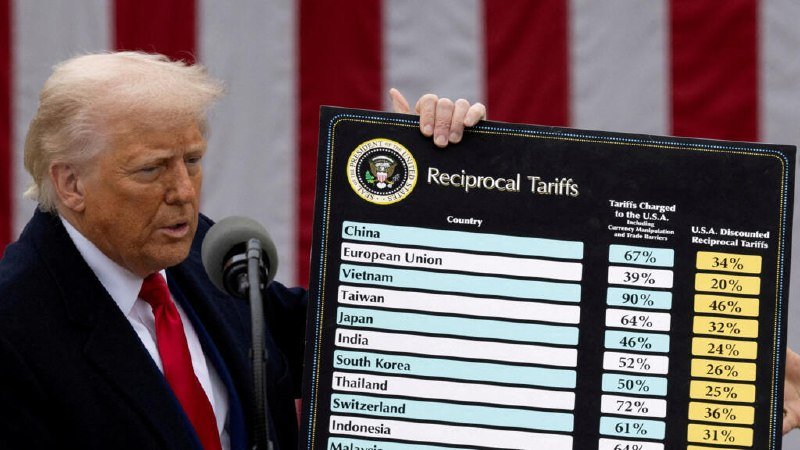
The tariff question dominated the agenda. The United States has maintained escalating duties on a range of goods since the opening moves of Trump's second-term trade offensive. Brazil, for its part, has absorbed the indirect effects — higher input costs for manufacturers, shifting commodity flows, and a currency pressure that has made Lula's industrial policy harder to execute. The two economies are deeply intertwined: Brazil is among the top five US trading partners in the Western Hemisphere, and the relationship spans agriculture, energy, aviation, and defense.
What made this meeting structurally significant was the timing. Lula had spent much of 2025 and early 2026 rebuilding bridges with Beijing, deepening BRICS engagement, and signaling that Brazil would not align automatically with Washington's preferences on global governance. The White House invitation — extended despite months of public friction over trade language and multilateral voting records — suggested both sides had concluded that managed confrontation was preferable to unmanaged rupture.
The immediate prize for Brazil is tariff relief, or at minimum, an exemption framework that shields key export sectors. Soybeans, beef, and aircraft — the backbone of US-Brazil commercial flows — face compounded pressure when the dollar strengthens and when US duties raise the cost of inputs Brazilian manufacturers depend on. Lula's delegation arrived seeking specificity on which goods might qualify for carve-outs.
The US side, according to briefing language from the White House readout, emphasized cooperation on energy and technology. Trump has repeatedly flagged liquid natural gas exports as a pillar of his administration's trade architecture, and Brazil's pre-salt oil discoveries give it leverage in any energy dialogue. A framework for US-Brazil cooperation on refining capacity and LNG infrastructure would give Trump's team a visible win to announce alongside any tariff accommodation.
The counter-reading is less benign. Some analysts in Washington view Lula's BRICS courtship as structurally incompatible with US hemispheric priorities — a deliberate diversification strategy that reduces Brazil's strategic alignment with the United States even as it maintains formal engagement. Under this lens, the White House meeting is less a reset than a pressure valve: an opportunity to deliver demands in person that have been ignored through diplomatic channels.
That framing has merit. Brazil voted against US positions at the UN on three separate occasions in 2025. It declined to join the expanded sanctions architecture targeting Russia's financial sector. It signed a bilateral trade settlement with China that bypasses dollar clearing in select commodity transactions. Each of those moves was noticed in the State Department and on K Street. The question is whether the meeting produces a tangible mechanism — tariff exemptions, a joint investment framework, a technology sharing agreement — or whether it produces a joint statement with mutually agreeable language and no enforcement backbone.
The structural reality is harder to escape. The US remains Brazil's largest bilateral trading partner by a significant margin. Brazil's agribusiness sector depends on US-origin fertilizers and technology inputs that have no near-term substitutes. Meanwhile, the Trump administration's tariff architecture has been explicitly designed to create bilateral leverage — to extract better terms country by country rather than through multilateral forums. Lula's meeting fits that pattern: a high-profile encounter where the US side can demonstrate that engagement produces concessions, or where Brazil can extract a partial exemption in exchange for commitments that are easier to announce than to verify.
Neither outcome should be dismissed. Precedent from the first Trump administration suggests that bilateral deals with Brazil tend to be narrow in scope and fragile in implementation. But Lula, across his political career, has demonstrated a capacity to extract symbolic wins from visits he enters as the weaker party. The question is what he extracted this time — and whether the joint readout will confirm specific commitments or settle for cordial language.
The deeper stakes involve the broader architecture of hemispheric trade. If the US and Brazil cannot reach a managed understanding on tariffs, the pressure creates openings for other players — European firms seeking market share, Chinese state enterprises offering financing tied to non-dollar contracts, and commodity traders who have already restructured supply chains to reduce dollar exposure. The meeting in the Oval Office on May 7 was, at one level, about bilateral trade. At the level of structural positioning, it was about whether the Western Hemisphere's two largest economies can still find enough common ground to shape the regional order, or whether that order is quietly being written elsewhere.
What the sources do not yet confirm is whether any specific tariff commitment was made public during the meeting, whether a joint statement was issued, or whether the two sides agreed to a timeline for further talks. The readout language from the White House described a productive working session; the Brazilian side has not yet issued a matching public statement. The gap between those two framings — and what fills it in the coming days — will determine whether the May 7 encounter is remembered as a diplomatic reset or as an expensive photo opportunity.
This publication's wire coverage of the meeting diverged from Reuters and AP dispatches in lead placement. While the wire services led with the tariff-agenda framing as established by the White House readout, this article foregrounded the structural tension between US hemispheric priorities and Brazil's multipolar alignment — a framing present in Brazilian media coverage but underweighted in English-language wire copy.
Wire provenance
This editorial synthesis draws on the following public wire/social posts:
- https://t.me/osintdefender/4891
- https://t.me/wfwitness/7823
- https://t.me/presstv/34512
- https://twitter.com/Osint613/status/2052415575616365017