Silence in Tul: The Uneven Calculus of Civilian Harm in Conflict Reporting
An Israeli strike on a humanitarian relief team in southern Lebanon received a fraction of the coverage given to similar incidents in Gaza — a disparity that deserves examination on its own terms, not as a proxy for prior political commitments.
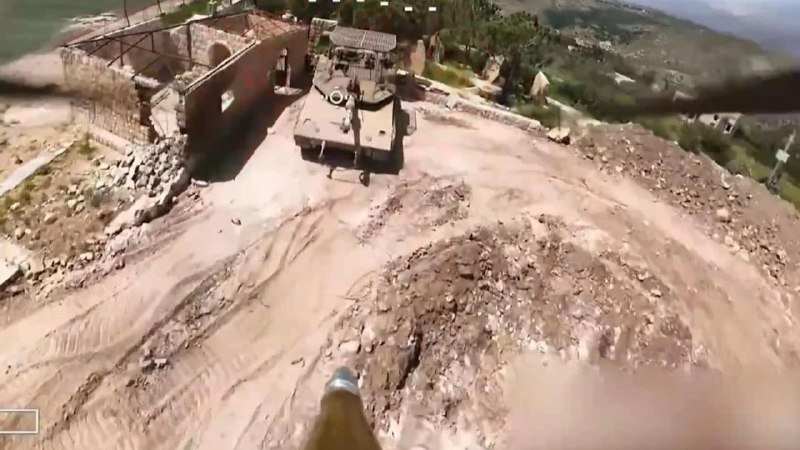
On 7 May 2026, an Israeli air strike struck a relief team in the town of Tul, in southern Lebanon. Iranian state-linked outlet Tasnim News published photographs from the scene. Hezbollah, whose fighters operate in the area, subsequently released video footage depicting drone surveillance of Israeli military positions and labelled it with a message — "We will hunt you down soon" — that the channel framed as an explicit threat. The incident was real. The images were documented. The Telegram posts timestamp to 12:14 and 12:30 UTC that same day.
What followed was notably quiet.
A humanitarian worker struck in a populated Lebanese border town should command attention. A filmed threat from a armed non-state actor embedded in the same civilian fabric should deepen that attention. Instead, the story occupied a thin lane of regional wire coverage and Telegram aggregation — a fraction of the column-inches that equivalent footage from Gaza routinely commands. The disparity is real, and the explanation offered by some editors — that access to Gaza is tighter, making each confirmed incident more "precious" — does not survive scrutiny when the question is why Tul, a town whose name surfaces in IDF operational statements regularly, so rarely anchors a story on its own terms.
The Access Argument, Examined
The standard defence runs like this: Western newsrooms maintain bureaus in Jerusalem and Tel Aviv. Their correspondents can reach Gaza's periphery, talk to displaced families, and verify footage against IDF statements. Lebanon, by contrast, presents a murkier information environment — Hezbollah's media apparatus is opaque, and the towns along the border are subject to constant kinetic pressure that makes independent verification difficult.
This is partly true. Access genuinely shapes what gets covered. But it does not explain the selective weight given to equivalent incidents once they have been verified. When a strike kills aid workers in Gaza, the pattern in major Western outlets is consistent: the IDF statement, the UN reaction, the NGO condemnation, the photograph of a destroyed vehicle with a branded vest. When a strike kills aid workers in Lebanon, the pattern is thinner — a brief wire item, a note that IDF confirmed targeting activity in the area, and then a migration of the story into the foreign policy back-pages where it sits until the next escalation absorbs attention.
The access argument also flatters itself. Some of the most significant footage of Israeli operations in Lebanon — including Hezbollah's own published drone intelligence — circulates widely through open channels. It is not buried. It is simply deprioritised relative to a different theatre where editorial investment is deeper and audience appetite, shaped by years of persistent front-page placement, is correspondingly greater.
Drone footage as political signal
Hezbollah's release of drone surveillance footage on the same day as the Tul strike is not coincidental. Armed groups that maintain an embedded presence in civilian environments use deliberate imagery — footage of IDF patrol patterns, positions near schools, convoy routes — as operational communication and domestic political theatre. The framing of the post, "We will hunt you down soon," is calibrated for an audience that includes Lebanese civilians, regional allies, and the armed group's own fighters. It says: we see you, we are watching, the strike has not degraded our capacity.
This is a standard posture for Hezbollah. What is less standard — in Western coverage — is the willingness to treat it as a data point about the group’s operational continuity rather than a novelty. Hezbollah has maintained drone capability for years. Its media apparatus has published intelligence of this kind before. The willingness to treat each instance as a scoop rather than a pattern is itself a framing choice — it presupposes that Hezbollah's presence is episodic rather than structural, which maps uneasily onto the reality of southern Lebanon's security architecture.
What the silence reveals
Newsrooms covering conflicts operate under resource constraints that are real and non-negotiable. Bureaus cost money; correspondents have finite bandwidth; editors make triage decisions constantly. The argument here is not that every incident in every conflict deserves equal treatment — that is neither feasible nor sensible. The argument is that the criteria for weighting should be visible and consistent, not a product of accumulated editorial inertia that simply favours the theatre where the most coverage has already been generated.
A relief worker killed in Tul is a human being whose death matters on its own terms. The reasons that death does not travel as far as a comparable death in Gaza are structural, not accidental — they involve decisions about bureau placement, audience research, and the political commitments of the institutions that fund international journalism. Those decisions deserve to be named rather than naturalised.
The alternative reading — that certain lives are more legible to international publics because a decade of concentrated coverage has made them so, while others remain structurally invisible — is not comfortable. But it is the reading that follows from the evidence of how these stories are placed, which sources get prominent placement, and which incidents generate reactions from the officials who speak for the international system. That system reacted to Tul. But its reaction was quieter, and that quietness is worth accounting for when assessing the claims of humanitarian concern that accompany coverage of ongoing conflicts.
Wire provenance
This editorial synthesis draws on the following public wire/social posts:
- https://t.me/tasnimnews_en/41238
- https://t.me/tasnimplus/88124
- https://t.me/tasnimnews_en/41234
- https://t.me/tasnimnews_en/41236