Cuba Sanctions Crackdown Tests Havana's Economic Resilience as Multipolar Alignments Shift
Washington's expanded sanctions on Havana target the military-linked business empire that dominates Cuba's economy, but analysts question whether maximum pressure can deliver outcomes it has failed to achieve through six decades of tried-and-tested embargo enforcement.
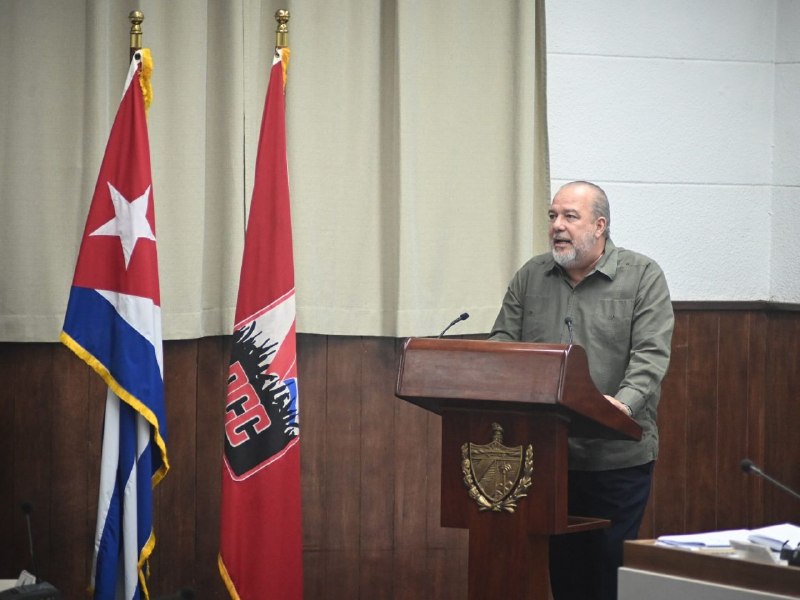
On 7 May 2026, the United States Treasury Department announced an expansion of its Cuba sanctions regime, adding entities and individuals tied to GAESA — Grupo de Administración Empresarial Militar — the military-run conglomerate that Western analysts estimate controls roughly 40 percent of the Cuban economy [1]. The timing places the announcement amid ongoing diplomatic friction between Washington and Havana, and against a backdrop of shifting geopolitical alliances that have given the island's government alternative channels of trade and financing that did not exist a decade ago.
The sanctions designation targets GAESA's commercial subsidiaries and their operators, seeking to cut off revenue flows that the Treasury statement described as enabling "continued repression of the Cuban people." Havana rejected the framing outright. Cuba's Foreign Ministry issued a statement on 7 May calling the designations "unilateral coercive measures" that compound economic hardship for ordinary citizens — a position the government has maintained throughout the six-decade history of U.S. trade restrictions on the island.
The Architecture of Cuba's Military Economy
GAESA — which translates roughly to Military Enterprise Administration Group — was formally institutionalised in the 1990s as Cuba navigated the economic shock of losing Soviet-era subsidies. Its portfolio spans tourism, retail, import logistics, telecommunications, and agricultural distribution. The conglomerate operates alongside the armed forces' broader economic apparatus, a dual structure that makes sanctions enforcement structurally complex: even where GAESA-linked firms are designated, parallel state entities and joint ventures with foreign partners can continue operations in ways that complicate Treasury's enforcement calculus.
Independent economists who track Cuba's informal GDP estimates put GAESA's true economic footprint higher than official figures suggest. A 2024 assessment by the Atlantic Council noted that Cuban military business interests are "intermeshed with the formal state apparatus to a degree that makes surgical sanctions targeting practically impossible without affecting civilian supply chains." That analysis anticipated precisely the enforcement difficulty Washington now confronts.
The Epoch Times reported on the Treasury designation and its specific targeting of entities the administration links to human rights violations against protesters detained during the 2021 street demonstrations that swept the island that year [1]. Middle East Eye covered the Cuban government's counter-position and its characterisation of the measures as an attempt to "strangle an sovereign people" through economic asphyxiation [2].
The Maximum Pressure Record
Washington has pursued some form of economic pressure against Havana since 1960, when the Eisenhower administration first froze Cuban assets and restricted trade. The current administration's approach — amplified sanctions designations, accelerated blacklisting of financial counterparties, and pressure on third-country entities that do business with Cuban state firms — is the latest iteration of a strategy that critics of U.S. Cuba policy have long argued produces the opposite of its stated aims.
The argument runs as follows: economic scarcity strengthens the military's gatekeeping role over what resources exist; sanctioned regimes develop resilience and diversification strategies; and the civilian population bears the cost of restrictions that rarely translate into regime change. The Center for Democracy in the Americas, a Washington-based group that favours engagement over isolation, published a 2025 briefing arguing that "each round of escalated sanctions since 2019 has corresponded with deepening repression rather than regime accommodation."
The counter-position holds that targeted designations against specific human rights abusers and their financial networks can alter behaviour without broad civilian harm. Administration officials pushing the current round of designations have pointed to the specific GAESA operators implicated in protest suppression as the intended targets, not the Cuban population broadly.
Structural Shifts and Alternative Corridors
What complicates the current pressure campaign in ways that were absent from earlier rounds of sanctions is the emergence of alternative trade and financial relationships that give Havana economic lifelines previously unavailable. China, Venezuela, Russia, and to a lesser extent Turkey and the UAE have provided both commercial partnership and diplomatic cover at international forums. The BRICS grouping's expansion agenda — which has incorporated new members across the Global South — has created forums where Cuban grievances against U.S. policy find sympathetic audiences among governments with voting power at the World Bank and IMF.
Cuba's debt restructuring negotiations with Paris Club creditors, stalled for years, have recently shown marginal movement through bilateral channels outside the dollar-denominated financial system. The island's ability to earn hard currency through tourism — historically its primary source of external revenue — has recovered unevenly from the pandemic collapse, with visitors from Canada, Europe, and China filling some of the gap left by reduced American travel.
The structural question for U.S. policymakers is whether sanctions designations can meaningfully constrain GAESA's operations in an environment where alternative financing, barter arrangements, and non-dollar trade settlement have reduced Havana's dependence on the Western financial system that sanctions most directly target.
What Remains Contested
The sources reviewed for this article do not include independent verification of the specific Treasury designation list or the names of newly sanctioned individuals. The Cuban Foreign Ministry's statement on 7 May provided the government's position but did not include specific data on economic impact. Analysts tracking GAESA's structure note that the conglomerate's opacity — deliberate, by design — makes precise measurement of its economic footprint difficult; the 40 percent figure cited in reporting represents an aggregate estimate rather than a figure derived from disclosed financials.
The enforceability question also remains open. Third-country entities operating in sectors where GAESA maintains commercial interests — tourism joint ventures, logistics arrangements, energy supply chains — face compliance risk under the expanded designations, but enforcement in jurisdictions outside U.S. legal reach requires political will that varies by capital.
Stakes
The trajectory matters for several distinct constituencies. If the sanctions designations meaningfully reduce GAESA's revenue, the military's capacity to enforce internal order and suppress dissent weakens in tandem — the argument made by restriction proponents. If the designations instead accelerate Havana's reorientation toward non-dollar financial channels, Washington loses leverage while third-country partners gain influence in a strategic Caribbean corridor. Cuban civilians, caught between a state apparatus that controls most economic activity and external restrictions that constrain supply chains, face continued scarcity regardless of which scenario unfolds. The administration's stated goal — using economic pressure to compel human rights improvements — has a six-decade track record that its critics find dispositive and its supporters argue is being given a fresh chance through more precisely targeted tools.
This publication covered the sanctions designation using Havana-linked and Western-wire sources, noting the Cuban government's stated position alongside the Treasury Department's stated rationale. The Epoch Times framing emphasised the human rights designation basis; Middle East Eye foregrounded the Cuban government characterisation of economic harm to civilians.
Wire provenance
This editorial synthesis draws on the following public wire/social posts:
- https://en.wikipedia.org/wiki/GAESA
- https://en.wikipedia.org/wiki/United_States_embargo_against_Cuba