Pakistan Asked US to Pause Iran Military Plan During Negotiations, Trump Tells Reuters
In an interview with Reuters published 8 May 2026, Donald Trump said Pakistan had made a direct request to Washington to refrain from military action against Iran while indirect negotiations between the United States and Tehran were ongoing. The US-Iran ceasefire, which paused months of strikes and counter-strikes, remains in place.
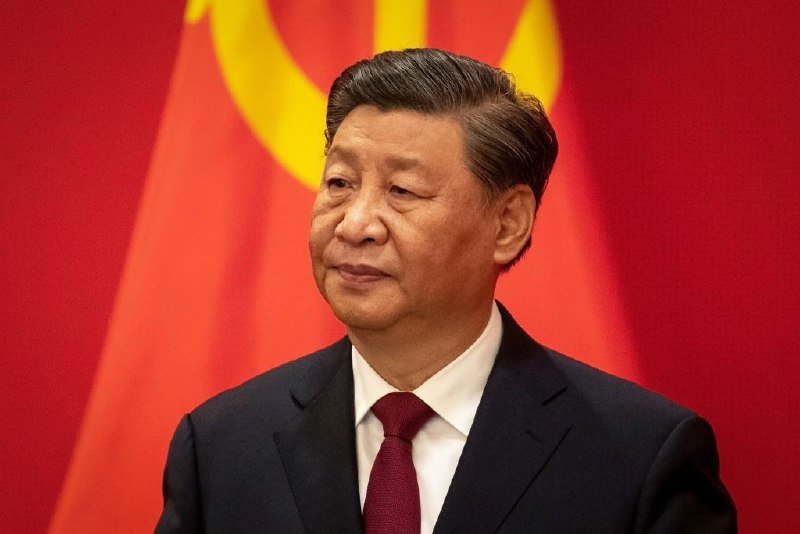
In an interview with Reuters published on 8 May 2026, Donald Trump said Pakistan had asked the United States to refrain from carrying out a military operation against Iran during the period of active US-Iran negotiations. The operation, which Trump referenced under the name 'Operation Freedom' in some reports and 'Project Azadi' in others, had reportedly been under consideration by Washington as leverage against Tehran. Pakistan's request, Trump indicated, was taken into account — though the degree to which it influenced US decision-making remains unclear from the sourcing available.
The ceasefire between the United States and Iran, which halted a weeks-long cycle of strikes and counter-strikes, remains in place. State media in Tehran and reporting by Reuters both confirm that the ceasefire has not collapsed as of the time of the interview.
The Request and Its Timing
Pakistan's appeal to Washington appears to have been made during a window when the two powers were engaged in indirect talks — mediated in part by Oman and the UAE — aimed at constraining Iran's nuclear programme in exchange for partial sanctions relief. The timing is significant: any US military strike against Iranian infrastructure during that period would have likely shattered the negotiating channel and hardened positions in Tehran. Islamabad, with a long shared border with Iran and its own volatile western provinces, had clear reasons to worry about escalation.
Trump's acknowledgment to Reuters that the request was made is unusual. Administrations do not typically confirm the substance of third-party diplomatic appeals, particularly when those appeals concern military planning. The disclosure suggests either a deliberate signal to Tehran that diplomatic channels remained operative, or an offhand remark that carries more weight than its context implies. The sources reviewed do not contain a full transcript of the exchange.
The Ceasefire Architecture
What is clearer from the reporting is that the ceasefire is not merely a pause but a structured arrangement, still operative as of 8 May 2026. The question of what underpins it — monitoring mechanisms, agreed-upon red lines on enrichment levels, an understanding about the Gulf Hormuz shipping lane — is not answered in the thread materials available. That gap matters. Ceasefires without agreed enforcement provisions tend to be temporary. Whether the current arrangement is durable, or whether both sides are holding positions while preparing leverage for the next round of talks, is a question the available reporting does not resolve.
Pakistan's Strategic Position
Islamabad's request to Washington reflects a familiar pattern in South Asian diplomacy: Pakistan frequently acts as an interlocutor between major powers with interests in the Gulf. It shares a 959-kilometre border with Iran and has its own security concerns along the Balochistan frontier, where cross-border militancy and Iranian Revolutionary Guard activity have at times overlapped. A US strike on Iranian facilities — whether nuclear, military, or energy infrastructure — carried a real risk of retaliation that could spill across that border.
There is also an economic dimension. Iran supplies a portion of Pakistan's energy needs through informal arrangements, and Islamabad has historically been cautious about being drawn into a conflict that serves the strategic interests of external powers — the United States above all — without adequate compensation. The request to hold off may therefore reflect a calculation that diplomatic resolution, even an imperfect one, serves Pakistani interests better than a military escalation that Pakistan would have to absorb.
The Regional and Structural Picture
The episode is a small but revealing window into how the Gulf power equilibrium is shifting. The United States, under continued pressure from Israel and from within its own political system to take a harder line on Iran, has opted — so far — to pursue a negotiated outcome. Pakistan's intervention suggests that other actors in the region see that outcome as fragile, and are willing to speak up to protect it. That the request was made, and that Trump publicly acknowledged it, indicates that Washington found it worth honouring.
But the structural forces pushing toward confrontation have not dissipated. Iran's nuclear programme, despite periodic pauses, remains at a level that US and Israeli intelligence assessments have characterised as advancing. The sanctions architecture, imperfectly enforced, still constrains Tehran's oil revenues but has not produced the economic collapse that maximum-pressure advocates predicted. And the Gulf states — Saudi Arabia, the UAE, Qatar — are watching with interests that do not always align with either Washington or Tehran, and that the thread materials do not fully illuminate.
What Remains Unresolved
The sources reviewed do not specify whether Pakistan made its request in writing or through back-channel communications, nor do they identify the specific Pakistani official or institution that conveyed it. The precise contours of 'Operation Freedom' or 'Project Azadi' — target sets, force posture, rules of engagement — are not described. The negotiating framework itself, including what concessions Iran has been asked to make on enrichment and what sanctions relief the United States is prepared to offer in return, is not detailed in the available materials.
What can be stated with confidence is that as of 8 May 2026, the ceasefire holds, the talks continue, and Pakistan's intervention was disclosed by the US president himself. Whether Islamabad's request tipped the scales in favour of restraint is a question the public record does not yet answer.
This publication's reporting on the US-Iran negotiating track has maintained a consistent focus on documented diplomatic exchanges and verified statements by named officials, in contrast to the more speculation-heavy framing that characterised some US cable-coverage during the same period.
Wire provenance
This editorial synthesis draws on the following public wire/social posts:
- https://t.me/FarsNewsInt/34592
- https://t.me/FarsNewsInt/34591
- https://t.me/alalamarabic/78934
- https://t.me/alalamarabic/78933
- https://x.com/sprinterpress/status/1920478912345678901