Russia Vetoes US-Bahrain UN Resolution on Strait of Hormuz, Backs Iran
Moscow has confirmed it will block a US-Bahrain draft resolution addressing maritime security in the Strait of Hormuz, deepening a diplomatic fracture at the Security Council over who controls the narrative on tensions in the Persian Gulf.
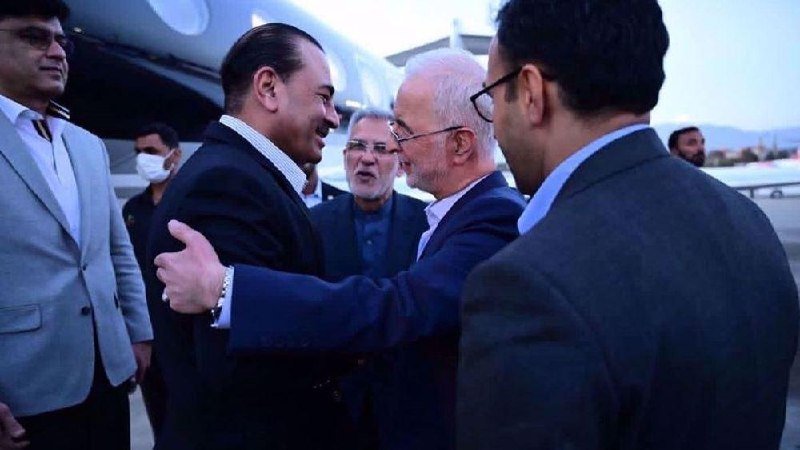
Russia told the United Nations Security Council on May 7, 2026, that it will block a draft resolution tabled by the United States and Bahrain addressing maritime security in the Strait of Hormuz. Moscow's representative at the world body issued a formal rejection of what the Russian mission described as "unbalanced formulations against Iran" — language that echoes Tehran's own objection to the Western-backed measure. The declaration sets up another confrontation in a Security Council already strained by competing visions of who bears responsibility for instability in the Persian Gulf. Russia said it presented an alternative draft that calls for ending the conflict and resolving differences through negotiation.
The dispute centres on how the Security Council characterises risk to commercial shipping in the strait, one of the world's most critical chokepoints for oil exports. The US-Bahrain text, according to the Iranian representation at the UN, called for "sustainable solutions" to Hormuz security but without addressing what Tehran frames as the root cause of Gulf tension. Russian diplomats argued the American resolution was designed to inflame, not de-escalate. "We call on members of the Security Council not to inflame tensions by pushing confrontational draft resolutions," the Russian mission stated. Iran issued a separate sharp reaction to the draft, with its representative arguing that genuine and lasting resolution of Hormuz's security challenges cannot be achieved without acknowledging the broader drivers of regional instability.
April Precedent: Russia and China Block Earlier Hormuz Text
The May 7 rejection is not the first time the Security Council has deadlocked over Hormuz. On April 7, 2026, Russia and China acting in concert prevented the adoption of a separate draft resolution addressing the same strait, according to statements from the Russian mission. That earlier text, which the Western sponsors presumably considered more closely aligned with their framing of the threat, failed to attract the minimum nine votes required, and Moscow and Beijing wielded their council positions to formally block it. Russia and China then introduced their own draft, centred on ending hostilities and returning to direct negotiation as the path to Gulf stability. The effect of that joint veto was to signal that neither Washington nor its Gulf partners could secure council backing for any resolution that singled out Iranian behaviour without a corresponding demand on all parties to the wider regional conflict.
The dual vetoes — in April and now in May — underscore a structural reality about the Security Council as it currently functions: the permanent members with veto power are not merely procedural obstacles. They represent competing geopolitical visions of Middle Eastern security. When Russia and China act in concert on Gulf questions, they are not simply protecting Iran; they are defending a conception of regional order in which American military presence and sanctions pressure are themselves treated as sources of instability rather than responses to it. The Russian mission's statement that the Western draft ignores "the real motives and causes of the crisis" reflects that broader analytical position.
The Hormuz Question: Navigation Rights or Geopolitical Leverage?
The Strait of Hormuz connects the Persian Gulf to the Gulf of Oman and is the conduit for roughly a fifth of global oil trade. Disruption there carries immediate consequences for global energy markets, which is why Washington and its partners treat any threat to freedom of navigation there as a first-order concern. The US Navy maintains a persistent presence in the Gulf of Oman specifically to deter interdiction of commercial shipping. From that vantage point, a Security Council resolution affirming navigational rights and condemning interference is a straightforward instrument of international law.
Iran's position, and by extension the position that Russia and China are now endorsing at the council, holds that the Western framing misses the political context. Iranian officials have long argued that the presence of US naval forces in Gulf waters is itself destabilising, and that Western sanctions — not Iranian conduct — are the primary driver of tension that makes the strait's status fragile. Under this reading, a resolution that names Iran as the problem while omitting the American military footprint and the sanctions regime is not a peace instrument but a political act dressed in the language of international law.
The sources available do not include the full text of either the US-Bahrain resolution or the Russian-Chinese alternative, so the precise language that divides the two camps cannot be verified directly from the materials on record. What is clear is that both sides believe the Hormuz question cannot be separated from the wider regional conflict — and that both are using the Security Council to make a point about legitimacy rather than simply to manage shipping risk.
Broader Implications for Security Council Practice
What makes the May 7 statement significant extends beyond the immediate resolution. The Security Council has been a site of sustained paralysis on Middle Eastern questions since Russia's 2022 full-scale invasion of Ukraine reshaped the politics of European security and, indirectly, the calculus of every permanent member. That invasion — and the Western sanctions architecture it triggered — has deepened Russia's alignment with China and Iran, creating a bloc within the council that can reliably block language its members find unfavourable. The Hormuz votes are an expression of that realignment, not an isolated dispute about navigation rights.
For Washington and its partners, each failed resolution is a reminder that the council's structural design leaves them with limited tools when Moscow and Beijing act in concert. The practical effect is to push the locus of Gulf security governance toward bilateral and minilateral arrangements — US naval operations, Gulf Cooperation Council coordination, and sanctions pressure — that do not require Security Council authorisation. That drift carries its own costs: a council that cannot speak with one voice on a navigational chokepoint for global energy markets is a council whose authority is increasingly theoretical.
The sources reviewed for this article are drawn from the Russian mission's public communications and Iranian state media, which present the Moscow-Tehran-Beijing axis position in its strongest form. American and Bahraini representations to the council are not reflected in the available materials, and a full accounting of the diplomatic exchange would require access to those statements or to the council record. Monexus will continue to track this file as the formal vote approaches.
This publication's coverage foregrounds the diplomatic record as stated by the Russian and Iranian missions — the sources available at time of writing — while noting the absence of countervailing statements from the US and Bahraini delegations in the material reviewed.
Wire provenance
This editorial synthesis draws on the following public wire/social posts:
- https://t.me/presstv
- https://t.me/alalamarabic
- https://t.me/alalamarabic
- https://t.me/alalamarabic
- https://t.me/alalamarabic