Tehran's Hormuz Calculus: Iran Advisor Declares Strategic Chokepoint Non-Negotiable
Iran's Supreme Leader's advisor Mohammad Mokhber declared on 8 May 2026 that the Islamic Republic will never relinquish control over the Strait of Hormuz, framing the waterway as a strategic asset of atomic-bomb equivalence—a hardening of Tehran's long-standing posture on the world's most critical oil chokepoint.
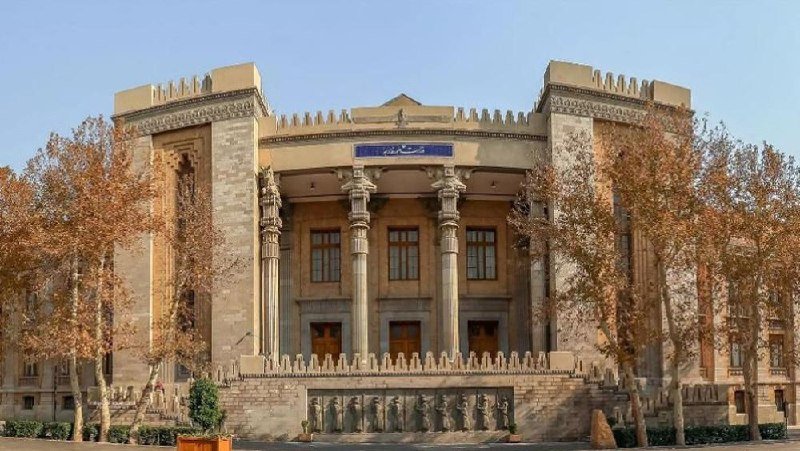
On 8 May 2026, Mohammad Mokhber, adviser and assistant to Iran's Supreme Leader Ayatollah Ali Khamenei, delivered a statement that rattled energy markets and tightened the knot of Middle Eastern deterrence politics. Speaking through Iran's Tasnim news agency, Mokhber declared the Strait of Hormuz a strategic asset with capabilities that "rival the atomic bomb," adding that the Islamic Republic would never neglect its control over the waterway. The statement, distributed simultaneously across Iranian state-aligned channels, carried the unmistakable cadence of official doctrine—not a偏离 from Tehran's known position, but a public reassertion of it, timed for effect.
The Strait of Hormuz is not merely a geographic convenience. It is the conduit through which roughly one-fifth of the world's oil supply passes daily—approximately 21 million barrels per day, according to the U.S. Energy Information Administration. Oman and the United Arab Emirates border its narrowest point, the Ormuz Gast Narrows, where shipping lanes compress to a width of just 33 kilometres. Control that corridor, and you control the economic lifelines of Saudi Arabia, Iraq, Kuwait, Bahrain, Qatar, and the UAE. Mokhber's language, drawing an explicit parallel to nuclear weapons, signals that Tehran understands this asymmetry better than most capitals in the region—and intends to weaponise it rhetorically, at minimum.
The Hormuz Doctrine and Its Logic
Iran has long treated the strait as a red line in any conflict scenario involving its nuclear programme or regional posture. The Islamic Revolutionary Guard Corps has conducted mine-laying exercises in the Persian Gulf, tested antiship missiles from coastal batteries, and deployed fast-attack craft in patterns designed to demonstrate the regime's ability to close the waterway on short notice. The logic is straightforward: a regime that cannot win a conventional naval engagement compensates with area-denial capabilities that raise the cost of any adversary's intervention to prohibitive levels.
Mokhber's explicit invocation of atomic-bomb equivalence places the strait within this doctrine. The comparison is not accidental. Just as a nuclear arsenal creates deterrence through unacceptable damage, Iran's ability to disrupt Hormuz traffic—even briefly—would send shockwaves through global energy markets, inflame inflation across import-dependent economies, and generate immediate international pressure on any adversary contemplating military action. This is the leverage Tehran has cultivated for four decades, and the 8 May statement confirms the regime has no intention of surrendering it.
The UAE Warning and Regional Repercussions
The Tasnim report carried an additional detail: a direct warning that the UAE would face punishment more severe than other parties in any escalated confrontation. The source materials do not specify what form this punishment would take, and Iranian state media are not transparent about operational specifics. But the message is legible. Of all the Gulf Cooperation Council states bordering the strait, the UAE has deepest commercial ties to both Western powers and Tehran, operating as a financial and logistical hub for multinationals navigating the region's regulatory complexity. Singling out the UAE for enhanced retaliation signals that Iran views Emirati neutrality—or worse, alignment with pressure campaigns—as a particular betrayal.
The warning landed against a backdrop of elevated regional tension. Talks between the United States and Iran over the nuclear file have produced no binding agreement, and both sides have signalled willingness to escalate rather than concede. Israeli operations in the region continue to generate friction. Gulf monarchies have been hedging—maintaining security partnerships with Washington while keeping quiet diplomatic channels open to Tehran. Mokhber's statement suggests that hedging has limits from Tehran's perspective, and that those who straddle too openly risk becoming a target of Iranian countermeasures.
Counterargument: The Limits of the Threat
It is worth noting what the statement cannot achieve. Rhetorical hardening does not translate automatically into operational capability. Iran's area-denial toolkit is real but imperfect; the U.S. Navy maintains significant presence in the Persian Gulf, and American carriers operate within striking distance. Closing the strait entirely would require sustained military operations that would invite precisely the international coalition response Tehran seeks to avoid. The regime's survival calculus has consistently favoured asymmetric deterrence over direct confrontation—bluster that raises costs, not actions that cross thresholds.
Moreover, closing the strait would harm Iran itself. Iranian oil exports also flow through or near the Hormuz corridor. Tehran has designed its area-denial posture to threaten disruption without self-inflicted damage, but the margin for error narrows if miscalculation occurs. The statement may be partly calibrated for domestic audiences—demonstrating resolve to a population that has endured years of sanctions—rather than as a genuine signal of imminent intent.
What Comes Next
The 8 May declaration does not change the facts on the water, but it recalibrates the atmosphere. Energy markets will process the statement as a risk premium. Gulf capitals will recalculate their hedging margins. Washington and European partners pursuing diplomatic channels will confront a Tehran that is deepening, not softening, its most potent card.
The structural reality remains unchanged: the Strait of Hormuz is the world's most consequential energy chokepoint, and Iran sits astride it with capabilities that no amount of sanctions or diplomatic pressure has eliminated. Mokhber's statement is a reminder that this asymmetry is not incidental but central to Tehran's strategic identity. Whatever negotiations proceed or collapse in the months ahead, they will do so in the shadow of a strait that, in Iranian doctrine, rivals the bomb itself.
Mokhber's statement was reported on 8 May 2026 via Iranian state-aligned channels including Tasnim News and Al-Alam Arabic, and monitored by regional geopolitical tracking services.
Wire provenance
This editorial synthesis draws on the following public wire/social posts:
- https://t.me/GeoPWatch/8043202513
- https://t.me/tasnimnews_en/8043202513
- https://t.me/alalamarabic/8043202513