Trump calls Iran strikes 'love tap' as ceasefire negotiations continue
As US-Iran negotiations resume, Trump dismisses limited strikes as a 'love tap' while Reuters confirms Pakistan sought to pause military operations during talks — raising questions about who holds leverage in the current diplomatic phase.
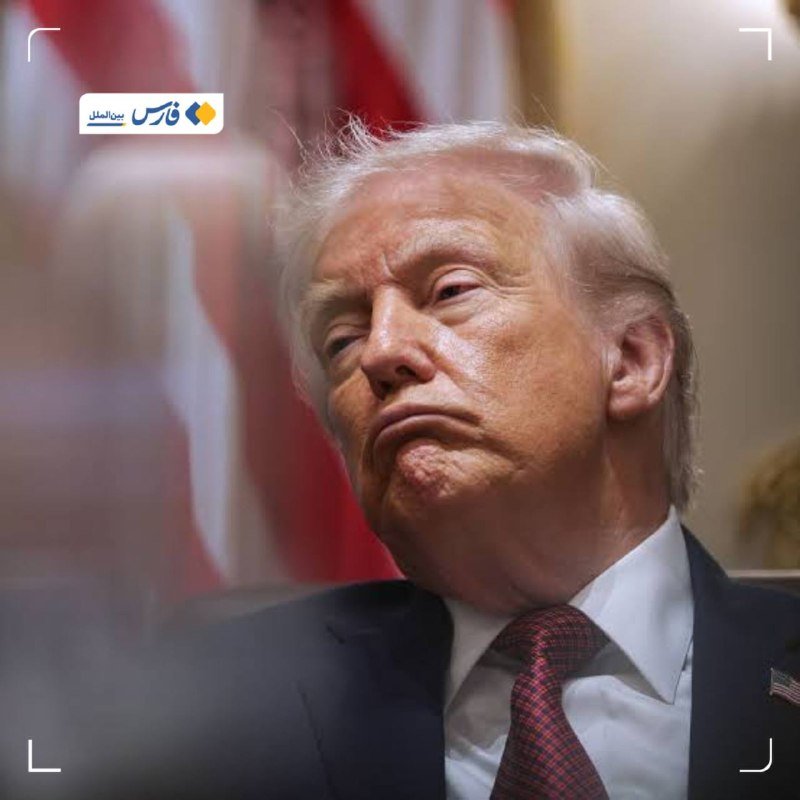
Within hours of limited US strikes landing on Iranian military infrastructure, President Donald Trump on 8 May 2026 delivered a characteristically performative assessment: the operation, he said, was "just a love tap." The same day, Trump declared that gas prices had fallen and the stock market had risen — framing that cast the strikes as a low-cost, high-reward display of coercive diplomacy rather than a significant escalation. Reuters reported separately that the ceasefire between Washington and Tehran remained technically in place, and that Pakistan had asked the United States to refrain from implementing its so-called "Freedom Project" — widely understood as a regime-engineering framework — while nuclear negotiations with Iran continued.
The picture that emerges is of an administration pursuing parallel tracks: visible military demonstrations calibrated to signal resolve without triggering a wider war, and quiet diplomatic engagement aimed at a negotiated outcome. Whether these tracks reinforce or undermine each other depends on which audience the White House is most intent on satisfying.
The strikes and the framing
The strikes, described in initial reporting as limited and targeted, were not presented by US officials as an opening salvo in a broader campaign. Trump himself moved quickly to de-escalate the language, using the phrase "love tap" in public remarks — a formulation that served multiple purposes simultaneously. It reassured financial markets nervous about oil supply disruptions, signalled to Tehran that the operation had defined limits, and reinforced to a domestic audience that the president retained full control over the pace and scope of any escalation. The Reuters reporting that a ceasefire remained in place after the strikes suggests the Iranian side read them in a similarly constrained fashion.
That reading, however, carries its own risks. An adversary that interprets limited strikes as evidence of restraint rather than resolve may calculate that further provocation will be met with similarly bounded responses. The framing of the strikes as economically manageable — gas prices down, markets up — may inadvertently telegraph the White House's own vulnerability to oil-market disruption, providing Tehran with a structural form of leverage.
Pakistan's intervention
The Reuters report that Pakistan asked the United States to suspend the Freedom Project during negotiations with Iran introduces a third actor with distinct interests. Pakistan shares a long, contested border with Iran and hosts its own internal tensions involving Iranian-adjacent militant groups. Islamabad's request suggests it fears that a US-backed regime change operation — or the threat of one — could destabilise its western flank precisely when Pakistan is managing its own domestic and regional pressures.
Whether Pakistan's intervention reflects coordination with Tehran, independent calculation, or a mutual interest in preventing a wider conflagration is not clear from available reporting. What is clear is that Washington's room to manoeuvre inside Iran is not solely a function of US-Iran bilateral dynamics. Regional stakeholders with their own security architectures are actively shaping what the United States can and cannot do during the negotiation window.
The negotiation phase and its structural logic
The ceasefire's persistence despite military action points to something the media framing of the strikes has largely obscured: both sides have so far chosen the diplomatic track as their primary instrument. Trump's public language has oscillated between coercive bluster and transactional pragmatism, a pattern that reflects the president's own negotiating style as much as any coherent strategic logic. Tehran, for its part, has maintained ceasefire compliance while continuing to enrich uranium — a posture that keeps its leverage intact without triggering a rupture.
The structural context here is the intersection of energy politics and nuclear non-proliferation. The United States, for all its military superiority, cannot impose a settlement on Iran without Iran's cooperation on the nuclear file. That cooperation cannot be extracted through strikes alone; it requires a negotiation framework that offers Iran something it values — most likely sanctions relief and a pathway to normalised economic relations. The "love tap" language, whatever its domestic political utility, does not advance that framework. It may, in fact, complicate it by reinforcing Tehran's perception that the US side cannot commit to a consistent approach.
What remains uncertain
The sources do not provide sufficient detail to establish which specific Iranian facilities were struck, what the precise Iranian response has been beyond ceasefire compliance, or whether there are classified parameters of the ceasefire agreement that differ materially from its public description. The Freedom Project's specific objectives remain opaque. It is also unclear whether Pakistan's request was relayed through diplomatic channels or public statements, and whether Washington has publicly responded to it. These gaps matter for any assessment of whether the current negotiation is durable or a tactical pause before a broader rupture.
What the available evidence does support is this: the ceasefire is holding, negotiations are ongoing, and the United States has conducted limited strikes without breaking the diplomatic window open. Whether that window produces a durable agreement or collapses under the weight of its own contradictions is the central question the coming weeks will answer.
Wire provenance
This editorial synthesis draws on the following public wire/social posts:
- https://t.me/disclosetv/19382
- https://t.me/disclosetv/19381
- https://t.me/alalamarabic/12477
- https://t.me/alalamarabic/12476