Ukraine Agrees to Three-Day Ceasefire Backed by US Mediation
Ukraine has agreed to a seventy-two-hour ceasefire with Russia spanning May 9–11, contingent on a simultaneous 1,000-for-1,000 prisoner exchange negotiated through US mediation, President Volodymyr Zelensky confirmed on 8 May 2026.
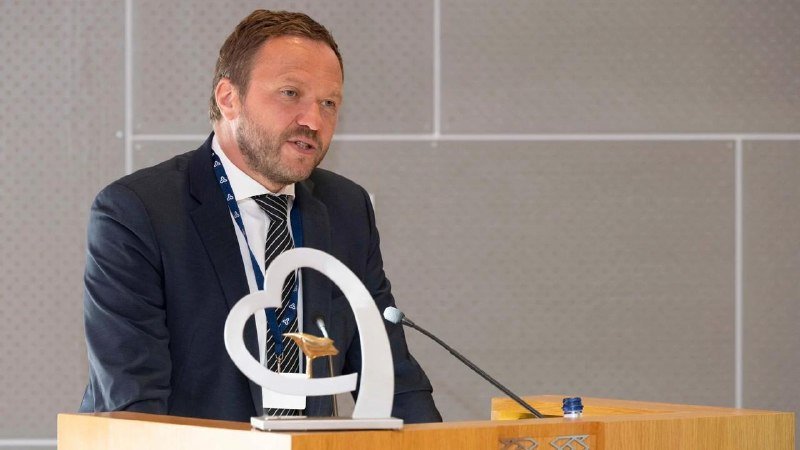
President Volodymyr Zelensky confirmed on 8 May 2026 that Ukraine had accepted a seventy-two-hour ceasefire with Russia, running from 9 May through 11 May, after Moscow agreed to a simultaneous prisoner-of-war exchange on a one-for-one basis brokered through US-mediated talks. The announcement followed a post on social media by President Donald Trump, who said he had personally requested the truce to allow Russia to observe its annual Victory Day commemorations on 9 May.
The terms of the agreement are concrete if limited. Both governments have committed to a ceasefire spanning three calendar days. The parallel prisoner exchange, structured as a 1,000-for-1,000 swap, is the quid pro quo that made Kyiv's consent possible. Trump described the arrangement as a gesture toward the Russian celebration, framing the pause in fighting as a goodwill offer tied to a date of significant symbolic weight in Moscow. Zelensky, for his part, used direct language about what the agreement prioritises: the return of Ukrainian nationals held in Russian captivity matters more than any ceremony or display on Moscow's Red Square.
The exchange itself, if carried out in full, would rank among the largest single prisoner swaps conducted since Russia's full-scale invasion began in February 2022. Beyond the arithmetic, the logistics of moving one thousand individuals in each direction within a narrow window carry considerable practical weight. Verification of identities, medical assessments, transport coordination, and agreement on delivery locations all require precision that past implementations have not always achieved. Whether the exchange is executed simultaneously or in staged tranches will determine how both governments interpret the other's commitment to the broader ceasefire.
The structural logic of this arrangement rewards close attention. The United States has reinserted itself as an active mediator in a conflict where its previous engagement produced no durable settlement. Trump's decision to anchor the request to Victory Day — a date that carries deep political resonance inside Russia — signals a willingness to accommodate Moscow's symbolic calendar in exchange for a tangible, time-bounded deliverable. It is a different calculus from the framing that dominated earlier phases of the war, where Western support for Ukraine was presented primarily as a matter of principle and collective security rather than negotiated accommodation.
For Kyiv, the agreement is a calculated trade. One thousand prisoners returned to Ukraine is a concrete human outcome that families inside the country will experience directly — and that carries political weight heading into whatever comes next. Whether three days of reduced fighting buys enough goodwill or space to advance a broader diplomatic track remains the operative question. The ceasefire is too brief to constitute a pause in the wider conflict; it is better understood as a test case. If both parties comply with the terms, the precedent it sets — and the role it assigns to Washington as the honest broker — may matter more than the seventy-two hours themselves.
What the available sources do not yet establish is whether either side has made commitments beyond the stated window, whether any unspoken conditions attach to the prisoner exchange, or how the agreement handles the question of continued military operations in territories where the front lines are most active. The ceasefire applies to the named dates; its logic as a precursor to longer-term arrangements is inference, not sourced fact. The prisoner exchange, if it proceeds as announced, will be the first reliable signal of whether Moscow's acceptance of the terms reflects a genuine willingness to follow through or a political manoeuvre designed to manage the optics of Victory Day.
The stakes are asymmetric but overlapping. Russia gains a propaganda frame — a temporary cessation granted at American request, in observance of a date the Kremlin treats as the centrepiece of its nationalist calendar. Ukraine gains the return of a significant number of its own people and a demonstration that negotiated outcomes remain achievable even as the front line remains static. Trump carries personal exposure: a ceasefire that collapses or an exchange that is partially honoured will be difficult to present as a success, and the political cost in Washington will be proportional to the expectations he has set.
The longer arc is equally uncertain. A three-day pause does not resolve the underlying territorial and security questions that drive the conflict. It does, however, establish a channel and a format — US mediation producing a bilateral commitment with concrete terms — that both sides have now accepted once. Whether that channel remains open, and whether the format scales beyond seventy-two hours, is the question this weekend's events will answer or defer.
This publication noted that the thread drew exclusively from Telegram wire services carrying unverified social media posts. Independent confirmation from the Ukrainian President's official platform, the Kremlin press service, or the White House was not available at time of writing. The structural framing above reflects what the available evidence supports rather than any broader claim about the trajectory of negotiations.
Wire provenance
This editorial synthesis draws on the following public wire/social posts:
- https://t.me/noel_reports/14892
- https://t.me/osintlive/13481
- https://t.me/osintlive/13480
- https://t.me/ClashReport/15631
- https://t.me/Tsaplienko/19843