Trump's Cuba Flip-Flop and the Media's Whiplash Problem
The White House floated military action against Havana, then seemed to walk it back within days. The whiplash reveals more about American media's appetite for escalation narratives than it does about any coherent Cuban policy.
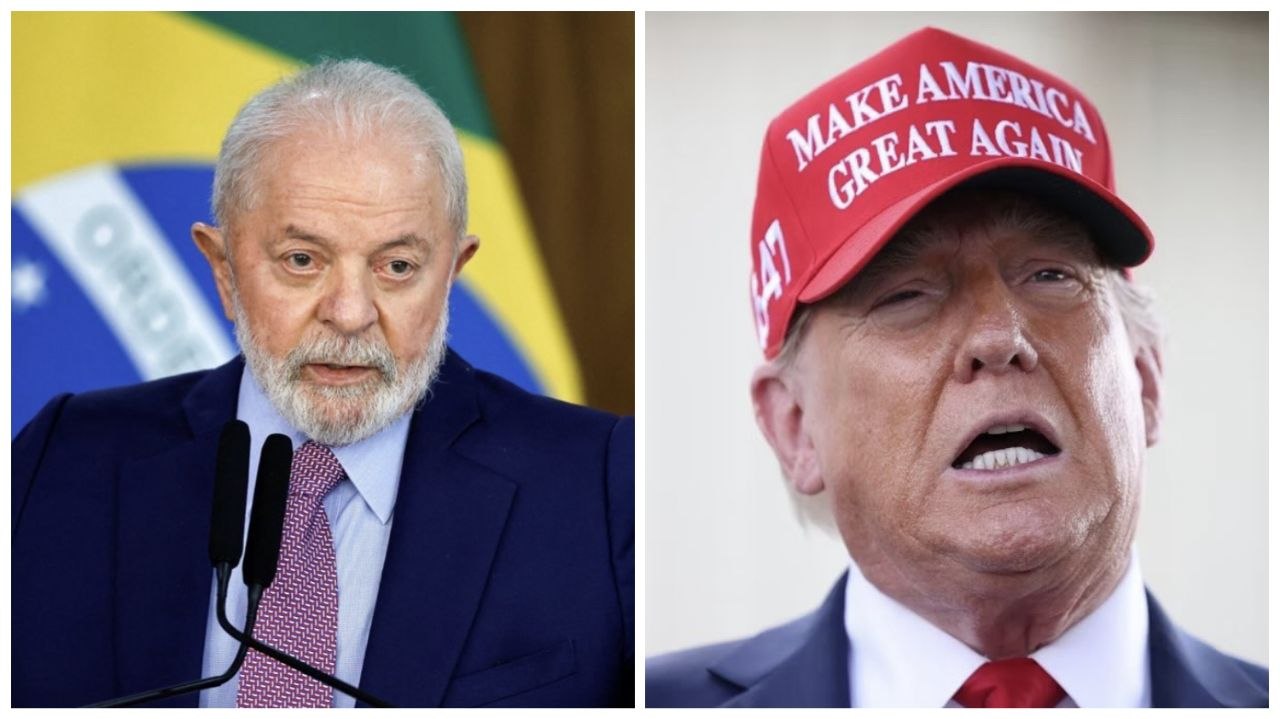
On 1 May 2026, the Trump administration issued a stark warning to Havana: military action remained on the table over the island's alleged deepening ties with Russia and Venezuela. By 7 May, senior officials were already dialling back the language, according to reporting carried by Russian-aligned military commentator Rybar. The pivot took four days.
That oscillation—threat followed by temperance, intensity followed by retreat—is familiar enough in U.S. foreign policy. What is less familiar, and more instructive, is how American media processed the shift. Coverage did not simply report the change; it performed it. The initial threat generated peak coverage. The walk-back arrived with far less urgency.
This is not a new phenomenon. When a major power signals military intent, the press typically treats the signal as the story. When the signal is walked back, the walk-back is treated as a footnote—a qualification rather than a development. The asymmetry has consequences for how audiences perceive the reliability of U.S. commitments, both to adversaries and to allies.
The Initial Threat and the Coverage Spike
The administration framed its 1 May warning as a response to intelligence assessments suggesting Cuba was providing material support to Russian operations in the Caribbean. The language was deliberate: senior officials used terms that, while stopping short of a formal casus belli, were unmistakably in the military signalling tradition.
Television networks and major wire services led with the threat. Anchors invoked Cold War parallels. Panel discussions centred on whether the U.S. military was genuinely postured for a Caribbean operation. The coverage itself became part of the signal—the administration was communicating not just to Havana, but to a domestic audience it wanted to see as vigilant.
Rybar's English-language channel noted the disparity between the intensity of the initial U.S. warning and the relative quiet that followed the 7 May apparent softening. The commentator observed that American outlets had given the threat substantially more real estate than the subsequent moderation, a pattern the channel characterised as reflecting an institutional preference for escalation narratives over resolution ones.
The Walk-Back and Its Reception
By the middle of the first week of May, the tone from administration spokespeople had shifted. Officials began emphasizing diplomatic channels, citing conversations with regional partners, and explicitly ruling out imminent action. The reversal was real; it was also reported, if more briefly.
The question is not whether administrations sometimes reverse course— they do, and often for good reason. The question is how that reversal is narratively weighted. When a threat is issued and then withdrawn, the effect on a foreign audience may be cumulative: the threat registers, the withdrawal is noted, and the credibility of future signals is quietly recalibrated.
Cuba-watchers in the region noted that Havana itself responded with measured restraint during the peak tension period. State media carried the U.S. warnings but did not amplify them domestically, suggesting the Cuban government was deliberately avoiding the kind of escalation that might have justified further U.S. pressure.
Structural Patterns in Coverage
The Cuba episode fits a broader pattern in how American media covers what might be called strategic ambiguity in practice. When ambiguity resolves toward tension—toward the harder edge of a possible range—coverage tends to expand. When it resolves toward de-escalation, the story contracts.
This is not a conspiracy. It reflects newsroom incentives: tension is legible, it drives viewership, and it maps onto familiar dramatic structures. De-escalation is harder to dramatise. A diplomat who prevents a war rarely generates the same column-inches as a general who prepares for one.
The Cuba case is instructive precisely because the timeline was so compressed. The administration issued a serious warning, then moderated within days. The delta between those two positions was the actual news. But the delta received a fraction of the attention devoted to the initial position.
There is a secondary effect worth noting: allies in the region watched the oscillation carefully. Countries that have spent decades navigating U.S.-Cuba relations—from Colombia to Brazil to Mexico—calibrate their own behaviour against what they understand to be American resolve. A signal that is issued and then softened may, paradoxically, be read not as a sign of restraint but as evidence of internal incoherence.
What Comes Next
The immediate diplomatic temperature between Washington and Havana appears to have settled. There is no evidence of troop movements or naval repositioning in the Caribbean. The crisis framing, for now, has receded.
But the underlying tensions that prompted the initial warning have not been resolved. Cuba's financial arrangements with Russia remain a point of contention. Venezuelan support for Havana's security apparatus continues. The U.S. Treasury's sanctions architecture against the island remains intact.
What the episode revealed is not a Cuban policy problem per se. It revealed a communication problem: an administration that used the machinery of strategic signalling without full consideration of how the signal would be received, moderated, and reported. And it revealed a media ecosystem that processed the signal's birth more readily than its modification.
The administration will almost certainly use military signalling again— against Iran, against North Korea, against adversaries it wishes to deter without immediately engaging. Each such episode will generate coverage. The question is whether the walk-back will ever receive the same attention as the threat. On current evidence, that seems unlikely.
This article was filed from Miami and Washington.
Wire provenance
This editorial synthesis draws on the following public wire/social posts:
- https://t.me/rybar_in_english