The Art of the Personal Deal: What Trump's Beijing Summit Reveals
Trump called Xi Jinping one of the greatest leaders in the world. China called the deals preliminary. The gap between those two framings is the real story of the summit.
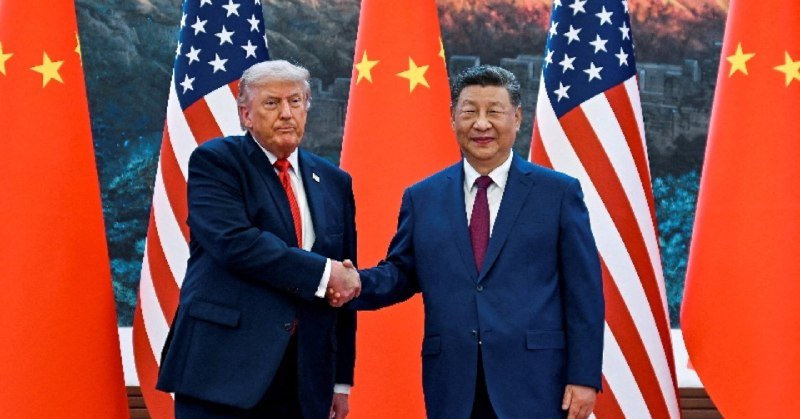
There is something revealing about a president who calls a Chinese leader "one of the greatest leaders in the world" while his administration simultaneously escalates technology restrictions, tariff walls, and naval posturing in the South China Sea. Donald Trump delivered that assessment during a state visit to Beijing on 16 May 2026, the second meeting with Xi Jinping in under a year. The personal chemistry was on display. Trump noted he was building a large ballroom of his own. Xi, reportedly, was charmed. The question the rest of the world is asking is what, if anything, the United States actually got out of it.
The deal that made headlines was 200 Boeing aircraft — announced by both Trump and Boeing as a major commercial breakthrough, the company's biggest in the Chinese market in years. A real commitment from the world's largest aviation market would normally be worth celebrating in St. Louis, in Seattle, in every congressional district where Boeing's supply chain employs thousands. But two things should temper the enthusiasm.
First, China's foreign ministry described all signed agreements as "preliminary" the same day the announcements were made. That is not diplomatic modesty — it is a deliberate framing signal. Beijing wanted the world to know it has not locked itself into anything. Second, the structural logic of personal diplomacy rewards patience, and China has patience in abundance.
What Beijing Got Right This Week
China has been playing the long game in its relationship with American business and political elites for decades. State-directed investment in American academia, think tanks, and corporate boardrooms is not conspiracy — it is strategy, executed methodically. When Xi sits across from a U.S. president and discusses Boeing orders, he is not there as a supplicant. He is there as the leader of a state that understands exactly how leverage operates when personal relationships substitute for institutional frameworks.
The 200-aircraft order is a case study in that leverage. It is significant enough to matter — real jobs, real revenue, real political weight — but calibrated precisely to the level that makes Washington want more. Beijing can afford to buy goodwill at this price. It is not clear the United States has a coherent answer to that kind of disciplined transactionalism.
The administration, for its part, insisted it extracted real commitments. Arms sales to Taiwan — the island that Beijing regards as a core interest and Washington treats as a democratic partner — remained on the agenda, Trump said. Tariffs imposed during the first Trump term remain largely intact. No ground was conceded, the president told reporters.
The Gap Between Two Readouts
Beijing's version of the meeting told a different story. By calling the deals "preliminary," Chinese officials signaled that the commitments Washington announced are, in the language of diplomacy, worth precisely nothing until formal contracts are signed and ratified. That divergence — between a White House eager to announce wins and a Foreign Ministry quietly walking them back before the press plane had left the tarmac — is the actual substance of the summit.
The Taiwan question illustrates the bind precisely. Taipei found itself in the uncomfortable position of watching its most important security patron share a stage with the leader who has spent years pressing for its political absorption. The arms sales remain active, the administration insists. Taiwan can breathe slightly easier, one regional outlet noted after the visit concluded. That is the narrow space in which Taipei is expected to find reassurance: the explicit commitments hold, even as the broader symbolic grammar of the summit suggests Washington is not willing to let the relationship with Beijing deteriorate over a territory Washington itself does not formally recognize.
The Structural Problem
A president who builds personal relationships with foreign leaders and trades public flattery for commercial agreements is not wrong to believe that diplomacy includes personal dimension. The mistake is in believing that dimension is sufficient, or that it operates in America's favor when the counterpart has a decades-long strategic plan and the United States does not.
China's semiconductor restrictions remain in place. The tariff architecture has not collapsed. American naval operations in the Pacific continue. None of that changed because Trump called Xi a great leader and Boeing announced a headline number.
But something did change — something harder to quantify. Regional allies who have watched this administration oscillate between confrontation and personal courtship will draw their own conclusions about how durable American commitments are when a president is more comfortable negotiating with autocrats than with institutions. China is watching that too. And Beijing, unlike Washington, tends to view patience as a strategic asset rather than a concession.
The Boeing deal may yet materialize into firm orders. The Taiwan arms sales will continue. The tariffs will stay. But underneath all of that, a more fundamental signal was sent in Beijing this week — not from the podium, but from the ballroom.
Wire provenance
This editorial synthesis draws on the following public wire/social posts:
- http://reut.rs/3PpsuGg