The Verification Gap: How Casualty Reporting Shapes the Narrative Around Gaza Strikes
Medical sources confirmed three dead and several wounded after an Israeli airstrike on a civilian vehicle in Gaza City on 16 May 2026. The incident illustrates a recurring problem in how such strikes enter the international information space — and whose counting methodology gets believed.
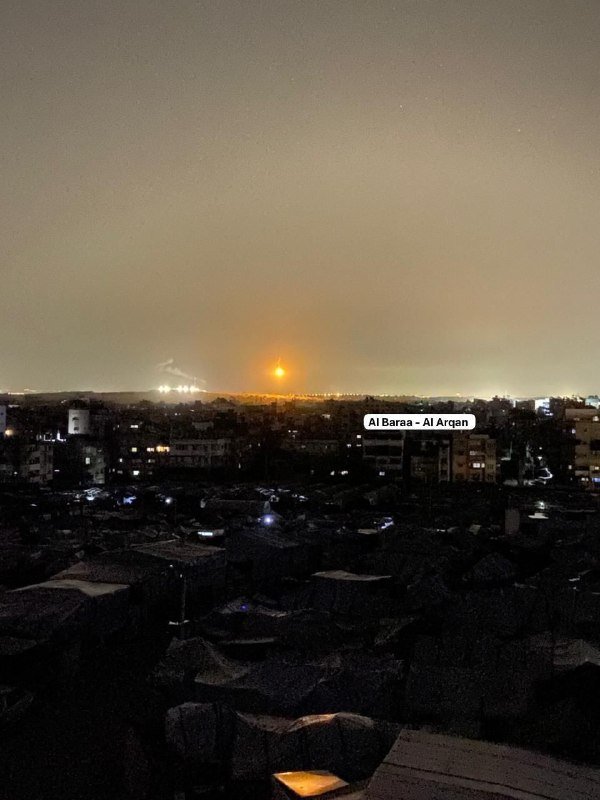
Medical sources in Gaza confirmed three dead and several wounded after an Israeli airstrike on a civilian vehicle near Al-Wahda Tower on Al-Shifa Street, west of Gaza City, on 16 May 2026. The wounded arrived at Al-Shifa Hospital, the strip's largest medical facility, which has featured repeatedly in the international coverage of this conflict. What followed the initial Telegram dispatches was a familiar sequence: casualty figures entered the global information space through local medical sources, and from there, depending on the outlet, they were either amplified, contextualised, or set against an Israeli military spokesperson's response. The sequence itself is the story.
What the Numbers Show — and What They Don't
The initial count from Gaza's medical sources is three martyrs, several wounded. In an environment where on-ground international observers are rarely granted access, these figures come from a system under extraordinary pressure — hospitals operating with depleted supplies, staff making triage decisions under bombardment, and casualty identification conducted in conditions no systematic counting methodology could fully normalise. That is not a dismissal of the data. It is the structural context the data exists inside. Western news organisations, when they report such figures at all, typically hedge them with phrases like "medical sources in Gaza said" — a journalistic caution that simultaneously acknowledges the information and distances the outlet from its independent verification. The hedge is legitimate. But it produces a curious asymmetry: the figures circulate, are reported, are discussed — yet arrive in readers' minds already marked as provisional, as if the uncertainty is a property of the event rather than a property of the access.
The Counterpoint the Framings Miss
Israeli military statements, when they come, typically describe strikes as targeted operations against confirmed military objectives, with incidental civilian harm acknowledged as regrettable but proportionate to the threat. That framing is internally coherent and reflects the operational doctrine under which Israeli forces operate. It is also, crucially, a statement made from a position of information access — drone feeds, signals intelligence, pre-strike target validation — that Gaza's medical infrastructure cannot replicate or verify. Neither framework is wrong. But they are calibrated differently, and the international audience rarely receives both on equal terms in the same story. The result is that the same incident — this strike, this vehicle, these dead at Al-Shifa — can read very differently depending on which sourcing sentence a reader encountered first.
The Structural Pattern in Plain Language
Coverage of strikes in dense urban environments, where one party's military apparatus is technologically superior and the other's casualties are documented by the other side's health infrastructure, systematically faces a credibility problem. It is not unique to this conflict. The same dynamic appears whenever a well-equipped military operates in territory where independent international observers have limited access. The asymmetry is in the information infrastructure, not in the underlying facts of civilian harm. Yet the framing conventions used to report such incidents tend to treat the methodological uncertainty as if it were an open question about whether civilians were harmed — rather than a straightforward question of whether the counting, done under those conditions, might undercount or overcount by some margin while remaining directionally accurate. The three confirmed dead in Tuesday's strike are not a headline in most of the world. They were a Telegram dispatch, picked up by regional wires, and set against an IDF statement not yet issued.
Why the Silence Around Verification Matters
The international human rights architecture — UN bodies, the International Committee of the Red Cross, international criminal court investigations — has repeatedly documented that civilian harm in conflict zones is systematically underreported when the party responsible controls access to the territory where it occurred. That is a finding reached across multiple conflicts, not a claim specific to this one. When medical sources in a besieged territory provide the first and most detailed account of an airstrike's human consequences, the information environment is structurally tilted. Western editorial conventions, which tend to treat official government statements as default framing and opposition accounts as contested, compound the tilt. Israeli security concerns — the threat from militant infrastructure embedded in civilian areas — are real, and IDF statements reflect operational assessments with evidentiary backing. Palestinian civilian harm, documented by medical sources operating at the limits of their infrastructure, is equally real. These are not symmetrical claims in terms of evidential backing. They are symmetrical in terms of the human stakes. The gap between those two symmetries is where the international conversation lives — and on 16 May 2026, as on previous occasions, the conversation did not last long enough to close it.
This publication tracked the Al-Shifa Hospital receiving wounded from Tuesday's strike using Gaza-based medical sources. IDF statements on the operation, when issued, will be noted here.
Wire provenance
This editorial synthesis draws on the following public wire/social posts:
- https://t.me/gazaalanpa/32471
- https://t.me/gazaalanpa/32467
- https://t.me/gazaalanpa/32465