Israeli Strike on Baalbek Signals End of Fragile Lebanon Ceasefire Architecture
Israeli airstrikes hit Baalbek in eastern Lebanon on 17 May 2026, killing at least five people and ending what remained of the ceasefire arrangement with Hezbollah, with Lebanese resistance forces reporting ten operations against Israeli positions in a single day.
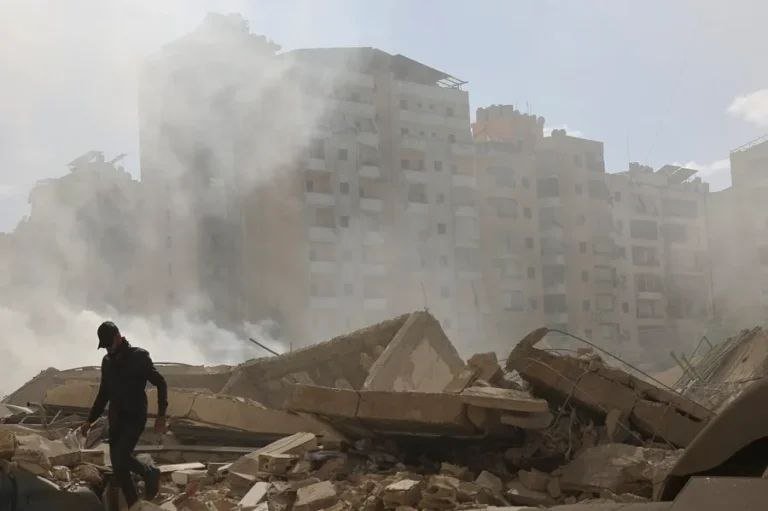
Israeli forces struck the historic city of Baalbek in eastern Lebanon on the evening of 17 May 2026, killing at least five people in attacks that also targeted southern Lebanon, according to multiple reports from regional news services. The strikes, confirmed by wire services and regional outlets, represent the most significant escalation along the Lebanon-Israel frontier since the fragile ceasefire arrangement took effect, and came despite diplomatic efforts to extend the agreement through negotiations mediated by the United States and France.
Hezbollah announced the execution of ten separate operations against Israeli military positions in the preceding twenty-four hours, according to the group's communications, describing the operations as responses to what it characterized as Israeli violations of the ceasefire terms. Israeli military spokespeople confirmed conducting strikes in eastern and southern Lebanon but characterized the operations as defensive measures responding to what the Israel Defense Forces described as threats emanating from Lebanese territory.
The timing of the Baalbek strike carries particular weight. Baalbek sits deep in the Bekaa Valley, approximately eighty kilometers from the Israel-Lebanon demarcation line established under the 2006 UN Security Council Resolution 1701. Previous Israeli operations in Lebanon have predominantly targeted areas in the south, near the frontier. The choice of a target in the eastern hinterland, at a moment when ceasefire negotiations were reportedly continuing, signals that whatever diplomatic architecture remained between the two sides has effectively ruptured.
The ceasefire arrangement, extended multiple times since its initial implementation, has been under sustained pressure for weeks. PressTV, citing Hezbollah officials, described the ongoing talks as having reached what it termed a "dead end," with the Lebanese side arguing that Israeli military activity constituted a systematic violation of the agreed framework. The Israeli position, as conveyed through official channels, has been that it retains the right to act against what it defines as imminent threats regardless of ceasefire terms.
What the sources make clear is that both sides had been operating in bad faith with respect to the ceasefire's core terms. Israeli strikes continued across southern and eastern Lebanon throughout the negotiation period, killing and injuring civilians, according to the reporting. Hezbollah's escalating operations—ten in a single day—suggest the group had concluded that the diplomatic track offered no viable path and reverted to military signalling. The gap between the formal ceasefire language and the daily operational reality had been widening for some time; 17 May appears to mark the point at which the formal language ceased to have any meaningful restraining effect.
The structural context matters here. The ceasefire arrangement was never a comprehensive peace agreement. It was, at best, a pause mechanism—a framework for managing hostilities rather than resolving them. Brokered under pressure from the United States and France, it reflected the priorities of outside powers with limited leverage over either party once their diplomatic attention moved elsewhere. What kept it functioning for as long as it did was a rough calculation of cost and benefit on both sides: Israel avoided the political and military expense of a full-scale ground operation; Hezbollah avoided the destruction of its infrastructure in the south. When that calculation shifted—when Israeli officials apparently decided that targeted strikes on deeper Lebanese territory served their interests, or when Hezbollah determined that the costs of restraint outweighed the benefits—the arrangement had no mechanism to prevent collapse.
Hezbollah's framing of the ten operations as defensive responses is consistent with how the group has characterized its military activities throughout the current phase of hostilities. Israeli officials have rejected this framing, arguing that the operations represent provocative escalation outside any legitimate self-defence rationale. The truth is that both characterizations contain partial validity: Hezbollah is responding to Israeli actions that it considers violations, but those responses themselves generate justifications for further Israeli operations. The cycle is self-reinforcing, and there is no actor with sufficient leverage over both parties to break it.
The immediate stakes are humanitarian. Lebanese civilians in the south and the Bekaa Valley have been subjected to continuing displacement and violence despite the nominal ceasefire. The deaths confirmed on 17 May add to a civilian toll that regional humanitarians and UN agencies have documented throughout the current phase of hostilities. Beyond the immediate casualty figures, the collapse of the ceasefire framework means that the population of southern Lebanon and northern Israel alike return to the condition of living under the near-daily prospect of strikes, counterstrikes, and displacement that characterized the period before the arrangement took effect.
The longer-run stakes involve the credibility of third-party mediation efforts. The United States and France invested diplomatic capital in sustaining the ceasefire, and its collapse reflects on their capacity to influence events in the theatre. It also raises questions about the coherence of Western policy toward Lebanon more broadly: Washington has designated Hezbollah as a terrorist organization, which complicates any effort to engage with the group as a negotiating party, yet the ceasefire's functioning depended precisely on that engagement. The EU and European member states face similar contradictions, having maintained varying levels of contact with Hezbollah while nominally treating its military wing as proscribed.
What remains uncertain is whether the escalation represents a deliberate Israeli decision to abandon the ceasefire framework or a tactical response to specific threat assessments that escalated beyond intended parameters. Israeli military briefings described the Baalbek strike as targeting infrastructure associated with what the IDF termed hostile activity, but the sources reviewed do not provide sufficient detail to assess whether this characterization is accurate or whether it represents post-hoc justification for an operation decided on other grounds. Hezbollah's own statements frame the day's events as an Israeli decision to end the ceasefire; the IDF position suggests it was responding to threats. Both cannot be fully correct, and the evidence available does not permit a definitive adjudication.
The trajectory appears clear in one direction at least: the ceasefire that had provided a framework for relative stability along the Lebanon-Israel frontier for the preceding months has now been breached in a manner that makes its restoration difficult to imagine in the near term. Both sides have demonstrated willingness to conduct operations that the other side considers ground for escalation. The diplomatic channel that sustained the arrangement through previous strains has reportedly reached an impasse. Absent a significant change in the calculus on either side—either a military outcome that one party finds sufficiently decisive or a political intervention from an outside power with real leverage—the pattern of strikes, counterstrikes, and civilian harm documented on 17 May is likely to continue.
This publication's reporting on the Lebanon-Israel frontier has consistently foregrounded civilian harm and ceasefire violations regardless of the party responsible, a framing that distinguishes our coverage from wire services that tend to lead with official IDF statements and treat Lebanese civilian casualties as secondary to military developments.
Wire provenance
This editorial synthesis draws on the following public wire/social posts:
- https://t.me/wfwitness/12438
- https://t.me/tasnimnews_en/8934
- https://t.me/JahanTasnim/4567
- https://t.me/presstv/7123
- https://t.me/JahanTasnim/4566