Iran's Revised Proposal to the U.S.: What Islamabad's Back-Channel Diplomacy Tells Us
A revised Iranian proposal relayed to Washington through Pakistan on 18 May 2026 represents the most concrete signal yet that Tehran is seeking a diplomatic off-ramp. But structural obstacles remain formidable, and the source of the report itself warrants scrutiny.
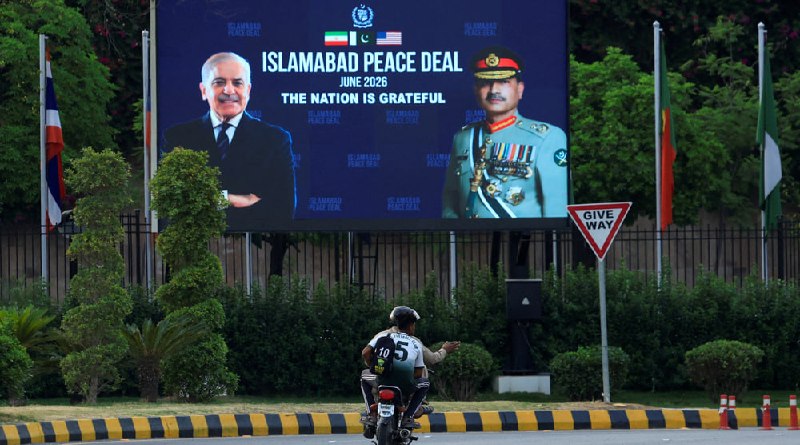
A revised Iranian proposal to end the Middle East conflict has been relayed to the United States through Pakistan, a Pakistani source told Reuters on 18 May 2026. "We don't have much time," the source said, a formulation that conveys urgency without specifying deadlines or conditions. The report, carried simultaneously across multiple open-source intelligence channels, landed against a backdrop of sustained stalemate in indirect nuclear negotiations between Iran and the United States — talks that have failed to produce a binding agreement despite intermittent contact since the collapse of the Joint Comprehensive Plan of Action in 2018.
The proposal's contents have not been disclosed. What is known is limited: Tehran has revised an earlier framework, transmitted that revision via Islamabad, and Washington has received it through an intermediary rather than a direct channel. Whether this represents a substantive shift in Iranian posture or a tactical maneuver designed to ease international pressure while preserving strategic options remains the central unanswered question.
What the Channel Tells Us
Pakistan's role as intermediary is not incidental. Direct U.S.-Iran talks have been eschewed by both administrations — Iran refuses direct engagement under sanctions pressure, and Washington has historically preferred to conduct back-channel discussions through regional partners with whom it maintains functioning diplomatic relations. Oman has played this role in the past. So have Swiss intermediaries. That Islamabad is now the named conduit suggests either that the established channels have broken down, or that Tehran is deliberately expanding the roster of nations it is willing to use as a buffer between itself and Washington.
The source description — "a Pakistani source cited by Reuters" — carries its own interpretive weight. Reuters, like most major wire services, routinely protects the identities of sources involved in sensitive state communications. That protection is necessary; unnamed officials risk political consequences, and their careers depend on discretion. But it also means that Monexus cannot independently verify the chain of custody: which Iranian official formulated the proposal, which Pakistani counterpart transmitted it, and at what level of government Washington received it. These gaps matter. A proposal delivered through a foreign ministry back-channel carries different weight than one relayed by a mid-level intelligence contact, and the sources do not specify which scenario applies.
The Structural Problem
The core dispute between Iran and the United States has not changed in outline for seven years. Iran seeks relief from economic sanctions in exchange for constraints on its nuclear programme. Washington demands verifiable, long-term limits on enrichment and inspection access before any sanctions relief materialises. Both sides have cycled through maximalist and moderate positions. Neither has found a formula that satisfies its domestic political constraints.
The current U.S. administration has maintained strategic ambiguity — neither walking away from the table nor committing to direct talks — while enforcing a maximum-pressure campaign that has kept Iran's oil exports severely constrained. That posture has succeeded in preventing Iran from acquiring a nuclear weapon on an accelerated timeline. It has not produced a negotiated outcome. The revised proposal, if genuine, suggests Tehran believes the stalemate has become untenable. Whether that belief reflects economic stress, regional military overextension, or a genuine desire to resolve the nuclear question is impossible to determine from the public record.
What Remains Uncertain
Several variables stand out as unresolved by the available reporting. First, the content of the proposal: the sources describe a revised framework but do not specify what Tehran has offered or demanded in this iteration. Second, the position of Israel, which has consistently opposed any deal that leaves Iran with residual enrichment capacity and has conducted military operations against Iranian nuclear infrastructure in the past. Third, the position of Gulf states — Saudi Arabia and the UAE — whose own relationship with Iran has normalised but who retain deep scepticism about Tehran's regional intentions. A proposal that addresses the nuclear question but leaves Iran's missile programme and proxy network untouched is unlikely to satisfy any of these audiences.
The sources also do not specify whether the proposal is intended to address the nuclear question alone or whether it encompasses Iran's regional posture — its support for armed groups across Gaza, Lebanon, Yemen, and Syria. Addressing all of these simultaneously would be unprecedented. Addressing any single dimension without acknowledging the others would be dismissed by critics as insufficient.
The Stakes
If the proposal represents a genuine opening, the upside is significant: a framework that averts a nuclear-armed Iran, reduces regional proxy tensions, and allows Gulf states and Israel to recalibrate their own defence postures accordingly. If it represents a diplomatic feint, the downside is equally clear: another cycle of engagement followed by collapse, renewed sanctions enforcement, and accelerated Iranian nuclear activity as insurance against a future deal that never arrives.
For the United States, the calculation is between two kinds of risk — the risk of accepting a flawed deal that leaves Iran on the cusp of weapons capability, and the risk of driving Iran into a corner where it concludes that only a nuclear weapon guarantees regime survival. Neither risk is hypothetical. Both have precedent in the history of great-power negotiations with proliferating states.
For the wider region, the calculus runs through every current flashpoint simultaneously. A deal that holds would reshape the battlefield economics of every proxy conflict Iran currently supports. A deal that unravels would leave those conflicts unresolved while Iran possesses more advanced nuclear knowledge than it did in 2015.
This publication will continue to monitor the reporting. The Telegram sources cited are open-source aggregators, not primary outlets, and Reuters itself has not published a standalone article with additional detail as of this writing. The information in this article is accurate as reported by those sources, and limited as those sources are. Readers should treat the specifics of the proposal — its terms, its reception in Washington, and its implications for ongoing conflicts — as provisionally reported pending further corroboration.
Monexus has not independently verified the chain of transmission or the contents of the revised proposal. The Telegram accounts cited are research-layer sources; further wire confirmation is expected and will be incorporated in future coverage.
Wire provenance
This editorial synthesis draws on the following public wire/social posts:
- https://t.me/osintlive/8743
- https://t.me/ClashReport/18452
- https://t.me/osintlive/8741