Thirty years of Amazon: why no Western company has come close
On the 29th anniversary of Amazon's public listing, the gap between the Seattle company's valuation and its nearest Western competitors is wider than at any point in the internet era — and structural factors suggest the distance will grow, not shrink.
On May 15, 1997, Amazon set its initial public offering price at $18 per share and joined the Nasdaq. A buyer who committed $1,000 at the open would today hold positions worth approximately $3.5 million — a return that dwarfs any comparable investment in Western retail history. Twenty-nine years later, the gap between Amazon and its nearest Western e-commerce competitors has not narrowed. It has widened.
The numbers are stark. Amazon's market capitalisation, as of mid-May 2026, exceeds $2.8 trillion. Its nearest publicly traded Western rival in pure online retail is arguable — some analysts name Shopify, others eBay at its 2026 valuation — but neither company approaches one-tenth of Amazon's scale. The question is not why Amazon won; it is why no one else won in the West, while Alibaba, JD.com, and a range of Southeast Asian platforms carved substantial domestic territories elsewhere.
The infrastructure moat
Amazon's durability is not primarily a story of brand recognition or first-mover luck. It is a story of deliberate infrastructure build. Jeff Bezos, in his 1997 letter to shareholders — a document the company still reproduces annually — described Amazon as being in an "early stage" of a business with "large opportunity." The framing was understated. What followed was the construction of logistics networks, data centre clusters, and fulfillment capabilities that took competitors years to understand and decades to attempt to replicate.
By 2006, Amazon Web Services had launched. The decision to commercialise the company's internal cloud infrastructure — then considered a curious side project — proved to be one of the most consequential strategic moves in technology history. AWS now generates annual revenues exceeding $100 billion and supplies the computational backbone for half the internet-facing businesses in the Western world. Rivals took a decade to respond: Microsoft Azure launched in 2010, Google Cloud in 2012. By that point, Amazon held entrenched contracts, proprietary tooling, and the pricing power that comes from operating at scale.
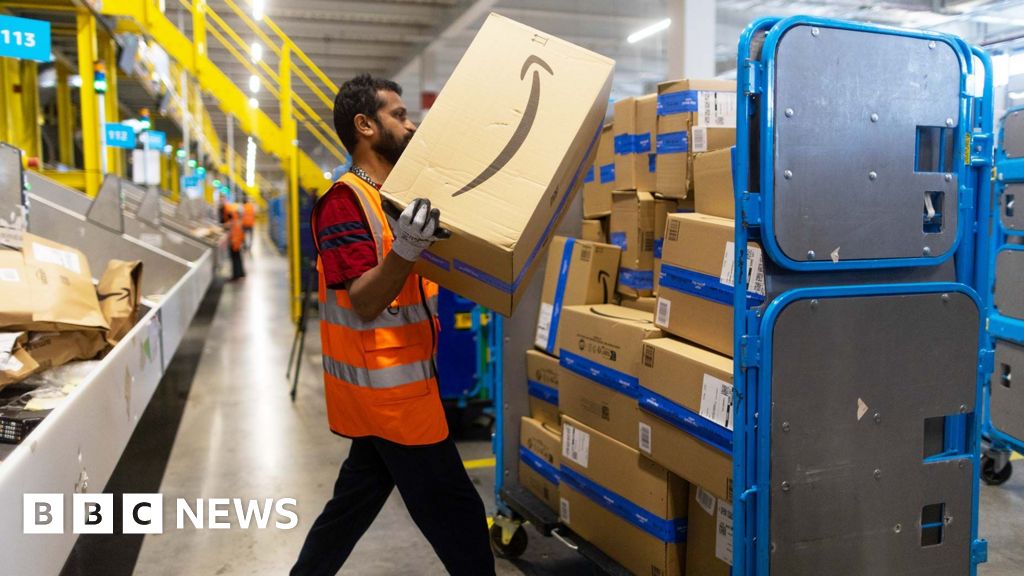
The logistics arm is equally instructive. Amazon has built a freight network that includes cargo aircraft, last-mile delivery contractors, and automated warehouses across four continents. No European or American retailer has replicated this architecture at comparable scope. Walmart, the closest analogue in physical retail scale, has made significant investments in e-commerce and its own fulfillment infrastructure since 2016, yet its e-commerce segment — despite absorbing more than $20 billion in capital expenditure in recent years — has not displaced Amazon as the default online destination for American consumers.
Why European rivals never materialised
The absence of a European Amazon is not for lack of ambition or capital. Zalando, Europe's largest online fashion retailer, peaked at roughly €20 billion in annual revenue before confronting the limits of its model. Carrefour, the French retail giant, poured billions into its digital transformation with limited market-share gains against pure-play competitors. German retailer Otto Group, once positioned as a potential continental challenger, has contracted its e-commerce ambitions in favour of logistics services for third parties.
The structural explanation is partly regulatory, partly cultural, and partly financial. European antitrust authorities have moved faster and more aggressively against large technology platforms than their American counterparts, creating an environment where the kind of cross-subsidisation Amazon used to dominate categories — pricing logistics losses against advertising and cloud margins — faces greater scrutiny. More fundamentally, European capital markets have historically preferred the stable cash flows of industrial and financial businesses over the sustained losses of platform-building ventures that define the early stages of e-commerce dominance. Amazon spent its first decade accumulating losses on purpose. The Nasdaq was willing to tolerate this; the Frankfurt and Paris markets were less forgiving of comparable strategies in domestic champions.
The counter-narrative — that European consumers simply prefer domestic retailers — does not hold under scrutiny. Amazon holds dominant market positions across the United Kingdom, Germany, France, and Italy. It is not a residual category for niche goods. It is the first search result for the majority of non-grocery retail searches in most European markets.
The geopolitical dimension
What makes Amazon's position particularly durable in 2026 is the absence of a clear policy response. The European Union's Digital Markets Act, which came into full effect in 2024, designated Amazon as a so-called gatekeeper and imposed interoperability and self-preferencing obligations. The practical effect on Amazon's market share has been minimal. The company adjusted its marketplace model slightly, increased transparency in search ranking methodologies, and continued to grow.
In the United States, the Department of Justice's 2023 antitrust case against Google produced a legal framework that, in theory, could be extended to platform dominance in retail. It has not been. The political appetite for a direct confrontation with Amazon — a company that employs more than 1.5 million people in the United States alone — sits uneasily with the electoral weight of those workforces in swing states. The policy tools available (breaking up the logistics and marketplace as separate businesses, imposing access requirements on third-party sellers) face implementation timelines measured in years and legal uncertainty measured in appellate cycles.
There is a further dimension that distinguishes Amazon from earlier monopolies. It does not simply dominate a single market. It provides the infrastructure for other businesses to operate. Shopify, which powers millions of small and medium-sized e-commerce stores, runs on Amazon's cloud services. The independent retailers that compete with Amazon on Amazon's own marketplace are simultaneously customers of Amazon's logistics and advertising services. This layered integration makes clean regulatory intervention structurally difficult — dismantling AWS would harm thousands of third-party businesses that are not Amazon's direct competitors.
What the IPO anniversary actually measures
The $3.5 million figure attached to a $1,000 investment in the 1997 IPO is seductive as a symbol, but it measures more than wealth creation. It measures the compounding advantage of a company that has spent three decades reinforcing its own infrastructure, expanding into adjacent categories before competitors could establish themselves, and using the cash flows from one business to fund the deficits of the next.
The meaningful question for markets observers is not whether Amazon will remain large — it clearly will. It is whether the structural conditions that produced Amazon's dominance are replicable by any Western government or competitor, or whether they represent a one-time alignment of capital patience, regulatory tolerance, and early-mover advantage that the next generation of internet commerce will inherit rather than reproduce. The evidence from the past three decades points to inheritance. The evidence from the past three years points to continuation.
This article was desked on May 18, 2026. Monexus covered the anniversary as a markets and structural-power story; the dominant wire framing focused on the investment return as a personal finance hook. The BBC's May 17 analysis, which examined Amazon's absence of Western rivals directly, informed the structural sections of this piece.
Wire provenance
This editorial synthesis draws on the following public wire/social posts:
- https://t.me/venture/1842
- https://t.me/producthunt/10582