Trump Warns Iran's 'Clock Is Ticking' as Nuclear Talks Falter
The Trump administration has issued a blunt warning to Tehran to accept US peace conditions quickly, as Iranian officials claim American negotiators have yet to offer concrete concessions in response to Iranian proposals.
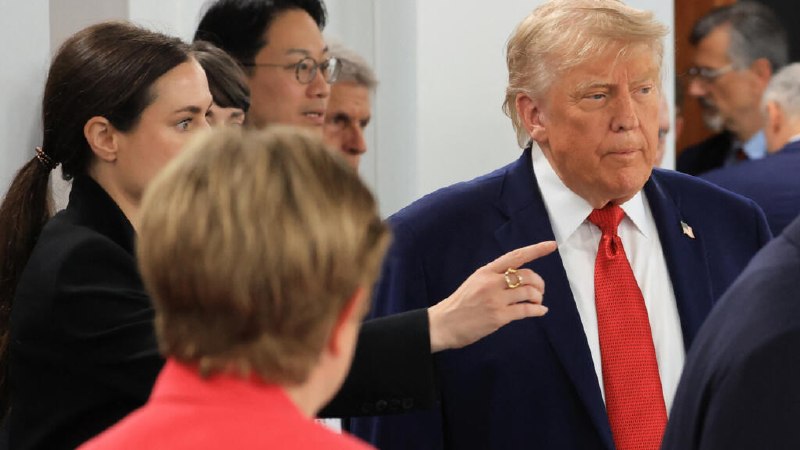
President Donald Trump warned Iran on 17 May 2026 that "the clock is ticking" for a negotiated nuclear agreement, as diplomatic contacts between the two governments showed no clear path forward despite months of indirect discussions. The public ultimatum, delivered at the White House, came as Iranian state-linked media reported that Washington had yet to present concrete concessions in response to proposals Tehran put forward in recent rounds of talks brokered by intermediaries.
The framing from the administration has shifted markedly since negotiations began in earnest earlier this year. Early signals from the White House suggested genuine openness to a diplomatic off-ramp; the language now is unmistakably coercive. Whether this reflects a deliberate pressure tactic or a genuine fracture in the negotiating position is the central unresolved question hanging over the talks.
The Ultimatum and Its Immediate Context
Trump's warning, delivered at an unscheduled press appearance on 17 May 2026, carried the unmistakable cadence of a closing demand rather than an opening position. "The clock is ticking for Iran," the President told reporters. "They know what they have to do." The statement came as senior administration officials, speaking on background, declined to specify what new incentives—economic or diplomatic—were on the table for Tehran.
Iranian state media, citing officials familiar with the negotiating file, reported that the US had not made concrete concessions in response to Tehran's latest proposals. That framing matters: it positions Iran as the party waiting for a response, not the one resisting one. The distinction is significant because both sides have, at various points, accused the other of bad-faith posturing.
The talks have been conducted largely through intermediaries, as direct US-Iran diplomatic contact remains limited. Oman and Switzerland have served as back-channels; the European Union has also maintained a quiet coordinating role. None of these actors have publicly commented on the current state of negotiations.
What Tehran Is Waiting For
Iranian officials have consistently maintained that any agreement must include sanctions relief verifiable enough to allow normal commercial activity—particularly in the energy sector—before Tehran would consider any slowdown of its nuclear programme. The 2015 Joint Comprehensive Plan of Action, from which the Trump administration withdrew in 2018, provided precisely that architecture, though the current government in Washington has signalled it will not simply revive the old deal.
The gap between the two positions has proven durable. The US wants caps on Iran's enrichment capacity and access for international inspectors that go beyond what the 2015 deal required. Iran wants economic guarantees that a future US administration could not simply revoke—as Trump did in his first term. Neither side has moved far enough to close that gap publicly.
Iranian parliamentarians and hardline commentators have used the current impasse to argue that Washington cannot be trusted to honour any agreement. That line has resonance in Tehran, where the memory of the 2018 withdrawal remains a defining wound in the relationship. Whether Supreme Leader Ayatollah Ali Khamenei's inner circle shares that scepticism or sees an opening in the current negotiations is not publicly known.
The Structural Logic of Coercive Diplomacy
The public ultimatum fits a familiar pattern in high-stakes negotiations: the party that believes it holds leverage moves to compress the timeline rather than improve the offer. The Trump administration has calculated that economic pressure—maintained through the 'maximum pressure' sanctions architecture first deployed in 2019—has sufficiently weakened Iran's position to extract better terms than a return to the JCPOA would have provided.
That calculation has not yet been validated by the evidence. Iran's nuclear programme has advanced considerably since 2018, with enrichment levels and stock-piles well beyond what the original deal permitted. Economic pain has been real, but not sufficient to produce capitulation. The regime has demonstrated a capacity to absorb hardship in exchange for retaining what it considers strategic deterrence.
The counter-argument—that timed pressure tends to entrench rather than persuade the target state—is well-supported by the historical record. Sanctions regimes frequently produce internal consolidation around nationalist or anti-Western positions, particularly when the target government controls the narrative around external threats. Tehran has used Washington's own rhetoric about regime change to justify repression and centralise power. A public ultimatum may reinforce that dynamic rather than undermine it.
The Stakes and the Near-Term Horizon
If negotiations collapse, the most likely near-term consequence is an intensification of the US pressure campaign. The options on the table—secondary sanctions targeting third-country buyers of Iranian oil, diplomatic isolation, or kinetic options—each carry escalating costs and uncertain returns. Secondary sanctions on Chinese and Russian entities have diminishing bite as those economies have already decoupled substantial portions of their Iranian oil exposure. Military action would require significant regional deployment and carries the risk of triggering a wider conflict that no US ally in the Gulf has publicly endorsed.
Iran's window to secure meaningful sanctions relief without conceding its enrichment programme narrows with each passing week. The administration's patience appears finite. Whether Tehran reads that as a bluff, a genuine red line, or a genuine expression of resolve will determine whether the next month produces movement or a breakdown.
The sources do not specify what concrete alternatives the administration has prepared if diplomacy fails, nor do they indicate whether any third-party mediator has private communication suggesting a path forward that differs from the public positions of both sides.
This article was written from wire reports. Monexus covered the ultimatum language straight; the Iranian counter-framing appeared in Iranian state-linked reporting carried by the Indian Express wire.