Trump's Beijing Visit and the Rhetoric of Great-Power Diplomacy
President Trump's China visit in May 2026 produced striking public warmth from Xi Jinping toward US military capabilities — a shift in diplomatic register that both Beijing and Washington appear willing to exploit, even as the structural tensions between the two powers remain unresolved.
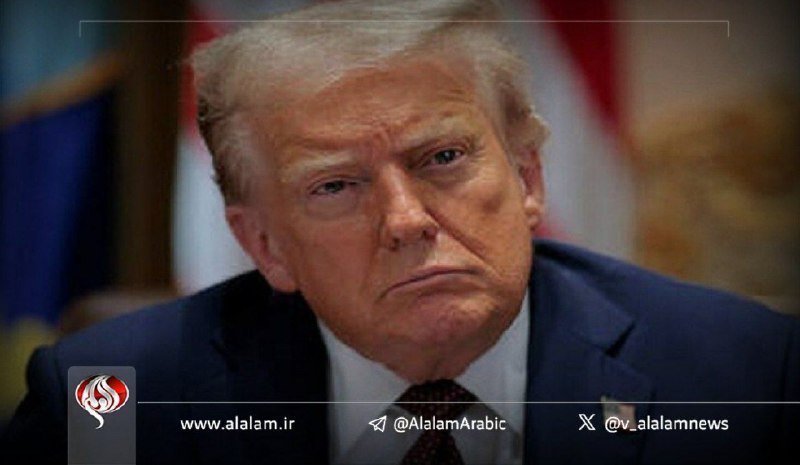
President Xi Jinping's public praise of the United States military during President Trump's May 2026 visit to Beijing marks a notable departure from the combative rhetoric that has defined US-China relations for much of the past decade. Trump reported on 18 May 2026 that Xi was "very, very complimentary of our military" and described himself as "amazed" by Xi's remarks. The South China Morning Post framed the visit as evidence of a "bipartisan shift" in Washington's approach to Beijing — a characterisation that warrants scrutiny, because the diplomatic warmth on display may obscure rather than resolve the underlying strategic competition between the two powers.
The Reciprocal Flattery
The public choreography of Trump's Beijing visit included language rarely heard from Chinese officialdom toward Washington. According to Trump's own account, relayed via Telegram channels on 18 May 2026, Xi told him directly that he was "surprised by our military." This follows a pattern of personal diplomacy that Trump has employed throughout his second term, treating direct engagement with foreign leaders as the primary instrument of statecraft. For Beijing, engaging Trump on this personal terrain offers strategic advantages: it positions Xi as a counterpart capable of managing Washington on terms Beijing finds acceptable, rather than as a respondent to pressure.
The framing matters because it reframes a relationship that both sides have substantial incentive to present as manageable. Beijing has long argued that Western characterisations of China as an existential threat are projections of US hegemony rather than accurate assessments of Chinese intent. Xi's decision to engage Trump's preference for personal chemistry — rather than institutional diplomatic register — signals a pragmatic recalibration. Whether this represents a genuine shift in Beijing's strategic posture or tactical flexibility within an unchanged framework remains the central question.
Washington's Bipartisan Problem
The South China Morning Post's framing of the visit as evidence of a "bipartisan shift" in Washington's China posture deserves closer examination. The piece, published on 18 May 2026, argues that Trump's direct engagement with Xi reflects a move away from the confrontational framing that characterised the first Trump administration's trade war and the subsequent Biden-era containment logic. Yet bipartisanship in US China policy has historically been thin — agreement on the threat diagnosis has coexisted with profound disagreement on the appropriate response.
What the visit actually demonstrates is the limits of personal diplomacy as a substitute for structural policy. Both Democratic and Republican analysts have argued that Chinese industrial policy, technology transfer practices, and territorial assertions in the South China Sea and Taiwan Strait represent systemic challenges that cannot be resolved through goodwill gestures between heads of state. Xi's military praise, however welcome in Washington, does not alter the facts on the ground in the Indo-Pacific.
The danger is that reciprocal flattery becomes a substitute for hard bargaining. Trump may return from Beijing with a sense of personal rapport that he translates into a diplomatic win — while Beijing extracts concrete concessions on trade, technology, or regional posture without making reciprocal commitments.
The Structural Dimension
The pattern of personal diplomacy between heads of state has a structural counterpart that is rarely acknowledged in the public framing of US-China summits. The two economies remain deeply interdepedent in ways that create mutual vulnerabilities. US consumers depend on Chinese manufacturing capacity; Chinese industrial development depends on access to US semiconductor design software, advanced equipment, and capital markets. That interdependence has not produced convergence — it has produced mutual entanglement that both sides find simultaneously advantageous and dangerous.
Beijing's approach to this interdependence has been characteristically long-term. Chinese state policy has systematically worked to reduce critical vulnerabilities — developing domestic semiconductor capacity, diversifying supply chains, building alternative financing infrastructure through institutions like the New Development Bank and the Belt and Road initiative. Xi Jinping's public warmth toward Trump does not represent a change in that strategic direction; it represents an assessment that the current moment offers opportunities for extraction that do not require confrontation.
The United States, meanwhile, has struggled to articulate a China policy that is both coherent and sustainable across electoral cycles. The bipartisan consensus on the threat has not produced a bipartisan consensus on the response — leaving US policy vulnerable to the pendulum swings between confrontation and accommodation that characterise the American political system. Trump's personal rapport with Xi may be genuine; it does not resolve the structural contradiction between US pressure and Chinese interests.
The Diplomatic Register as Policy Signal
The decision to make Xi's military praise public — and for Trump to amplify it — is itself a policy signal. Diplomatic language is never neutral. The choice to describe Xi as "very, very complimentary" rather than to release a joint communiqué emphasising shared commitments tells a specific story: that of a relationship managed through personal chemistry rather than institutionalised negotiation. That story advantages both leaders in their respective domestic contexts. Trump can claim a diplomatic success; Xi can demonstrate that he manages the relationship on his own terms.
For third parties — Taiwan, Japan, the Philippines, European NATO members — the public display of US-China warmth carries its own signal. Whether it represents genuine de-escalation or a temporary pause in competition will be determined not by the rhetoric of military praise but by subsequent actions: naval deployments in the South China Sea, arms sales to Taiwan, semiconductor export controls, tariff schedules. The diplomatic register may have shifted; the structural incentives have not.
What remains genuinely uncertain is whether the personal rapport between Trump and Xi translates into any meaningful change in the negotiating positions that have kept the two powers in a state of managed friction since 2018. The sources reviewed for this article do not establish whether any concrete agreements were reached during the visit, beyond the public statements of mutual respect. That ambiguity — between diplomatic theatre and genuine negotiation — is where the real story lies.
This publication covered the Trump-Xi Beijing visit with emphasis on the structural incentives driving both sides' diplomatic register, rather than on the immediate spectacle of personal rapport. The framing in Western wire coverage focused primarily on Washington's political calculations; this analysis seeks to centre the strategic logic operating on both sides equally.
Wire provenance
This editorial synthesis draws on the following public wire/social posts:
- https://t.me/ClashReport/142857
- https://t.me/SCMPNews/89241
- https://t.me/TasnimNewsEn/38421