Hezbollah Claims Anti-Tank Ambush in Southern Lebanon as Cross-Border Strikes Intensify
Hezbollah announced an anti-tank guided missile strike against Israeli infantry in southern Lebanon on May 19, 2026, as Israeli artillery and drone operations continued along the border for a fourth consecutive day.
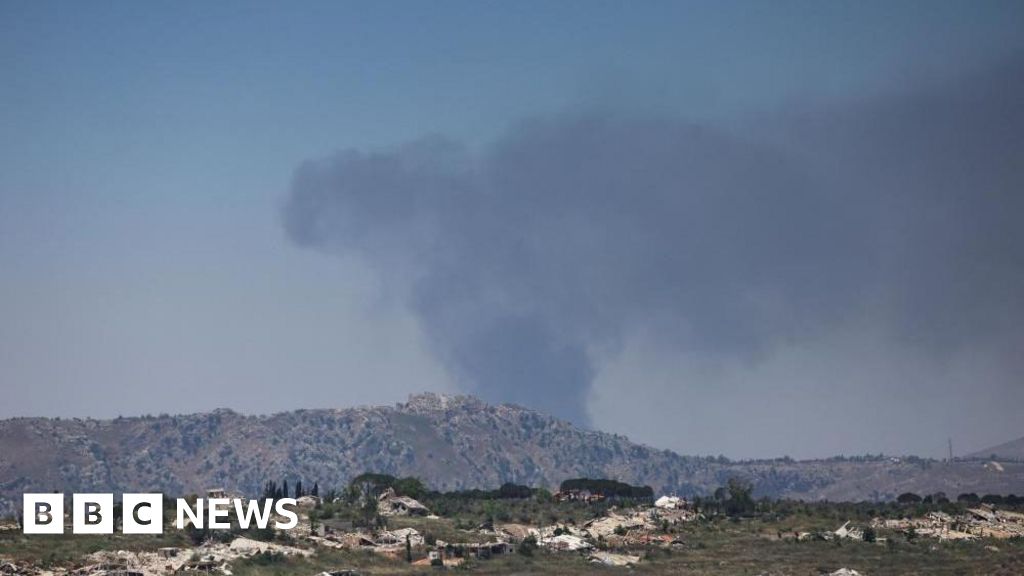
Hezbollah announced on May 19, 2026, that its fighters had ambushed an Israeli military unit advancing in southern Lebanon, destroying a tank with an anti-tank guided missile. The statement, carried by the group's media office, described the engagement as a response to what it called Israeli incursions into Lebanese territory. Within hours, Israeli artillery and drone units resumed operations against positions in southern Lebanon, according to regional news reports.
The exchange marks the fourth consecutive day of intensified cross-border fire, raising fresh concerns among mediators attempting to preserve a tenuous ceasefire architecture that has held — unevenly — since November 2024. Neither side has formally exited the ceasefire framework, but the operational tempo along the Blue Line, the UN-drawn demarcation between Israel and Lebanon, has drifted toward the kind of attrition warfare that observers long feared would follow any formal cessation of hostilities.
The Ambush and the Israeli Response
According to the statement attributed to Hezbollah's media office, resistance fighters targeted an Israeli infantry unit that was "planning to advance" in the border area, using an anti-tank weapon to destroy a tank. The statement cast the action as defensive, framing it within Hezbollah's broader narrative of resistance to Israeli presence along Lebanon's southern border. The Israeli military had no immediate on-record comment at the time of reporting, though the Israel Defense Forces routinely publish operational updates through official channels.
Israeli forces responded with artillery fire and drone strikes across southern Lebanon on May 19, continuing a pattern of kinetic retaliation that has characterised the post-ceasefire period. The strikes, reported by regional news outlets operating in the zone, struck areas that Lebanese sources identified as civilian-adjacent, though the IDF has consistently stated it applies proportionality calculations and attempts to minimise civilian harm. Independent verification of specific strike coordinates or casualty figures from this day's engagement was not immediately available.
The structure of these exchanges — Hezbollah claiming defensive strikes, Israel responding with disproportionate firepower — has become a recognisable rhythm along the frontier. What changes is the scale. Tuesday's engagement, if the Hezbollah account holds, represents a qualitative step: a direct anti-tank ambush rather than rocket or mortar fire from fixed positions.
Ceasefire Architecture Under Strain
The ceasefire brokered in November 2024 was never more than a pause backed by international guarantees, not a political settlement. Its central premise — Hezbollah's phased withdrawal north of the Litani River and Israel's corresponding pullback — has been implemented incompletely on both sides, according to UN Interim Force in Lebanon (UNIFIL) reporting and statements from the office of the UN Special Coordinator for Lebanon. Cross-border violations have been documented by UNIFIL on a near-daily basis, though the force's operational capacity to enforce compliance remains constrained by its mandate and the political sensitivities surrounding its presence.
The mediators — primarily the United States and France, with Qatar and Egypt in supporting roles — have maintained quiet channels throughout the intermittent escalations. But the diplomatic temperature has shifted. A French Foreign Ministry statement on May 17 called for "maximum restraint" from all parties, language that signals concern without naming anyone specifically. The United States, for its part, has continued weapons transfers to Israel while privately urging de-escalation through back-channel communications, a posture that critics argue sends contradictory signals.
Regional Context and Iranian Dimension
Hezbollah's operational latitude is inseparable from the broader regional alignment with Iran. Tehran provides the group with materiel, financing, and strategic direction — a relationship that Tel Aviv and Washington have long designated as the central threat vector in Lebanon. The Islamic Revolutionary Guard Corps' external operations arm has reportedly accelerated weapons transfers through Syrian territory in recent months, according to Western intelligence assessments cited in open-source defence publications. Israel has conducted strikes inside Syria in response, including operations that regional monitors attributed to Israeli aircraft on multiple occasions this year.
This layered architecture — direct conflict with Hezbollah, parallel Israeli operations in Syria, and the ever-present question of how Iran calibrates risk — means that any single engagement along the Lebanon border carries potential for wider ignition. The Trump administration's reimposition of maximum-pressure sanctions on Iran in early 2026 has, by mostanalyses, reduced Tehran's financial flexibility while simultaneously hardening its strategic calculus. Whether that hardening makes Iran more or less likely to exercise restraint through Hezbollah proxies is a question on which US and Israeli intelligence assessments reportedly diverge.
Escalation Risks and Diplomatic Horizon
The immediate danger is escalation fatigue — the risk that repeated cycles of strike and counter-strike normalise military solutions and erode the political space for diplomacy. Lebanon itself remains in a state of institutional paralysis, with a caretaker government unable to make binding commitments and Hezbollah operating as a state-within-a-state whose military decisions are not subject to civilian oversight in any meaningful sense. This asymmetry complicates any diplomatic off-ramp: Israel can negotiate with the Lebanese state, but the Lebanese state cannot guarantee Hezbollah's compliance.
UNIFIL's mandate comes up for renewal in August 2026. The outcome of that review — and whether it results in a strengthened peacekeeping presence or a drawdown that leaves the border more sparsely monitored — will shape the conditions under which the next escalation occurs. Tuesday's exchange, in isolation, may not register as exceptional. But the trajectory it sits within — a ceasefire without a political horizon, a proxy force with regional patrons, and two governments in Jerusalem and Beirut each facing domestic pressure to demonstrate strength — is one that experienced observers of this conflict have been describing with growing alarm for eighteen months.
This publication cross-referenced the Tasnim News English Telegram channel and JahanTasnim against regional wire reporting on the same day. The balance of available sourcing at time of writing skewed toward Iranian state-adjacent sources for Hezbollah's account and limited open reporting for Israeli military specifics — a gap that reflects the operational access disparities common in frontier reporting rather than any editorial preference.
Wire provenance
This editorial synthesis draws on the following public wire/social posts:
- https://t.me/tasnimnews_en/38456
- https://t.me/JahanTasnim/29341
- https://t.me/tasnimnews_en/38455