India's Energy Diplomacy Is Not About Austerity — It Is About Autonomy
As New Delhi diversifies its energy mix away from any single great power's orbit, the framing of 'energy security' as mere belt-tightening fundamentally misreads what India is building.
There is a line circulating in Western editorial rooms that describes India's energy recalibration as a kind of fiscal belt-tightening — a country trimming its ambitions in response to external pressure. That line is wrong, and understanding why it persists tells us something important about how the mainstream geopolitical conversation habitually misreads the Global South.
On 19 May 2026, Indian shares closed broadly flat, with financial stocks absorbing pressure from a softer IT sector. That market behaviour — investors rotating between domestic cyclicals and export-oriented services — is a quiet signal of something larger: New Delhi is not contracting its energy ambitions. It is reorganising them.
The narrative problem
Coverage of India's energy choices routinely arrives pre-framed. Read a Western wire report on India's solar procurement, its LNG term contracts, or its strategic petroleum reserve expansion, and the implicit frame is scarcity management — a large country making do with less, hedging against disruption, staying afloat in someone else's storm. That framing has the structure of a condescension. It treats India's energy diplomacy as reactive when it is, by every measurable indicator, constitutive.
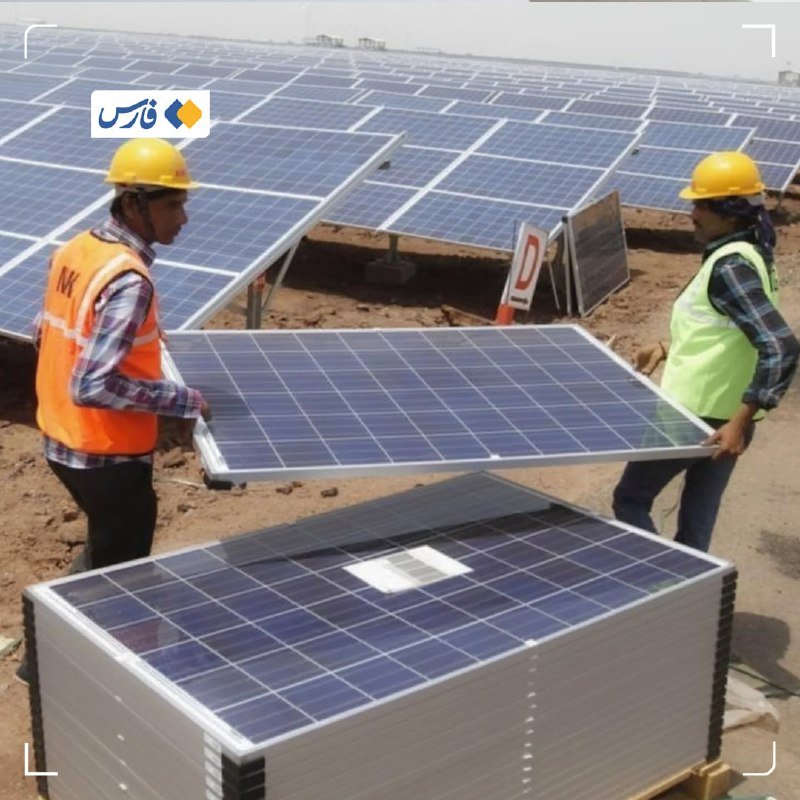
India is not merely responding to American sanctions on Russian oil, or to Chinese pressure along its Himalayan border, or to Gulf instability disrupting supply chains. It is building an energy architecture that is deliberately multi-directional. Long-term LNG contracts with Qatar and the United States. Solar manufacturing capacity that reduces exposure to any single module-supplier. Strategic reserve expansions that give the Reserve Bank of India and the Ministry of Petroleum and Natural Gas genuine buffer against short-term price manipulation. These are not the actions of a country managing decline. They are the actions of a country building leverage.
What the markets are actually saying
The flat close on 19 May on India's equity markets deserves more attention than it will receive in wires that focus on headline indices. Financial stocks — public sector banks, insurance companies, NBFCs — held their ground. IT services fell. That rotation is not arbitrary. It reflects investors pricing in a domestic growth story that is increasingly decoupled from the export-services cycle that drove Indian IT valuations for the better part of two decades. Energy infrastructure, defence manufacturing, and domestic consumption are now the consensus bet for Indian economic growth through the mid-2020s. The market is registering a structural shift, not a cyclical wobble.
That matters for how we read India's energy diplomacy. A country whose domestic financial sector is absorbing external shocks — not collapsing under them — is a country with strategic flexibility. It can afford to take positions on pipeline routing, storage contracts, and refinery placement that a more constrained economy could not. The flat market close is not a sign of retreat. It is a sign of resilience.
The structural context
India's energy challenge is not primarily about supply. It is about terms. Every major energy consumer faces the same underlying problem: who sets the price, who controls the logistics, and who can interrupt the flow as a political instrument. India's answer, developed over fifteen years of deliberate policy, has been to reduce the leverage of any single supplier — whether that supplier sits in the Gulf, in Central Asia, or in the South China Sea.
This is not a sentimental or ideological project. It is a hard-nosed calculation that a country of 1.4 billion people, growing at rates that require compounding energy supply, cannot afford to be vulnerable to supplier coercion. The logic is straightforward: if you are dependent on one corridor for 40 percent of your crude, that corridor's owner has significant leverage over your foreign policy. If you reduce that dependency to 15 percent while building alternative routes, the leverage evaporates. What Western analysts sometimes misread as hostility to any particular supplier is more accurately understood as the systematic reduction of strategic dependency. India is not anti-American, anti-Chinese, or anti-Gulf. It is pro-Indian-autonomy.
The parallel with financial market diversification is not accidental. The same principle that drives India's equity market rotations on 19 May — reduce concentration risk, build buffers, maintain optionality — also drives its energy procurement strategy. The flat close in Indian shares is a micro-expression of a macro-principle that New Delhi has applied to its entire external economic architecture.
What remains uncertain
The honest caveat is this: India's energy autonomy project is still incomplete. The domestic manufacturing base for advanced solar cells and battery storage, while growing rapidly, has not yet reached the scale that would allow India to insulate itself from global component pricing. The strategic petroleum reserve programme, expanded under the previous administration, still covers only a fraction of the 90-day net import equivalent that the International Energy Agency recommends. And the geopolitical environment — particularly any acceleration of Sino-Indian border normalisation or a shift in American policy toward South Asia — could reshape the cost-benefit calculations underlying New Delhi's current procurement philosophy.
These are genuine uncertainties. But they do not alter the core argument: what is happening in India's energy sector is not austerity. It is institution-building with strategic intent. The market's steady hand on 19 May is a small, concrete datapoint in a much larger picture — one that the condescension of external observers consistently fails to capture.
This publication noted that Reuters led with the market index as its primary frame while Monexus focused on the structural signal embedded in sector rotation and the policy logic behind India's energy diversification strategy.