JR's Paris Bridge Takeover Turns an Icon of the Seine Into an Immersive Cave
French artist JR is transforming one of Paris's most photographed bridges into an immersive photographic cave this summer, testing the boundaries between public monument and participatory installation.
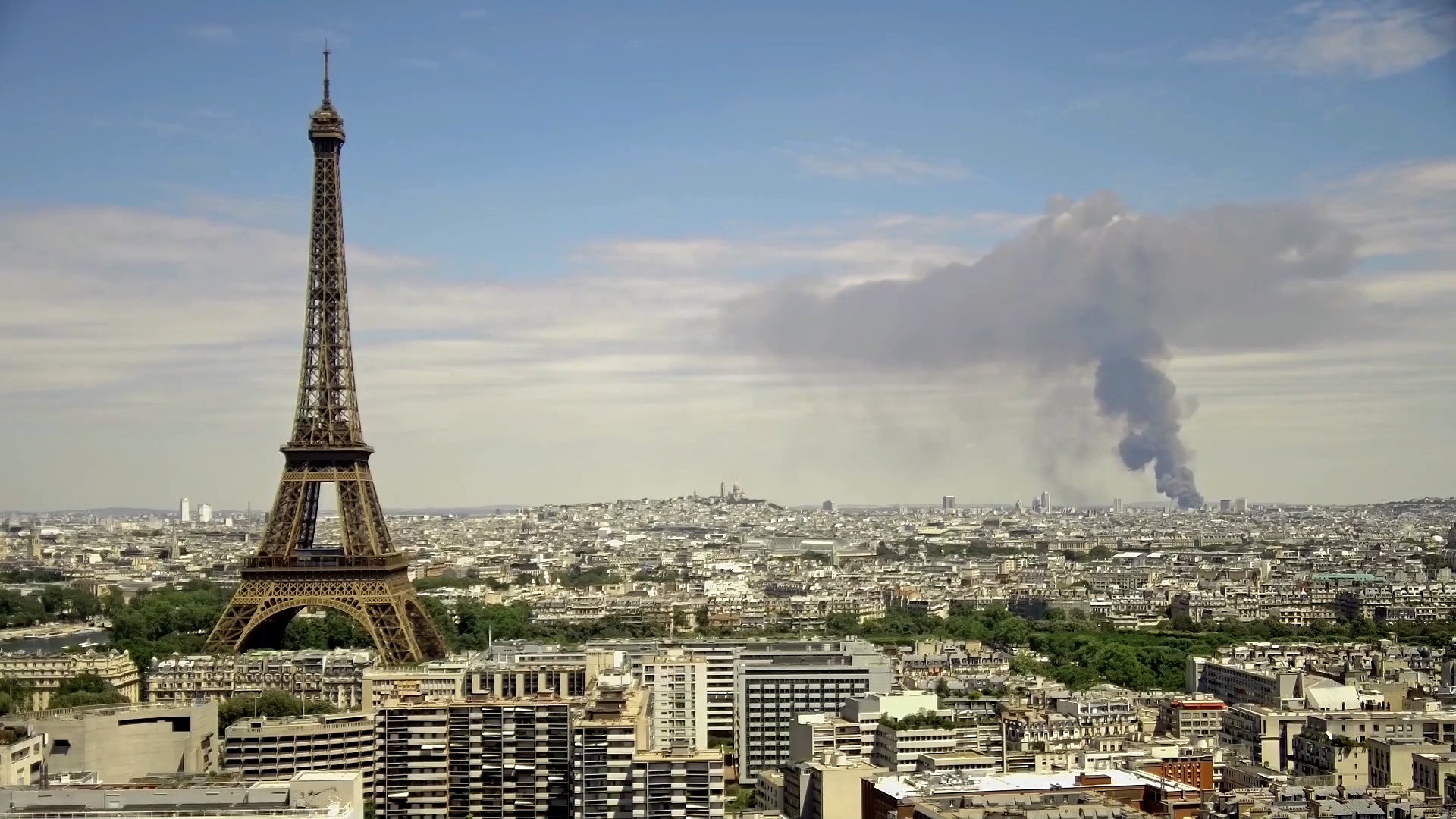
French artist JR is preparing to occupy one of Paris's most storied pedestrian crossings with a photographic installation that will, in his words, turn the bridge into a cave. The project, announced by France 24 on 19 May 2026, will open to the public from June 6 through June 28, transforming the Pont des Arts—the wrought-iron span linking the Louvre's western courtyard with the Institut de France—into an immersive environment of scaled photographs applied directly to the structure's walking surface. Tourists and Parisians alike will be able to walk across what the artist has described as a subterranean optical illusion, the bridge's familiar stone and metal replaced, temporarily, by an artwork that inverts the viewer's relationship to the Seine below and the skyline beyond.
The project sits at the intersection of two questions that have animated JR's practice since he first gained international attention: who owns public space, and what does it mean to make art that cannot be encountered inside a gallery. The Pont des Arts carries significant symbolic weight in Paris. For decades it was famous as the bridge where lovers padlocked metal chains to the railings, inscribing their names and tossing the keys into the river—a practice the city government removed in 2015 over structural concerns, leaving the bridge simultaneously emptied of one tradition and open to another. JR's intervention arrives in that vacuum, and it does so with an explicit invitation: this is not a monument to be observed from a distance but a surface to be walked across, stepped on, inhabited.
An Artist Built on Public Space
JR, who uses only his initials as a professional name, has spent nearly two decades treating architecture and infrastructure as his primary mediums. His 2016 installation at the Louvre Pyramid—where he applied a giant self-portrait photograph to the glass facade, making the structure appear to be crumbling—remains one of the most discussed public art moments in recent French cultural history. That project, carried out without fanfare and revealed to a city that woke to find their most famous museum facade apparently imploding, demonstrated JR's appetite for controlled surprise: the artwork as urban prank with a serious purpose. He has since executed projects across four continents, including a 2018 installation on the US-Mexico border fence and a 2021 paper boat sculpture that crossed the Thames. Each project shares a common logic: find a surface the public already inhabits, transform it, return it.
The Pont des Arts project follows this template but adds a new technical element. Rather than applying photographs to a vertical facade, JR's team will install imagery on the horizontal plane of the bridge deck itself. The effect, as described in initial coverage, is of a literal inversion—visitors will look down through the bridge's grating to the river, their perspective altered by the photographic layer, as though descending into rather than crossing over. The phrase "immersive cave" in early accounts captures this spatial disorientation.
Paris Has Been Here Before, Carefully
The city's relationship with large-scale public art has never been uncomplicated. France's tradition of republican monumentalism—statues of generals, equestrian monuments, names of battles carved into public buildings—has long clashed with the idea of art that is genuinely participatory and democratically accessible. The Pompidou years brought modern sculpture into the streets; the Mitterrand-era grands projets filled the city with statement buildings; the Explosion du Partagone protests of recent years have raised persistent questions about who gets to decide what public space looks like, and in whose interest. Against that backdrop, JR's invitation to step on the art rather than admire it from across the street represents something genuinely unconventional for Paris.
There is a parallel to Jeff Koons's "Boulevard de la Villette" installation of 2016, a series of balloon-sculpture structures installed along the canal in the 19th arrondissement that invited physical interaction. That project attracted both large crowds and criticism from those who saw it as an aestheticization of public infrastructure rather than a genuine democratization of the art object. JR's project, by contrast, takes place on one of the most expensive and symbolically loaded patches of real estate in the world—the pedestrian crossing that links two of France's most prestigious cultural institutions—and asks visitors to treat it as a floor. The tension is deliberate.
The Stakes for Public Art in an Era of Crowds
The timing of the project is not incidental. Paris is deep in a prolonged reckoning with the effects of mass tourism on its central neighborhoods and its most-visited monuments. The Seine's banks, the areas around Notre-Dame, the Luxembourg Gardens, and the Pont des Arts itself have been at the center of debates about visitor management, commercial encroachment, and the changing character of neighborhood life. City hall has experimented with timed entry systems, distributed visitor caps, and moves to redirect foot traffic away from overtaxed corridors. JR's installation, running for three weeks in June, will concentrate attention on a single bridge in a way that is both artistically motivated and institutionally convenient for a city trying to manage how its icons are consumed.
That dual character—genuine artistic intervention on one side, crowd-management tool on the other—is worth examining. The project is open to the public without charge, which maintains JR's longstanding commitment to accessibility. But it will also almost certainly generate social-media content of a type that makes the Pont des Arts newly, perhaps overwhelmingly, attractive to visitors who might otherwise walk past. The bridge's location—connecting the Louvre's outdoor areas to the Institut de France—means that the installation sits directly in the path of visitors who are already moving through the most visited corridor in European tourism. Whether the artwork diffuses that traffic or concentrates it further is a question the city and the artist have not publicly addressed.
What Comes After the Bridge
For JR, the Pont des Arts project is the latest in a career that has consistently used scale and publicness to challenge what he calls the "invisible borders" between people and institutions. His TED Prize-winning "Inside Out Project," which allowed communities worldwide to post large-format portraits in public spaces, established the template: photography as political gesture, installation as democratizing act. The Pont des Arts sits within that tradition but adds a layer of self-reference. To walk across a photograph of a cave on a bridge that is itself an icon of the city that hosts the world's largest museum is to be reminded, gently and somewhat confusingly, that every space is already a construction.
The installation opens June 6. Whether it survives Paris's famously complex relationship with public art, its weather, and its own crowds remains to be seen. What is certain is that the bridge will not look the same in five weeks' time, and that the photograph—once removed—will leave behind only the memory of an optical trick and the question of what public space is actually for.
This article draws on initial reporting from France 24, which first reported the project announcement on 19 May 2026. Details about the installation's technical execution remain limited; Monexus will follow reporting as JR's team releases further information ahead of the June opening.
Wire provenance
This editorial synthesis draws on the following public wire/social posts:
- https://t.me/france24_en/98214