Tehran's Demographic Gambit: Iran's Supreme Leader Links National Power to Population Growth
Iran's Supreme Leader has issued a direct statement linking Iran's status as a major power to population growth, reviving a long-standing policy debate that has split Iranian society and shaped the Islamic Republic's demographic trajectory since the 1979 revolution.
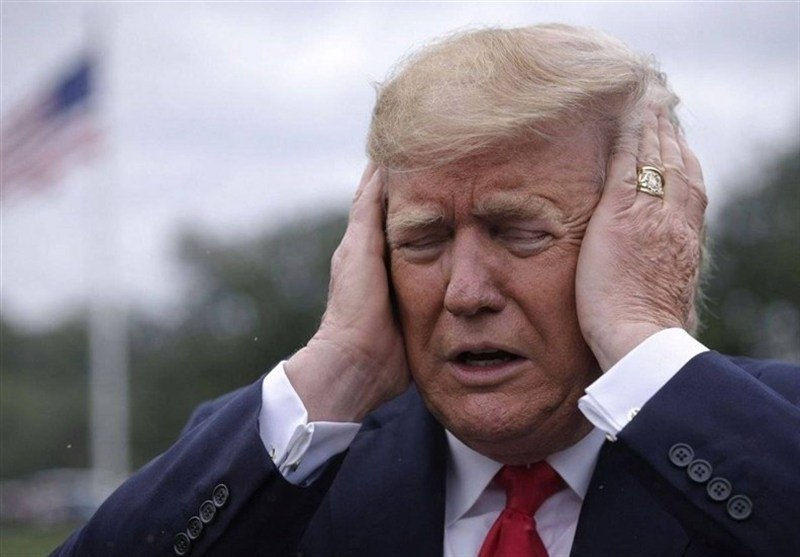
On 19 May 2026, Ayatollah Seyyed Mojtaba Hosseini Khamenei, the Supreme Leader of the Islamic Revolution, issued a direct message linking Iran's geopolitical standing to its population trajectory. The statement, released through official channels and carried by Iran's state news agency IRNA, responded to a letter from a group of activists working in the field of population growth. Khamenei emphasised that maintaining Iran's status as a major power was, in his formulation, inseparable from demographic expansion.
The timing is not incidental. Iran today has a population of roughly 88 million, a figure that represents a sharp correction from the demographic retrenchment of the 1980s and 1990s. In the immediate aftermath of the 1979 revolution, the new Islamic government initially encouraged large families, viewing population growth as a bulwark against external threat. By the mid-1980s, that position had reversed entirely: state policy shifted toward population control, with the government promoting small-family norms, distributing contraceptives, and offering incentives for sterilisation. The architect of that reversal was the current Supreme Leader's father, Ayatollah Ali Khamenei, who in 2012 declared Iran's falling birth rate a national crisis and ordered a policy reset. The younger Khamenei has now carried that reversal to its logical endpoint, asserting in his 19 May message that population decline is structurally incompatible with major-power status.
The State-Media Amplification Machine
The statement received prominent play across Iranian state media. IRNA's English-language service carried the full text, framing Khamenei's remarks as a policy directive of the first order. The Arabic-language service, operating across a Gulf audience acutely sensitive to demographic questions, gave the story similarly prominent placement. The consistent thread across all three official channels — the English, Arabic, and Persian-language services — is the central claim: that Iran's ability to project power regionally and globally depends on a sufficiently large population base.
This framing is not new to Iranian state communications. For over a decade, official rhetoric has treated fertility rates as a strategic variable, on par with military capability or economic output. What the 19 May statement adds is the direct linkage to great-power status — a phrase that carries particular weight given the Islamic Republic's self-conception as the centre of a resistance axis spanning Lebanon, Yemen, Iraq, and Syria. Whether that self-conception is validated by material capability is a separate question from how Tehran frames it internally. The statement's significance lies in its articulation of the official position: population is not a private matter, nor a consequence of economic development, but a precondition for the state's geopolitical ambitions.
The Structural Tensions
The policy logic faces serious structural headwinds. Iran's economy, still bearing the weight of extensive US and EU sanctions, has struggled to generate sufficient formal-sector employment for its existing population. Youth unemployment has remained persistently above 20 percent for most of the past decade, according to Iranian statistical releases cited by regional wire services. Introducing additional demographic pressure without a corresponding expansion in industrial capacity risks intensifying that strain.
Iran's water situation compounds the problem. The country sits among the world's most water-stressed nations, with aquifer depletion accelerating in its agricultural heartlands. Any population expansion strategy that assumes current agricultural productivity will hold — or expand — runs into hard physical constraints that state directives cannot dissolve.
There is also the question of what demographic growth actually means for power projection. Regional rivals Saudi Arabia and the UAE have pursued parallel demographic ambitions, investing heavily in citizen-birth promotion schemes and, in the Gulf states' case, importing foreign labour at scale. Saudi Arabia's Vision 2030 explicitly addresses the kingdom's low national-birth-rate problem while simultaneously seeking to nationalise segments of the workforce. Neither Riyadh nor Abu Dhabi appears to have solved the underlying tension between demographic aspiration and economic capacity. Tehran's position shares that structural problem, even if the ideological framing differs.
The Regional and Global Context
The demographic policy debate is not unique to Iran. Governments across the political spectrum — from Hungary's conservative Orbán, who has made family subsidies a centrepiece of his electoral appeal, to China's Xi Jinping, who relaxed the one-child policy as an economic necessity and now promotes multi-child families, to South Korea's frantic attempts to reverse the world's lowest fertility rate — have concluded that population trajectory is a matter of state concern, not merely a market outcome. The common thread is anxiety about ageing populations, shrinking workforces, and the implied decline in geopolitical weight that demographic contraction seems to portend.
What distinguishes the Iranian case is the explicit linkage to the state's revolutionary self-conception. For Tehran, the Islamic Republic is not merely a government but a project — one that requires sufficient human mass to sustain regional reach, ideological export, and strategic depth. The 19 May statement operationalises that premise, treating population growth as a direct input into the state's power equation.
Whether that equation holds depends on factors the demographic policy alone cannot address. Economic stagnation, international isolation, and environmental degradation are all variables in the power calculation — and none of them are resolved by a higher birth rate. What the statement does do is signal the Supreme Leader's determination to hold the demographic line, regardless of what pressures push in the other direction.
This publication framed Khamenei's population statement as a direct continuation of Tehran's decade-long demographic policy reversal. The wire services led with the great-power linkage; this piece foregrounds the structural contradictions the policy will confront.
Wire provenance
This editorial synthesis draws on the following public wire/social posts:
- https://t.me/Khamenei_en/6543
- https://t.me/Irna_en/8921
- https://t.me/Khamenei_arabi/4421