The IRGC's Escalation Calculus Demands a Response from Washington
The Revolutionary Guards' warning that any renewed aggression will spill beyond the region is not rhetorical posturing — it is structured deterrence language, and the Biden administration needs to treat it as such.
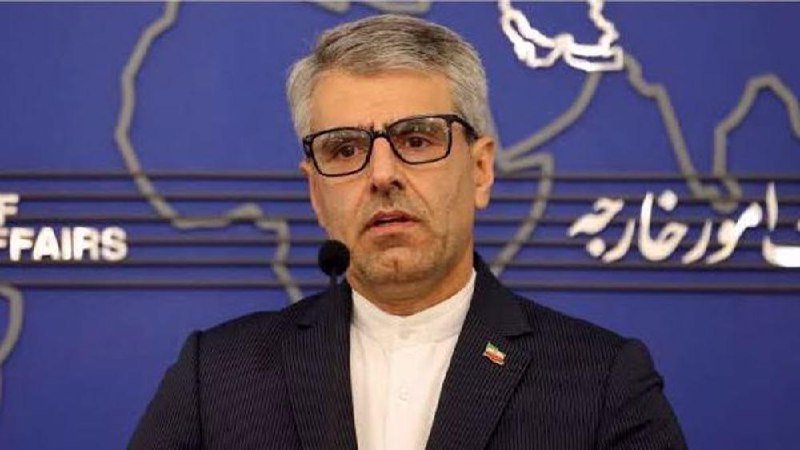
The Iranian Revolutionary Guards Corps has a message for the world: the next war, if it comes, won't stay where it's told. On 20 May 2026, the IRGC issued a statement warning that if aggression against Iran is repeated, the conflict will go beyond the regional scope — a threat that arrives amid heightened speculation that the Middle East is entering a new and more dangerous phase of hostilities.
This is not the usual revolutionary boilerplate. This is structured deterrence language, and it deserves to be read carefully rather than dismissed as bluster.
What the statement actually says
The IRGC's declaration, carried by Iranian state-adjacent channels on the morning of 20 May 2026, named the "American-Zionist regime" explicitly. It said that if aggression against Iran is repeated, the regional war that has long been anticipated will for the first time "go beyond the borders of the region." That is a significant escalation in both target and scope — it is an explicit warning to the United States that any military action Iran deems as aggression will carry consequences that extend beyond the theatre where it occurs.
The phrasing is deliberately calibrated. It is not a declaration of war; it is a deterrent signal — designed to raise the costs of any strike against Iran in the minds of US policymakers who might otherwise treat limited military action as a low-risk option.
The strategic context
The United States has conducted a sustained campaign of air strikes against Iranian-linked targets in Iraq and Syria over the past two years, framed consistently as retaliation for attacks on US personnel and regional partners. That campaign has operated within a set of understood parameters: limited in scope, targeted in execution, and bounded by an implicit mutual understanding that neither side wants a full-scale conflict.
But those parameters are under pressure. Reporting over the preceding weeks had suggested the Trump administration was weighing more aggressive options regarding Iran's nuclear programme — options that, if exercised, would represent a qualitative change in the nature of the US-Iran confrontation. Israel, meanwhile, has continued its own campaign of operations across the region, with strikes in Syria and Lebanon that Iran views as extensions of US-backed pressure.
The IRGC's statement is a response to that pressure. It signals that Tehran is watching the escalation curve closely, and that it believes the threshold for out-of-region retaliation has moved.
Why this matters
The danger here is not that Iran will launch an immediate attack on US territory or assets. It is that the statement reshapes the risk calculus for everyone involved. Washington's default assumption — that it can conduct targeted strikes against Iranian interests in the region without triggering a broader conflict — rests on an understanding that Iran will absorb limited provocation and respond proportionately within the same theatre.
The IRGC is saying that assumption no longer holds. If the United States strikes, Iran will attempt to strike back in ways that are not confined to the immediate theatre of the original strike. That is a direct challenge to the operational logic that has governed US-Iranian military interaction for the past half-decade.
It is also a test of the administration's willingness to acknowledge that posture. If Washington treats the statement as noise and continues to calibrate strikes on the old parameters, it runs a genuine risk of miscalculation — either believing that Iranian restraint will hold when it won't, or believing that Iranian retaliation will remain regionally bounded when the IRGC has explicitly said it will not.
The stakes for every player
The United States has interests in preventing Iran from acquiring a nuclear weapon, in maintaining the security of its regional partners, and in avoiding a war that would be destabilising and costly across multiple theatres simultaneously. Those interests are not served by treating an explicit IRGC deterrence signal as rhetorical habit. The statement may be designed to intimidate; it may also be a genuine statement of intent. The cost of being wrong in either direction is not symmetric.
Israel faces a similarly complex calculation. Its security apparatus has spent years managing the Iranian threat through a mixture of covert operations, intelligence partnerships, and carefully targeted strikes. A statement from the IRGC that raises the ceiling on potential Iranian retaliation adds a new layer of uncertainty to an already volatile environment — one where miscalculation by any party could rapidly outpace the diplomatic instruments available to contain it.
Tehran, for its part, is signaling strength at a moment when its regional position has been under significant pressure. The statement serves an internal audience as much as an external one — it projects resolve, it establishes a red line, and it forces the United States to factor escalation risk into every subsequent calculation about military action.
The IRGC's warning is not an inevitability. It is a threat, and threats — particularly those issued in the language of deterrence — are meant to be read, weighed, and answered. Washington cannot afford to read it as noise and move on. The consequences of that miscalculation would be felt well beyond the Middle East.
Monexus has covered the IRGC's statements on regional escalation as a geopolitical signal rather than a domestic Iranian matter — the framing differs from wire services that led with the domestic political angle.
Wire provenance
This editorial synthesis draws on the following public wire/social posts:
- https://t.me/abualiexpress
- https://t.me/alalamarabic