The 99% President: Trump, Netanyahu, and the Personalization of American Power
Donald Trump's claim that he could run for Israeli Prime Minister with 99% approval is not a gaffe — it is a window into how American presidents increasingly treat foreign policy as personal brand management.
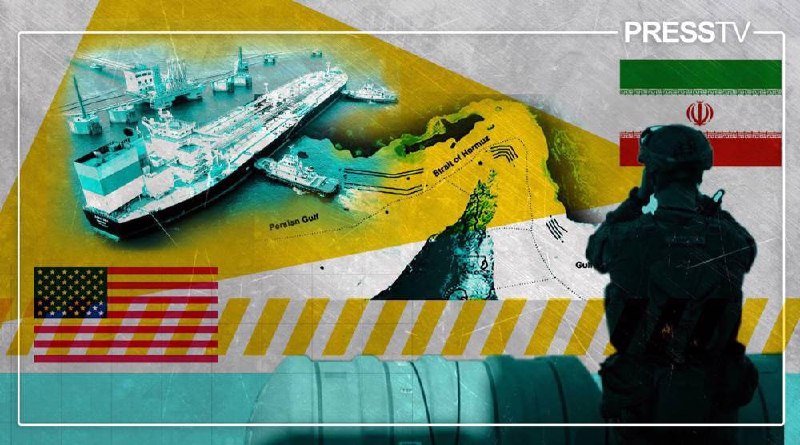
On 20 May 2026, Donald Trump offered a series of statements that would be remarkable from any American president and are perhaps uniquely unremarkable from this one. He claimed 99 percent approval in Israel. He said he could run for Prime Minister. He described his relationship with Benjamin Netanyahu in terms of personal loyalty and assumed control — "he will do whatever I want him to do." And he offered a reductive framing of Iran as a country whose citizens are simply angry about their standard of living. These are not gaffes. They are the vocabulary of a specific approach to power: one that substitutes personal relationships for institutional frameworks and poll-number confidence for strategic clarity.
The thesis here is not that Trump is wrong about any particular policy. It is that his language reveals a deeper problem in how American presidents now approach the Middle East — and that the costs of that personalization extend well beyond domestic political theater.
The Iran Framing Misses Its Own Complexity
Trump's observation that "there's a lot of anger now in Iran because people are living so badly" is the kind of statement that plays well in certain domestic political contexts but flattens a genuinely complex situation into a simple narrative about economic causation. Iranian public sentiment is shaped by economic pressure, yes — but also by decades of revolutionary ideology, regional isolation, and a state apparatus that has survived exactly by channeling grievances outward rather than inward. Reducing Iranian frustration to economic discontent misses how the regime has historically managed that frustration, and what external pressure has consistently done to it. The sources reporting these Trump statements do not provide independent corroboration of Iranian public opinion data, but the framing itself deserves scrutiny regardless — it is the kind of simplification that serves domestic political needs more than it illuminates regional reality.
"Whatever I Want": The Language of Control
Trump's claim that Netanyahu "will do whatever I want him to do" is, on its face, a remarkable assertion of personal leverage over a foreign leader. On closer inspection, it reveals more about Trump's style than about the actual balance of power between Washington and Jerusalem. American presidents have long held significant influence over Israeli policy — the question is not whether leverage exists but how it is exercised. Framing it as personal loyalty rather than institutional negotiation does several things: it flatters a domestic base that values strength and personal connection over process; it positions Trump as the indispensable broker in any future arrangement; and it subtly undermines Netanyahu's own political position by suggesting the Israeli leader is following orders rather than making calculations.
This last point matters more than it might appear. Israeli prime ministers negotiate with coalition constraints that require diplomatic flexibility and deniability. When an American president publicly claims control, that deniability disappears. Trump's language may play well in a press availability, but it constrains the very partner he is claiming to direct.
The 99% Figure as Political Architecture
The 99 percent approval claim in Israel is, in statistical terms, absurd — no modern democracy produces such numbers for any political figure, let alone a foreign one. In political communication terms, it is something more interesting: a piece of narrative architecture. The 99 percent figure serves multiple functions simultaneously. It tells a domestic audience that Trump is uniquely strong in a strategically vital region. It sets up a framework in which any Iran negotiation, if it happens, will be framed as Trump's personal victory. And it signals to both allies and adversaries that American policy under this administration is, in some meaningful sense, a one-man operation.
This last function is the most consequential. When foreign policy becomes personal brand architecture, the institutions that provide continuity, memory, and institutional checks are quietly marginalized. The State Department, the intelligence community, the professional diplomatic corps — these exist to translate strategic interests into sustainable arrangements. A foreign policy conducted through personal relationships and poll-number theater tends to produce arrangements that serve the president's political needs rather than the nation's long-term interests.
What the Personalization Actually Costs
The structural pattern here is the personalization of American Middle East policy — the reduction of strategic calculation to personal relationship, and the use of poll-number rhetoric as a substitute for institutional authority. This is not unique to Trump; American presidents have long exhibited personalist tendencies in foreign policy. But the degree and the explicitness of Trump's language on 20 May 2026 is a reminder of what that personalization costs.
It costs allies the space to negotiate credibly with their own constituencies. It costs American credibility when the personal narrative inevitably collides with institutional reality. And it costs the clarity that comes from distinguishing between a president's political interests and a nation's strategic ones. The 99 percent claim is a piece of political theater — it serves the narrative Trump is building about his own indispensability. But indispensability, in the end, is a claim that only matters if the underlying strategy is sound. The language of control and personal leverage, deployed without visible institutional grounding, may be the clearest warning sign in the room.
Wire provenance
This editorial synthesis draws on the following public wire/social posts:
- https://t.me/ClashReport/28456
- https://t.me/DDGeopolitics/18934
- https://t.me/GeoPWatch/4521
- https://t.me/disclosetv/11892