The Castro Indictment Is Politics Dressed as Justice
The Trump administration's indictment of Raul Castro for the 1996 Brothers to the Rescue shootdown is legally defensible and politically convenient. Those are the same thing, and that should trouble us.
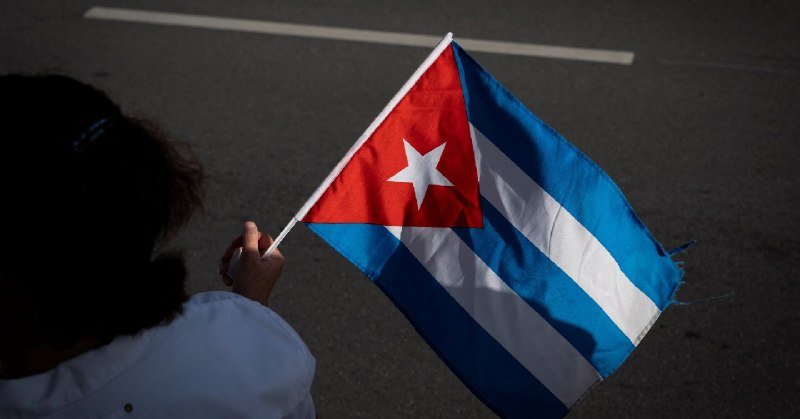
The Trump administration has indicted Raul Castro for the 1996 shootdown of two Brothers to the Rescue aircraft — an act that killed four Cuban-American pilots conducting humanitarian search-and-rescue missions over the Florida Straits. The indictment, announced on 21 May 2026, arrives thirty years after the incident and three years after Havana and Washington quietly resumed normalisation talks. The timing demands scrutiny. This is not justice delayed. This is justice deployed.
The charges are legally credible. The kill order for the MiG-21 interceptors that downed the Cessna aircraft was issued at a level that, under international law, carries individual criminal responsibility. Four dead pilots on a humanitarian mission. A factual record that has sat in DOJ files since 1996. So why now?
The Timing Is the Message
The sources do not explain the prosecution's calendar. Al Jazeera's reporting identifies the indictment but offers no rationale from Washington for the thirty-year gap. That silence is itself informative. Normalisation talks between Cuba and the United States have been proceeding, cautiously, since 2023. Havana has made measured concessions on migration and limited economic liberalisation. The Biden-era thaw, never warm, had at least established a channel. The Trump administration, inheriting that architecture, has now detonated a charge that will make any continuation of dialogue politically untenable — certainly in Washington, where South Florida's political class has long treated Cuba normalisation as a third rail.
The indictment does not merely punish a historical crime. It forecloses a diplomatic future. That is the function of its timing.
A Pattern, Not an Exception
This is not the first time US-Cuba policy has turned on criminal prosecution as political instrument. American administrations of both parties have treated Cuban officials as uniquely prosecutable compared to counterparts in other theatres. The logical next question — why this regime, why these crimes, why now — rarely gets answered in the coverage itself, because the answer implicates a structural dynamic rather than individual malice: a domestic constituency in South Florida that votes, donates, and frames Cuban-American identity politics; an institutional apparatus (State, DOJ, Treasury's Cuba desk) that has spent three decades building a prosecutorial case-load; and an absence of competing diplomatic interests strong enough to override both.
The alternative reading — that this is simply the rule of law catching up with a dictator — deserves acknowledgment. Raul Castro was defence minister in 1996 and, by most accounts, personally authorised the intercept. He is not a peripheral figure. The evidence for his involvement has been in the public record for decades. If the indictment had come in 2010, or 2016, one could argue it reflected genuine prosecutorial resolve rather than strategic selection.
What the Indictment Cannot Do
It cannot bring back the four pilots — Pablo Morales, Carlos Costa, Armando Alejandre Jr., and Mario de la Paz. It cannot reverse three decades of US embargo policy that has, by most metrics, failed to produce regime change while succeeding in making ordinary Cubans poorer. And it cannot, by itself, deliver accountability in any meaningful sense: Castro is eighty-nine years old, remains in Havana, and will not appear in a US courtroom. The indictment is, in practical terms, a symbolic act with diplomatic consequences rather than a precursor to extradition or trial.
The sources offer no indication that the administration weighed diplomatic alternatives before proceeding. Al Jazeera's reporting, and the Epoch Times coverage, focus on the indictment itself and its immediate political reception — not on whether State Department or National Security Council officials assessed the downstream effects on bilateral talks. That gap in the record matters, because it is the gap in the policy itself.
The Stakes Beyond the Headline
The most consequential effect of this indictment will not be felt in courtrooms. It will be felt in the normalisation process that was quietly proceeding, and in the lives of Cubans for whom improved US-Cuba relations was not an abstraction but a potential easing of economic pressure. Miami's hardliners will welcome the move as long-overdue. Those who believe engagement produces more change than isolation will see it as confirmation that Washington cannot sustain a consistent Cuba policy beyond electoral cycles.
Both assessments may be correct. What the coverage tends to obscure is that criminal prosecution and diplomatic engagement are not always mutually exclusive — but in the specific context of US-Cuba relations, they have been treated as such for sixty years. The indictment confirms that pattern. It does not challenge it.
That is the real story: not the charges against an elderly former leader, but the policy architecture that selected those charges for this moment. Justice, in this instance, is a branch of politics. Pretending otherwise does no service to the dead or the living.
Wire provenance
This editorial synthesis draws on the following public wire/social posts:
- https://t.me/aljazeeraglobal/24569
- https://t.me/aljazeeraglobal/24570
- https://t.me/aljazeeraglobal/24571
- https://t.me/epochtimes/14897