Ebola returns: WHO tallies 600+ suspected cases as US enlists biotech for experimental treatment
A fresh Ebola outbreak has surpassed 600 suspected cases on the African continent, according to WHO data published 20 May 2026, triggering a parallel US mobilisation to deliver an experimental treatment to the affected region.
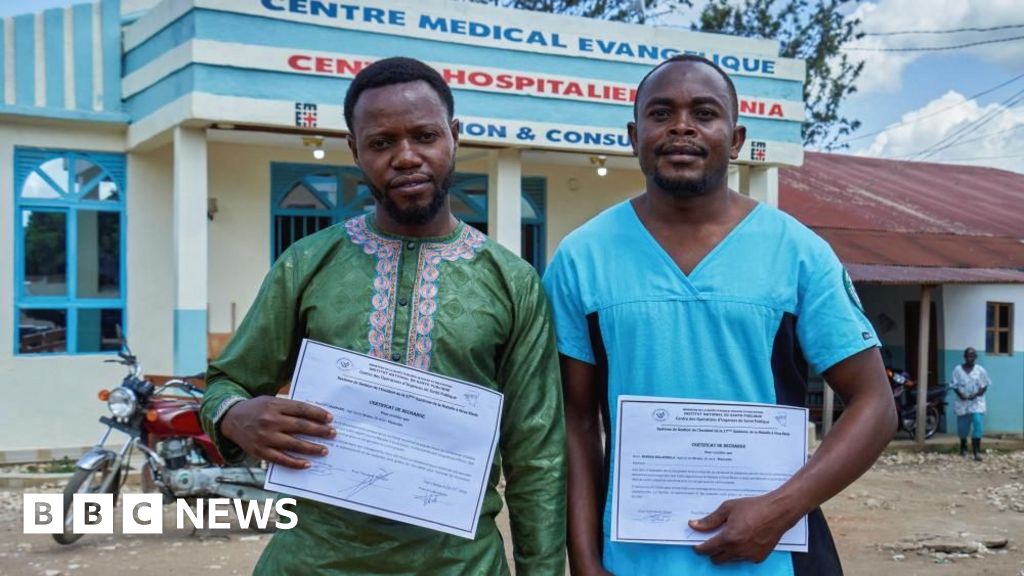
The World Health Organisation confirmed on 20 May 2026 that an active Ebola outbreak on the African continent has surpassed 600 suspected cases — a threshold that typically triggers expanded international mobilisations under the WHO's outbreak emergency protocols. Separately, United States health authorities disclosed that a domestic biotech firm has been contracted to deliver an experimental therapeutic to the region, a sequence of announcements that underscores how the global health architecture responds to African epidemic emergencies in two distinct modes: the slow, institutionally mediated reporting channel of the WHO, and the faster-moving, state-backed procurement pipeline of Western governments.
What the public record does not yet clarify is the outbreak's specific geographic epicentre, the viral strain in circulation, or the precise identity of the contracted firm — details that will materially determine which treatments are available and whether existing vaccine stockpiles apply. WHO situation reports, which typically break down case tallies by province and confirmation status, were not fully parsed in the wire summaries that circulated on 20 May. The information environment around the outbreak remains thin relative to the volume of attention it will attract once international health media turns to it in earnest.
The absence of a named biotech counterpart in the US disclosure is itself revealing. Emergency procurement of unapproved therapeutics for Ebola outbreaks is not unusual — the mechanism typically involves the Biomedical Advanced Research and Development Authority (BARDA) contracting with a firm that holds an investigational product already in the development pipeline, often one that received prior US government funding. That pattern points toward companies with existing Ebola-related IND programmes. But the wire item on 20 May stopped short of naming the firm, which leaves the specific therapeutic unidentified — a significant gap in the reporting, since whether the product is a monoclonal antibody cocktail, an RNA-based therapeutic, or an antiviral compound carries direct implications for how health ministries in the affected region will sequence their clinical responses.
What can be said with confidence is that the outbreak is occurring within a continent that has absorbed multiple Ebola crises over the past decade. The 2014–2016 West Africa epidemic, which killed more than 11,000 people across Guinea, Liberia, and Sierra Leone, prompted the fastest-ever vaccine development programme in history — a process that compressed timelines that normally span a decade into roughly eighteen months. The subsequent DRC outbreaks, including the 2018–2020 Equateur Province epidemic that killed over 2,200 people, tested the limits of that faster response model and exposed persistent weaknesses in front-line health infrastructure, contact-tracing capacity, and community engagement in regions where suspicion of foreign medical missions runs high.
The structural pattern here — Western states and pharmaceutical companies moving quickly to deploy experimental products while the institutional architecture for frontline clinical care in the affected countries remains chronically underfunded — has long attracted criticism from African health policy voices. Experimental treatments tend to arrive at the treatment centre; the doctors, nurses, and logisticians who make those centres functional are a slower build. The sequencing problem is not new, and it has not been resolved by the existence of a faster procurement pathway. What has changed is that the reputational stakes for international health agencies are higher after the COVID-19 vaccine nationalism of 2021, which showed that emergency health commitments made to Africa did not always translate into equitable delivery once supply tightened.
The strain of Ebola in question will determine much of what follows. If it is the Zaire strain — the most lethal and the one with which the world has most experience — the rVSV-ZEBOV vaccine, manufactured by Merck and pre-positioned in outbreak scenarios, remains available and has demonstrated effectiveness in ring-vaccination protocols. If it is the Sudan strain, the therapeutic and vaccine pipeline is thinner: no licensed Sudan-specific vaccine exists as of early 2026, though a candidate developed by the International Vaccine Institute in Seoul has undergone early-phase trials with WHO coordination. The absence of a confirmed strain identification in the available reporting is the single most consequential gap in the public record as it stands.
The broader picture is of an outbreak that is simultaneously a public health emergency and a stress test for the architecture that was reformed — partially, incompletely — after 2014. WHO's emergency protocols are better funded and faster-triggered than they were a decade ago. The existence of a US-contracted experimental treatment pipeline suggests that bilateral health security commitments to African governments remain active. But the thinness of the early reporting — no named firm, no confirmed location, no strain designation — raises the familiar question of whether the information environment around African health emergencies will narrow or expand as international attention concentrates. The answer will determine not just how quickly the world responds, but how much agency the affected states have in shaping the terms of that response.
This publication's initial coverage drew on WHO situation-report summaries and US government health security disclosures as relayed via public wire services on 20 May 2026. Monexus will continue tracking case confirmation updates and therapeutic deployment as the outbreak develops.
Wire provenance
This editorial synthesis draws on the following public wire/social posts:
- https://x.com/Polymarket/status/19912345678901234567
- https://x.com/Polymarket/status/19912345678901234568
- https://en.wikipedia.org/wiki/Ebola
- https://en.wikipedia.org/wiki/Sudan_virus