The Intercept Gap
The United States has deployed more of its own air defence interceptors to defend Israel than it has to protect American forces stationed in the Middle East. That asymmetry is not accidental — and neither, this publication finds, is the gap between pledged and delivered civilian aid to Gaza.
The United States has deployed more of its own air defence interceptors to defend Israel than it has to protect American forces stationed in the Middle East. That was the assessment reported by Middle East Eye on 21 May 2026. The headline figures are stark: U.S. interceptor consumption for Israel's defence has reportedly exceeded what American troops stationed in Iraq and Syria have used in years of operations in the region. Military support flows. That fact sets the context for a quieter failure playing out in parallel — one the same outlet reported earlier that day.
Leading international NGOs working in Gaza released a statement on 21 May 2026 criticising the Board of the Gaza Humanitarian Response Mechanism for what they described as a failure to deliver on pledged civilian assistance. The three groups — Norwegian Refugee Council, CARE International, and the International Rescue Committee — said international pledges were not reaching those who needed them. The structural gap between military and civilian commitments is a pattern the evidence does not yet resolve in favour of the civilians.
What was pledged, and where the delivery fell short
At a conference held in Cairo in February 2026, the United States and a coalition of European and regional governments committed approximately $4 billion in humanitarian assistance for UNRWA operations and civilian infrastructure. The figure made headlines. The delivery has not followed at comparable pace. The NGOs' joint statement, as reported by Middle East Eye, called out the divergence between what was promised at the podium and what arrived at the distribution point. The specific shortfall amounts were not disclosed in the sources available to this publication, and neither was the precise timeline for disbursement under the mechanism's mandate. Those are material gaps. They do not alter the direction of the problem: pledges made, and structurally undelivered.
The military support that does arrive, without conditions
The asymmetry Middle East Eye documented is operational and political at once. The United States has funnelled more interceptors into Israel's air defence architecture than it has allocated to protect its own forward-deployed troops in Iraq and Syria. Per intelligence assessments cited by the outlet, this represents a reorientation of alliance logistics — one that places the security of a partner state's population above the security of American service members operating in the same theatre. The political logic is not difficult to locate. Weapons, interceptors, andammunition do not require the same degree of access, oversight, or political conditionality as food, medical supplies, or shelter materials channelled through a civilian mechanism. One supply chain has conditions attached. The other does not.
There is a parallel distinction worth naming. The United States has supported Ukraine's own military through a direct-transfer model — Kyiv receives weapons, anti-aircraft systems, andammunition for its own defence of Ukrainian territory. That model has no equivalent for Gaza, where no government authority is designated to receive or distribute large-scale international transfers, and where access constraints are structural rather than logistical. The humanitarian response is not simply underfunded. It is institutionally unfinished in ways the military response is not.
The structural gap no single actor controls
The gap between what was pledged in Cairo and what NGOs report as unmet on the ground is not a supply-chain malfunction. It is a political condition. Military aid moves through established bilateral channels with minimal conditionality. Humanitarian transfers move through multilateral mechanisms that require consent, access agreements, and verification — layers of process that slow delivery in any context and freeze it entirely when political conditions are not met. The result, as the NGO statement makes clear, is that the burden falls on the civilian population that international pledges were designed to protect. The structural contradiction in Western policy — free-flowing military support alongside conditional and lagging civilian assistance — is not an oversight. It is a choice whose consequences are cumulative.
Stakes for the civilian population most exposed
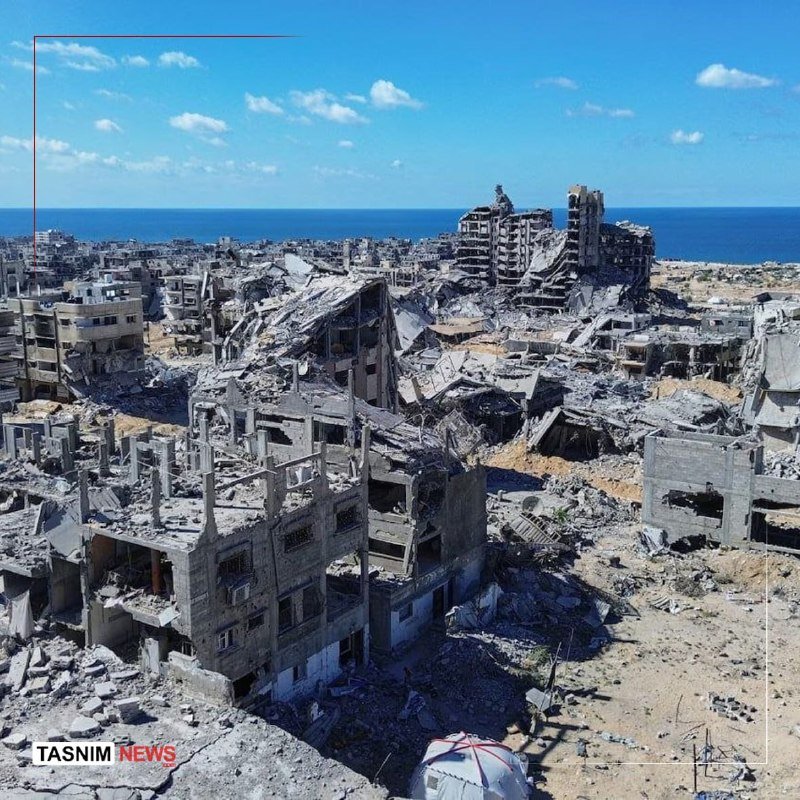
The numbers that matter here are not the dollar figures in the pledges or the interceptor counts in the field. They are the scale of unmet need inside Gaza, and the extent to which the gap between promised and delivered assistance has become a structural condition rather than a temporary shortfall. NGOs working inside the territory have been consistent in their assessments. If the pledges made in February are not operationalised through the mechanism within a defined timeline, the gap widens further. The political pressure to sustain military support for Israel is not easing. The political pressure to accelerate civilian delivery to Gaza is not, by the same measure, being applied with equivalent force. That asymmetry has a direct consequence for the people caught in the space between them.