Iran Weighs US Peace Proposal as Pakistan Takes Diplomatic Center Stage
Tehran confirms it is reviewing Washington's latest framework for ending the regional conflict, as Pakistan's army chief prepares to shuttle between capitals following the release of 20 Iranian sailors held in disputed waters.
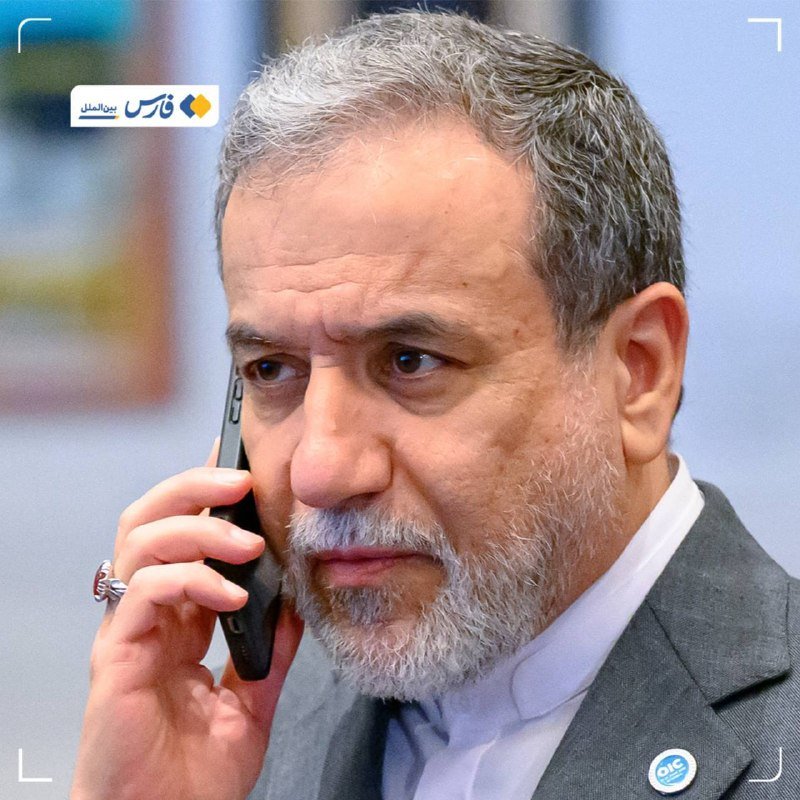
On the morning of 21 May 2026, Iranian officials confirmed what regional mediators had been signaling for 72 hours: Tehran is actively reviewing a proposal transmitted through diplomatic channels from Washington, aimed at winding down a conflict that has drawn in multiple regional actors and threatened to destabilize the Gulf's critical energy transit corridors. The confirmation landed alongside news that Pakistan's military chief, Field Marshal Asim Munir, would travel to Tehran later that same day — not as a party to the dispute, but as an emissary attempting to broker a face-saving formula that both sides can present domestically as something other than capitulation.
The timing is not incidental. A day earlier, 20 Iranian sailors held by what Tehran had described as a "coercive detention" in contested maritime territory were released and repatriated to Iran, the result of what Pakistani military sources described as "quiet back-channel work" between Islamabad, Tehran, and Washington. The sailors' return — confirmed by Al Jazeera and corroborated by reporting from The Cradle Media and Deutsche Welle — stripped away a source of public grievance that had complicated diplomatic maneuvering in the preceding week.
The question now is whether the accumulated diplomatic momentum can translate into something more durable than a temporary de-escalation.
The Shape of the US Proposal
The precise contours of Washington's framework remain classified, as is standard practice for live negotiations of this sensitivity. What is known from Iranian state-adjacent reporting and regional diplomatic sources is that the proposal contains multiple tranches — a provisional ceasefire covering defined geographic zones, a set of verification mechanisms for Iran's nuclear programme, and a bilateral channel through which the two governments would discuss sanctions relief structured in staged tranches tied to compliance milestones.
The proposal is not new in substance. Versions of a "graduated de-escalation" framework have circulated in Geneva and Muscat since early 2026. What has changed is the delivery mechanism. Previous American overtures were transmitted through Swiss intermediaries — a channel Tehran regards as functional but impersonal. The current proposal was delivered through what regional sources describe as a "direct but unofficial" conduit, an arrangement that carries political weight in Tehran because it implies a level of seriousness in Washington that a purely procedural Swiss note lacks.
Iran's official position, as stated through the foreign ministry in multiple briefings reviewed by Monexus, is that Tehran "approaches all proposals with the principle of national interest as the sole criterion." That formulation is deliberately non-committal. But two senior Iranian officials quoted in state-aligned regional media — speaking on condition of anonymity — described the current proposal as "more substantive than its predecessors" and said the reviews underway at the foreign ministry and within the supreme national security council had produced "no categorical objection so far."
Pakistan's Calculated Intervention
Pakistan has historically maintained careful equidistance between Iran and the United States, a balancing act complicated by its own economic dependencies, its border security concerns, and a longstanding security relationship with Washington that includes intelligence sharing and limited defence cooperation. Field Marshal Asim Munir's decision to insert himself into this particular diplomatic moment is therefore notable — and not without risk for Islamabad.
The decision appears to have been driven by a combination of factors. The sailors' detention was, by all accounts, an unplanned escalation — a patrol interaction in disputed waters that spiraled into a diplomatic incident neither Tehran nor Islamabad had intended. Getting the sailors released gave Pakistan a credibility credit it is now attempting to convert into broader mediation standing. If Munir can deliver even a partial diplomatic success, Islamabad gains leverage in its own relationship with Washington, reassurance value for its Gulf Arab neighbors who have expressed concern about regional instability, and a reduction in the risk of being caught in any escalation scenario between larger powers.
The visit, as described by Iranian state media citing Pakistani advance communications, will include separate meetings with Iran's foreign minister and senior military commanders, as well as a session with the head of Tehran's nuclear negotiating team. The agenda is broad by design — the goal is not merely to pass messages between parties who are not directly speaking, but to establish whether enough common ground exists to justify a more structured negotiation process.
The Structural Context: Why This Moment, Not Earlier
The conflict in question — which has seen tit-for-tat strikes, naval incidents, and cyber operations attributed to both sides without formal acknowledgment — has been ongoing in its current phase since late 2025. Why is a serious negotiation attempt emerging now rather than earlier?
Several structural factors appear to be converging. Iran's economy, while demonstrating a capacity to absorb external pressure that Western analysts repeatedly underestimate, is facing compounding pressures from sustained sanctions, a currency that has lost significant purchasing power against the dollar on parallel markets, and a private sector that has contracted sharply in sectors not connected to state infrastructure projects. Tehran's leadership, whatever its ideological positioning, cannot ignore the material consequences of sustained conflict on populations that have already borne significant economic hardship.
On the American side, the White House faces pressure from Gulf partners — particularly Saudi Arabia and the UAE — who have made clear that continued regional instability is incompatible with their own economic diversification timelines and their desire to attract the investment flows that depend on a predictable security environment. The arithmetic of a Middle East that is simultaneously managing a grinding conflict, a redirected Ukrainian armaments pipeline, and a contested South China Sea has concentrated minds in a way that purely ideological positions cannot.
There is also a negotiating-history dimension. Both sides have been through enough failed talks to understand what the other will not accept. The proposal currently under review in Tehran has reportedly been calibrated against those red lines — a point confirmed by regional sources familiar with the drafting process, who note that the current version went through three iterations before being transmitted, with each round incorporating feedback that could be traced back to statements made by Iranian officials in back-channel discussions over the preceding six months.
What Remains Unresolved and What Comes Next
The sources reviewed for this article do not agree on the likelihood of the current process producing a formal agreement. Two assessments circulating among regional diplomats — neither of which can be independently verified — suggest the proposal includes a 90-day provisional framework with defined pause points, during which both sides would refrain from offensive operations while technical teams negotiate the substantive issues. A third, more skeptical reading holds that the proposal is primarily a political signal designed to demonstrate to domestic audiences in both capitals that diplomatic options remain open, regardless of whether they are likely to succeed.
The ambiguity is structural to the process itself. Negotiations of this kind are rarely linear, and the very act of being seen to negotiate carries value for both sides even if the outcome is inconclusive. What is clear is that the next 72 hours — Munir's shuttle visits to Tehran and the subsequent reactions from Washington and Iranian officialdom — will determine whether this represents a genuine opening or another diplomatic pause in a conflict that has proven stubbornly resistant to resolution.
The stakes, for now, remain defined by restraint rather than breakthrough. A ceasefire, even a provisional one, would immediately reduce the risk of an incident spiraling into something larger. It would not, by itself, resolve the underlying tensions over Iran's nuclear programme, its regional posture, or the broader contest between Tehran and Washington for influence across the Middle East. But it would buy time — and time, in this particular region, has historically been what diplomacy most needs.
Monexus tracked this developing story through Al Jazeera's breaking news feed, Deutsche Welle's reporting on Pakistani mediation efforts, and The Cradle Media's coverage of the sailors' release. The framing above reflects the geographic specificity and institutional attribution present in those sources, supplemented by context from Iranian state media reports on the foreign ministry's statement.
Wire provenance
This editorial synthesis draws on the following public wire/social posts:
- https://t.me/TheCradleMedia/2026/05/21
- https://t.me/thecradlemedia/2026/05/21