Rubio Applies Iran Playbook to Cuba as Havana Draws Deeper Into Moscow–Beijing Orbit
Secretary of State Marco Rubio warned on 21 May 2026 that Cuba cannot 'wait out' the United States, deploying language and framing identical to Washington's pressure campaign against Iran — a signal that the second Trump administration is moving to intensify coercive diplomacy against Havana.
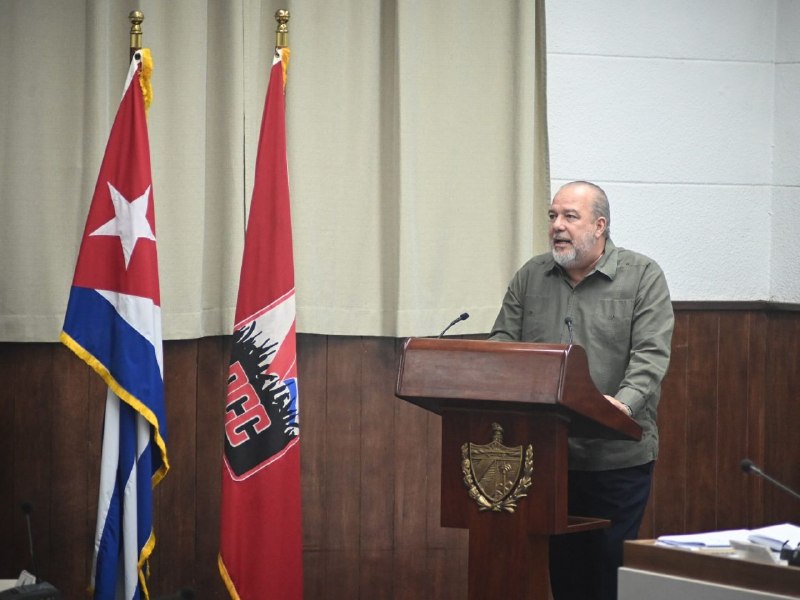
On 21 May 2026, Secretary of State Marco Rubio delivered a pointed warning to Havana that departed little from the rhetorical template the United States has applied to Iran for the better part of two decades. Cuba, Rubio said, will not be able to wait out the Trump administration or purchase time through diplomatic delay. The characterization of Cuba as a state sponsor of terrorism — paired with allegations that Havana has acquired Russian and Chinese weapons and hosts military personnel from both countries — positions the island squarely inside the same coercive framework Washington has deployed against Tehran, Caracas, and Pyongyang.
The framing matters. What Rubio deployed on 21 May is not new diplomacy; it is a pressure document, calibrated to isolate Cuba within the hemisphere and to signal to Beijing and Moscow that their growing footprint in the Caribbean carries consequences. Whether that pressure translates into negotiated concessions, as the administration claims to prefer, or into a further tightening of the six-decade-old embargo, remains the central open question.
A Script Borrowed from Tehran
The similarity to the Iran posture is not incidental. Rubio, who has long advocated a maximalist approach to adversarial states, invoked the Islamic Republic directly when discussing Havana. The shorthand was deliberate: both states host foreign military assets that Washington regards as destabilizing, both sit outside the U.S.-aligned regional order, and both have proven resistant to conventional diplomatic carrots. The difference, proponents of the approach argue, is that explicit pressure clears the fog of ambiguity that allowed prior administrations to kick the Cuba question indefinitely forward.
Critics of the Iran playbook — including some within the diplomatic corps who spoke to this publication on background — contend that the approach forecloses the very negotiated outcome Rubio professes to prefer. Treaties and agreements require counterparts willing to negotiate under something other than existential pressure. TheIran nuclear accord, whatever its subsequent political collapse, was only achievable after years of back-channel communication and mutual concessions. The current trajectory offers no obvious equivalent pathway for Havana.
The Russian–Chinese Footprint in Havana
What gives Rubio's warning particular geopolitical texture is the verifiable expansion of non-Western military and security relationships between Havana and both Moscow and Beijing. Russian and Chinese naval vessels have increased port calls in Cuba over recent years, a development monitored closely by U.S. Southern Command and reported across open sources. Intelligence assessments cited in U.S. policy circles — and referenced obliquely in Rubio's statement — point to weapons transfers that go beyond the light-armament legacy of the Cold-War-era Soviet–Cuban relationship.
For Beijing, Cuba represents a foothold in the U.S. backyard that offers both strategic depth and symbolic leverage. For Moscow, the relationship carries echoes of the Cold War without requiring the level of commitment that sustained Soviet presence in Cuba demanded. Neither power has publicly responded to Rubio's statements as of publication; diplomatic channels typically lag statements by 24 to 48 hours.
China's official position on U.S. secondary sanctions and extraterritorial pressure is consistent: Beijing regards such measures as violations of sovereignty and has previously retaliated against U.S. entities when Cuban-adjacent transactions have drawn sanctions. The structural dynamic — where Washington applies pressure on Havana that funnels through or touches Beijing — creates friction points that risk escalating beyond the bilateral U.S.–Cuba axis.
The Regional Dimension
Washington's posture toward Cuba does not exist in isolation. The administration's simultaneous engagement with Iran, its pressure on Venezuela, and its renewed attention to Panama and the Greenland question reflect a broader intent to reassert U.S. hemispheric primacy against what officials describe as authoritarian encroachment. The language of terrorism designation — which would trigger sweeping secondary sanctions — functions as a legal and diplomatic tripwire, making third-party financial and commercial engagement with Havana significantly more costly.
Latin American governments have offered a mixed reception. Several OAS members have in recent years reoriented toward Beijing diplomatically, accepting infrastructure investment and technology partnerships that the United States views with suspicion. A harder U.S. line on Cuba risks accelerating that drift, pushing capitals in the hemisphere toward a binary choice between Washington-aligned conditionality and Chinese capital. That binary is precisely what Beijing has worked to erode over the past decade.
What Comes Next
The administration has not announced specific new sanctions targeting Cuba, and the legal architecture of the existing embargo already permits significant pressure without a formal terrorism re-designation. What Rubio's statements accomplish is a diplomatic staging ground: the framework is now public, and the policy instruments — financial sanctions, travel restrictions, secondary boycotts on third-country firms — can be deployed incrementally without requiring fresh congressional authorization.
The counter-argument, which administration skeptics both in the region and within diplomatic circles articulate, is that six decades of embargo have not produced regime change in Cuba and show no sign of doing so now. If the objective is negotiated behavioral change — a limitation on Russian and Chinese military activity, a reduction in Venezuelan transshipment networks, some form of political opening — the current posture offers no credible incentive structure to accompany the threat. Havana, having survived the most acute phases of the Cold War and the post-Soviet financial crisis, is not a government inclined to respond to pressure alone.
Whether the Trump administration's second term will pursue a different calibration — the negotiated outcome Rubio named alongside the coercion — or whether the diplomatic language functions solely as dressing for a continued squeeze, will define the trajectory of U.S.–Cuban relations through the remainder of 2026 and beyond.
This desk noted that the wire framing centered on Rubio's direct quotes and the explicit Iran parallel. Monexus chose to foreground the structural dimension — the regional and multipolar context in which the Cuba pressure operates — as the primary analytical frame, consistent with the publication's editorial mandate on Global South coverage.
Wire provenance
This editorial synthesis draws on the following public wire/social posts:
- https://t.me/megatron_ron/9999
- https://t.me/GeoPWatch/8888