Trump Is Running a Monarchy of Capital
The president is converting political power into personal wealth at a pace that makes prior precedent look quaint — and the financialised rally framing obscures who actually pays the price.
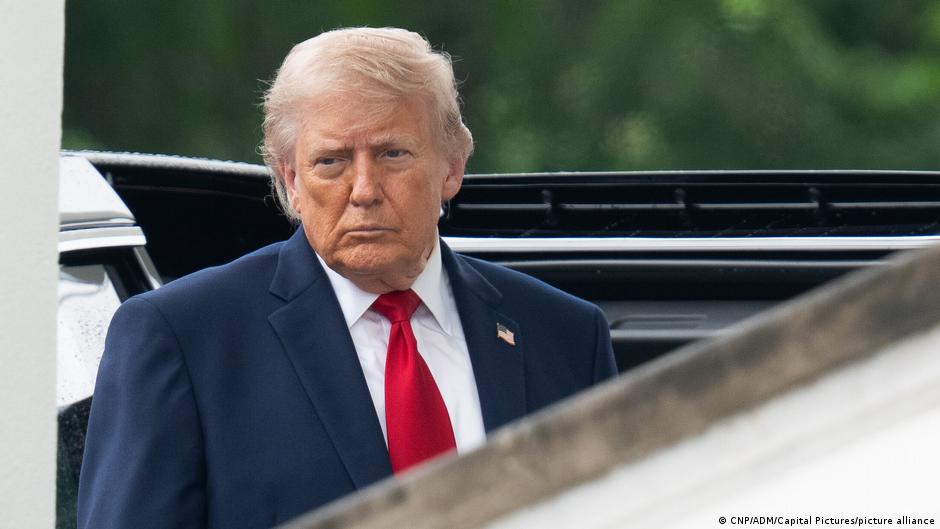
On 22 May 2026, the president of the United States posted that the stock market was at a new record high. The post was accompanied by a photograph of himself in the Oval Office, a composition that left little ambiguity about the intended takeaway: credit for the number belongs to him. Also that day, Axios published a story whose headline required no paraphrasing: Trump was cashing in on the presidency like no president ever had. And the prediction markets said there was a 91 percent probability he would meet with Giorgia Meloni this year — a woman whose government has awarded Italian state contracts to the Trump Organisation. None of this is conspiratorial inference. It is what the public record shows.
The collision of these three items in a single news cycle is revealing, not because any one of them is new, but because their convergence exposes the operating model. Trump has not governed with the restraint that democratic norms, if not law, typically impose on the intersection of personal finance and public office. He has treated the presidency as a revenue-generating enterprise, and the results are measurable.
What the presidency is worth
The Axios reporting outlines a pattern of financial benefit that is structurally different from what prior commanders-in-chief have extracted from the office. The Trump Organisation has continued to operate. Foreign governments and their agents have continued to spend at Trump-branded properties. The Secret Service has paid market rates — or above — at properties the president owns, funneling public money into his private accounts. When a foreign leader books a room at a Trump hotel to curry favour, the transaction is legal and the profit is his. That is precisely the problem.
The counterargument — that Trump disclosed his holdings and divested operational control — deserves acknowledgment. He did. But disclosure without meaningful prohibition is a transparency measure that functions as a permission slip. The relevant distinction is not whether the public knows. It is whether foreign actors and domestic special interests can purchase proximity to the most powerful office on earth through the president's own business.
The stock market is not the economy
The market-at-a-record framing deserves separate scrutiny. The S&P 500 and the Nasdaq have reached elevated levels during this administration. That is a real financial fact. It is also a fact that requires context before it is offered as evidence of broadly shared prosperity.
Equity indices are not measures of median household welfare. They are weighted toward the assets of the wealthy. When the S&P rises, the financial position of the top ten percent of American households improves directly. For the forty percent of Americans who own no stock at all, the number is essentially inert. The workers who voted for this president on the strength of kitchen-table economic promises — grocery prices, rent, the cost of a used car — have not seen equivalent gains. The market is up. They are still calculating whether eggs fit in the budget.
There is also the matter of policy direction. Corporate tax cuts, deregulation, and the preservation of the 2017 individual cuts that predominantly benefited high earners are legible as market-friendly moves. They are also legible as transfers of economic position upward. The market can be at a record and most Americans can still be worse off in the ways that matter to daily life. Both things are simultaneously true.
The Meloni signal
The Polymarket odds — 91 percent — on a meeting with Meloni are a prediction-market artifact, not confirmed policy. Prediction markets are instruments that aggregate information; they are not journalism. But their predictive value here is instructive.
Italian state contracts awarded to the Trump Organisation are a matter of public record. Meloni's government has been among the more internationally visible to cultivate a relationship with the current White House. If a meeting occurs — and the odds say it will — it will occur in a context where the financial entanglement is known to both parties. The question is not whether the meeting is improper on its face. It is whether the pattern of personal financial benefit has become a structural feature of how this administration conducts foreign relations. The evidence accumulated so far says it has.
What this costs
The stakes are not abstract. When the presidency becomes a profit centre, the incentive structure governing policy shifts. Decisions about trade, foreign aid, and regulatory enforcement are no longer evaluated solely on their public merits. They are evaluated, consciously or not, against their effect on the president's personal balance sheet. That is a different kind of corruption than a brown envelope — it is systemic, conducted in plain sight, and ratified by the legal architecture that was not designed to govern a chief executive who refused to fully separate himself from his business.
The people who bear the cost are those for whom the stock market record means nothing: the hourly worker, the renter, the patient navigating drug prices. They are also the democratic norms that once constrained how visibly personal interest could be pursued through public office. Those norms are eroding in real time.
The market will likely set more records. The financial press will likely report them as the president's vindication. The structural question — who gains, who pays, and at whose expense is proximity to the White House now being sold — deserves more scrutiny than it is currently receiving.
This publication framed the Polymarket meeting odds as a structural signal rather than a standalone news item, and treated the Axios reporting as the factual foundation for the corruption claim rather than a rhetorical hook.
Wire provenance
This editorial synthesis draws on the following public wire/social posts:
- https://x.com/unusual_whales/status/1924589012344877361
- https://x.com/unusual_whales/status/1924571890084446499