Trump's Uranium Vow Reshapes the US-Iran Calculus
The president's declaration that the United States will retrieve and destroy Iran's uranium stockpile marks a significant escalation in the nuclear standoff — one explicitly tethered to promises of lower gasoline prices for American consumers.
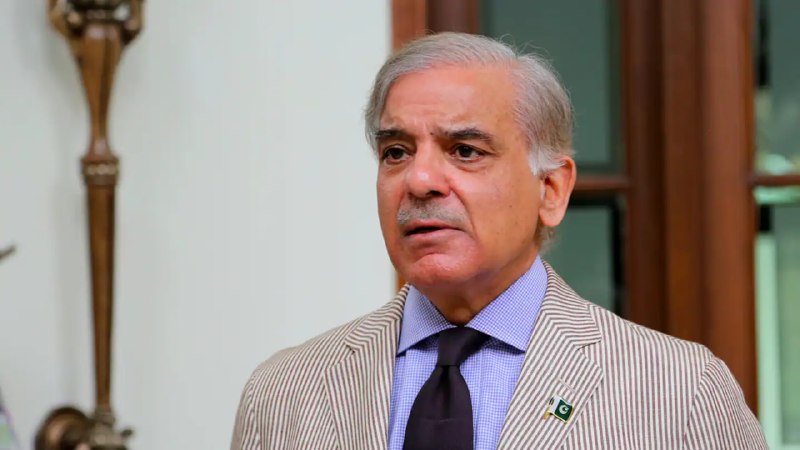
On 21 May 2026, President Donald Trump announced that the United States would retrieve Iran's uranium and "likely destroy it" — a declaration that blurs the line between diplomacy and coercive ultimatum, and one the White House explicitly linked to domestic fuel prices. "The US will get Iran's uranium, we will likely destroy it," Trump stated, according to Reuters. A separate post from Unusual Whales captured an earlier formulation: " gasoline prices will fall after Iran stops its actions," the president said — language that frames Iranian nuclear activity as the proximate cause of pain at the pump.
The pairing of nuclear non-proliferation objectives with consumer-price promises is not new to this administration, but the directness of the retrieval vow marks a qualitative shift. Previous American demands that Iran ship out enriched material implied international inspections and negotiated handover; Trump's framing suggests unilateral enforcement. Whether the logistics of physically removing a validated uranium stock from Iranian territory have been thought through — or whether the statement is primarily designed for domestic political consumption — remains unclear from available sources.
From Deal to Maximum Pressure
The contours of the current standoff trace back to the 2015 Joint Comprehensive Plan of Action, which constrained Iran's enrichment activities in exchange for sanctions relief. The Trump administration withdrew from that agreement in 2018, reimposing sweeping sanctions and pursuing what it termed "maximum pressure." The Biden administration made limited efforts to revive the deal but ultimately left office without a breakthrough. What the current administration inherited was not a diplomatic framework but a vacuum — and Trump has moved to fill it with explicit threats rather than negotiated constraints.
The uranium retrieval pledge fits that pattern. It is simultaneously a negotiating demand, a public ultimatum, and a message to American voters that action on Iran will deliver tangible results at home. Whether it functions as any of those things depends on questions the administration has not yet answered: what mechanism delivers the uranium to American hands, what happens if Tehran refuses, and whether the military operation required to seize enriched material is either feasible or proportionate to the stated objective.
The Gasoline Equation
The political economy of the statement is harder to dismiss. Energy prices remain a potent driver of electoral sentiment, and linking them to Iranian policy accomplishes two things simultaneously: it justifies confrontational posturing as pragmatic rather than ideological, and it gives the administration a concrete deliverable — lower prices — that does not depend on resolving complex nuclear questions before the next cycle.
The causal chain Trump implies is not self-evident. Global oil markets respond to supply-demand balances, OPEC+ decisions, and broader macroeconomic factors. Iranian oil exports have been constrained by sanctions for years, and any additional disruption would likely tighten supply rather than release it. Destroying Iran's uranium — a decommissioning action, not an extraction one — would not add barrels to the market. The more plausible interpretation is that Trump is signalling that a resolution of the nuclear standoff, whatever form it takes, would remove a risk premium currently embedded in regional energy pricing.
Escalation Architecture
The military dimension deserves scrutiny that the public statements do not provide. A US operation to seize Iran's nuclear materials would constitute an act of war by any conventional definition. It would invite retaliation across multiple axes: naval assets in the Persian Gulf, ballistic missile responses against US bases in the region, and potential disruption of Strait of Hormuz shipping lanes through which roughly 20 percent of global oil flows. The costs of such a scenario — in lives, in economic disruption, in regional instability — would almost certainly dwarf any gasoline-price benefit.
That calculus is not lost on American military planners. The more likely interpretation, analysts suggest, is that the uranium retrieval language is coercive diplomacy: an ask so extreme that incremental concessions seem reasonable by comparison. Whether Tehran reads it that way, or instead interprets it as a casus belli in waiting, will determine whether the statement functions as leverage or spark.
There is a personal dimension, too. Sources cited by the Indian Express report that Trump indicated he may skip his son's wedding to attend to Iran-related matters — a framing that humanises the president while simultaneously signalling the gravity, or manufactured urgency, of the moment. Whether this reflects genuine operational demands or political theatre is, again, not specified in available accounts.
What Comes Next
The structural logic here is not complicated. An administration that promised to end foreign entanglements is constructing the architecture for a potential new one in the Middle East. An Iran policy built on retrieval ultimatums and gasoline-price linkages leaves little room for the graduated diplomacy that has historically governed nuclear negotiations — because there is no face-saving off-ramp built into the stated demand. Either Iran capitulates, or the US acts.
The stakes for Gulf Arab states are immediate: any military exchange would risk their energy infrastructure and their relationship with Washington. The stakes for European powers, who have repeatedly urged diplomatic solutions, are equally uncomfortable — they face pressure to support an ultimatum they did not author and may not endorse. And the stakes for Iran itself are existential, in the most literal sense.
What remains unclear from the available record is whether the retrieval pledge represents a settled policy decision or a negotiating position — whether the administration has run the military logistics, calibrated the deterrence calculations, and assessed the regional fallout, or whether it has simply discovered that uranium retrieval plays well in a political environment where strength signals matter more than operational plans. The sources do not say. That absence is itself a data point.
Monexus covered this story through a geopolitics desk lens, foregrounding the structural incentives behind the gasoline linkage and the escalatory logic of the retrieval demand. Wire framing tended to treat the statements as announcements; this article reads them as instruments.
Wire provenance
This editorial synthesis draws on the following public wire/social posts:
- http://reut.rs/3RDNvgZ
- https://x.com/unusual_whales/status/1923456789013454569
- https://x.com/unusual_whales/status/1923441234567890123